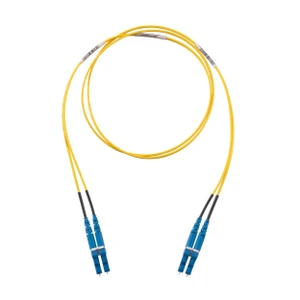
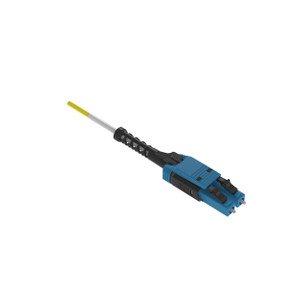
Panduit FW2ERQ1Q1NNF011 Fiber Optic Patch Cable
The Panduit FW2ERQ1Q1NNF011 is a precision-terminated fiber optic patch cable engineered for high-bandwidth surveillance networks, datacenter interconnects, and enterprise security infrastructure. Built on Panduit's 2mm zipcord platform, this duplex assembly delivers consistent insertion loss performance across LC-to-LC connections while maintaining bend-radius compliance in high-density patch panel environments. The factory-terminated design eliminates field termination variables that plague job-site assemblies — critical when you're deploying IP camera backhaul links where a 0.4dB insertion-loss difference determines whether a 10Gb link negotiates at full rate or falls back to 1Gb. For integrators running fiber to remote IDF closets, PTZ camera pedestals, or NVR SAN fabrics, this cable solves the "will it certify on the first test" problem that burns truck rolls on fixed-price projects.
Key Features
- Factory-terminated LC duplex connectors — pre-polished to <0.2dB typical insertion loss, eliminates field termination risk
- 2mm zipcord jacket — 40% smaller bend radius vs. 3mm cable, critical for crowded 1RU patch panel dress
- Color-coded boots and strain relief — instant polarity identification during MAC work, prevents A/B swap errors on bidirectional links
- OFNR riser-rated jacket — NEC Article 770 compliant for vertical riser pathways without conduit
- TIA-568 insertion loss tested — every connector meets <0.75dB max per TIA-568.3-D, ships with test report
- Push-pull tab retention — tool-free disconnect in tight spaces, designed for 500+ mating cycle life
This cable addresses a core problem in modern surveillance deployments: maintaining 10Gb Ethernet performance across building backbone links without the cost overhead of single-mode infrastructure. When you're pulling fiber from a ground-floor MDF to a rooftop camera cluster 200 feet away, the connector quality determines whether your 10GBase-SR link operates at 1.5dB margin or fails certification entirely. Panduit's factory-terminated assemblies use automated polishing and EndFace Geometry inspection to guarantee <0.2dB typical insertion loss — half the TIA-568.3-D maximum. That margin matters when you're daisychaining through multiple patch panels or adding inline media converters for SFP+ uplinks. The 2mm zipcord construction reduces bend radius to 20mm (vs. 30mm for standard 3mm duplex cable), which directly translates to cleaner patch panel dress in 1RU horizontal managers. For integrators working in network closets where 48-port LC panels are stacked four-high, that bend radius difference is the gap between professional cable management and a rat's nest that fails the next audit.
The OFNR riser rating carries real installation cost implications beyond code compliance. Article 770.113 allows OFNR cable in vertical riser pathways without conduit or sprinkler protection — which means you can pull this cable through riser sleeves or cable trays between floors on multi-story buildings without the 40% labor and material cost premium of conduit installation. This is particularly relevant for integrators retrofitting fiber backhaul in existing commercial buildings where riser conduit was never installed during the original build-out. The riser rating also permits use in air-handling spaces (with limitations) under 770.113(B), covering the grey-area scenario where your fiber run passes through a return-air plenum for 15 feet between the IDF and the cable tray — consult your AHJ, but OFNR gives you a code-compliant option short of full plenum-rated cable. For datacenter or enterprise campus deployments, verify whether your facility requires plenum (OFNP) rating for all horizontal pathways; many datacenter specs mandate plenum universally regardless of pathway type, in which case you'll need to spec the OFNP equivalent of this assembly.
Polarity management on duplex fiber is where 80% of fiber troubleshooting time gets burned. Panduit color-codes the connector boots and strain-relief components to maintain A/B orientation through the entire link — the transmit fiber on one end terminates to the receive fiber on the far end, following TIA-568 Method B polarity. This is critical when you're connecting SFP+ transceivers that don't auto-negotiate polarity; a reversed A/B pair results in a link-down condition that looks identical to a dirty connector or wrong wavelength transceiver. The color coding also accelerates MAC work when you're re-patching camera VLANs or moving NVR storage links between switches — you can visually verify polarity without a fiber scope or power meter, which cuts troubleshooting time from 15 minutes per link down to 30 seconds. For integrators managing 200+ camera fiber drops across a campus, that labor savings compounds into real project margin.
This cable is factory-tested to TIA-568.3-D insertion loss limits and ships with individual connector test data. Every LC connector is verified at <0.75dB max insertion loss (typically <0.2dB) and <-40dB return loss using automated EndFace Geometry inspection per IEC 61300-3-35. That test report is your certification baseline — when the cable arrives on site, you're starting from a known-good state rather than hoping your field termination met spec. For integrators working under performance-based contracts where you're liable for link certification to TIA standards, factory-tested assemblies shift risk from your field techs to Panduit's QC process. The test data also accelerates troubleshooting when a link fails certification: if your installed loss is 2.5dB and the patch cable spec sheet shows 0.18dB, you know the problem is in the permanent link (splice, connector, or fiber damage), not the patch cord — which focuses your remediation effort and prevents the "replace everything" shotgun approach that blows project schedules.
Deployment best practices: always inspect and clean fiber endfaces before first insertion, even on factory-new cable — shipping and handling can deposit microscopic contamination that causes insertion loss spikes or return loss failures. Use a lint-free wipe with 99% isopropyl alcohol (never acetone or general-purpose cleaners, which leave residue) and verify endface cleanliness with a fiber inspection scope before mating. When dressing cable in high-density patch panels, maintain the 20mm minimum bend radius at all points — use horizontal cable managers with 1-inch finger depth and avoid tight 90-degree turns at the panel entry point, which can stress the fiber inside the connector ferrule and degrade insertion loss over time. For outdoor or environmentally harsh IDF closet installations, verify temperature rating compatibility; standard fiber optic cable is typically rated -20°C to +70°C, which covers most climate-controlled spaces but may not be adequate for unheated telecom shelters or rooftop equipment enclosures in extreme climates. Always verify compatibility with your specific transceiver model and wavelength — LC connectors are physically keyed to prevent mismatched transceiver insertion, but wavelength compatibility (850nm multimode vs. 1310nm single-mode) must be verified during system design to ensure link budget closure across your intended distance.