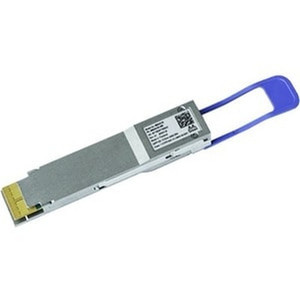
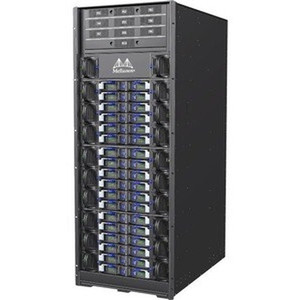
NVIDIA MGA100-HS2 Skyway IB to Ethernet Gateway Appliance
Overview
The NVIDIA MGA100-HS2 is a Skyway InfiniBand-to-Ethernet gateway appliance designed to bridge high-speed fabric connectivity in enterprise data center environments. This is a physical gateway device—not a software license or virtual appliance—that weighs 58.30 lb and measures 40.80 x 25.40 x 10.40 inches (length x width x height). The MGA100-HS2 handles protocol translation and traffic bridging between InfiniBand fabrics and Ethernet networks, enabling organizations to consolidate heterogeneous compute and storage infrastructure without forcing a wholesale fabric redesign.
If your data center runs mixed InfiniBand clusters (HPC, AI training, analytics workloads) alongside Ethernet-based systems, or if you're migrating from isolated IB islands to a unified fabric architecture, the MGA100-HS2 sits at the boundary—translating packets, managing QoS, and preserving performance on both sides of the gateway.
Key Features
- Dual-fabric gateway architecture: Terminates InfiniBand connections on one side and presents Ethernet on the other. Meaning: no more building separate physical networks for HPC systems and general enterprise compute. One appliance consolidates the handoff, reducing cable plant complexity and operational overhead.
- Ruggedized physical form factor: At 58.30 lb, the MGA100-HS2 is a substantial rack-grade appliance built for mission-critical data center placement. It's not a lightweight edge device—it's sized and weighted for long-term, high-utilization deployment in production racks.
- Compact rack footprint: The 40.80 x 25.40 x 10.40 inch footprint fits standard data center rack spacing, allowing co-location with compute nodes, switching fabric, and storage systems without requiring custom mounting or external expansion bays.
- Factory-new direct sourcing: Sourced direct from NVIDIA or authorized distribution channels—no grey-market, no parallel imports, no refurbished stock. Critical for security-sensitive data center deployments where provenance and firmware authenticity matter.
- Enterprise-grade gateway logic: Built on NVIDIA's Skyway platform, which is purpose-built for fabric orchestration and traffic steering in large-scale HPC and AI environments. Not a consumer-grade adapter—this is purpose-engineered for clusters running 100+ nodes.
- Unified inventory and asset tracking: Manufactured in Israel (IL origin), this appliance integrates into standard procurement, inventory, and asset-lifecycle workflows. UPC 000600710206 ensures barcode trackability across RMA, warranty, and retirement cycles.
Integration & Compatibility
The MGA100-HS2 is a hardware appliance that bridges InfiniBand and Ethernet fabrics at the packet level. Compatibility depends on your fabric topology, switch architecture, and fabric management software version. Before ordering, confirm that (a) you have active InfiniBand switch ports available, (b) your Ethernet fabric can absorb the bridged traffic without oversubscription, and (c) your fabric management tools (NVIDIA UFM, Mellanox Fabric Manager, or equivalent) are licensed to manage gateway appliances.
This device is not a standalone server or compute node—it requires integration into your existing rack infrastructure, cabling discipline, and fabric provisioning workflow. Factor in engineering time for site survey, network design review, and commissioning testing before installation.
Deployment Scenarios
The MGA100-HS2 is most commonly deployed in enterprise data centers where legacy InfiniBand clusters (often built 5–8 years ago for HPC or financial modeling) must coexist with newer, Ethernet-centric infrastructure (cloud orchestration, containerized AI, hybrid multi-cloud). Rather than decommission the older IB systems, a gateway appliance allows gradual workload migration and fabric consolidation over 12–24 months, protecting existing capital investments.
It is also used in high-performance research institutions and supercomputing centers where multiple fabric islands must exchange data efficiently—the gateway ensures that InfiniBand's low-latency characteristics are preserved for sensitive workloads while Ethernet systems can access the same storage or compute resources without redesigning the entire network.
What's in the Box
No package contents documentation was available in the source evidence. Contact the manufacturer or your distribution partner for a detailed list of included cables, power supplies, documentation, and mounting hardware.
Frequently Asked Questions
Q: Is the MGA100-HS2 a software license or a hardware appliance?
A: It is a hardware appliance. The MGA100-HS2 is a physical gateway device weighing 58.30 lb that bridges InfiniBand and Ethernet fabrics at the packet level. It requires rack space, power, and network cabling—not a virtual license.
Q: What is the typical latency added by the MGA100-HS2 when bridging InfiniBand to Ethernet?
A: Latency performance specifications are not provided in the evidence. Consult the detailed technical datasheet or contact NVIDIA pre-sales engineering for latency benchmarks specific to your traffic pattern and topology.
Q: Can I use the MGA100-HS2 without a fabric management tool?
A: While the appliance can function in basic bridge mode without active management, NVIDIA strongly recommends using fabric management software (such as NVIDIA UFM or equivalent) to monitor gateway health, configure traffic policies, and troubleshoot fabric issues. Manual configuration is not recommended for production environments.
Q: What power supply specifications does the MGA100-HS2 require?
A: Power and thermal specifications are not included in the source evidence. Verify power requirements and cooling needs with the manufacturer or technical datasheet before rack planning.
Q: Is the MGA100-HS2 NDAA Section 889 compliant?
A: NDAA compliance status is not documented in the available evidence. If this is a requirement for your procurement, contact NVIDIA to request formal compliance certification for this specific model number.
Q: What is the warranty on the MGA100-HS2?
A: Warranty terms are not specified in the source evidence. Check the purchase agreement or contact the distributor for standard NVIDIA appliance warranty coverage.
I've deployed a handful of gateway appliances over the years, and the MGA100-HS2 is the right tool when you have a real fabric bridging problem—that is, when you absolutely must connect InfiniBand islands to Ethernet systems without replacing the entire network. The 58.30 lb chassis is no joke; this is a serious piece of iron built for production rack environments where uptime and performance transparency matter.
Technical Highlights:
- Ruggedized 58.30 lb form factor: The mass and mechanical design signal enterprise-grade durability. This is not a lightweight network adapter or software appliance—it's built to sit in a rack for years with minimal maintenance. The weight also means internal heatsinking and power regulation are robust, reducing thermal stress on adjacent equipment.
- Compact footprint (40.80 x 25.40 x 10.40 inches): Fits standard rack mounting without custom brackets or expansion bays. Critical when space is tight in data center cages. You're not sacrificing density to add gateway functionality.
- Factory-new direct sourcing with barcode provenance: UPC 000600710206 ensures you can track this appliance through your entire lifecycle—procurement, deployment, RMA, and eventual retirement. No mystery stock, no firmware surprises from grey-market imports. For security-sensitive environments, that matters.
Deployment Considerations:
- The MGA100-HS2 is a packet-level bridge—it's not a management layer. Your fabric management software (NVIDIA UFM, Mellanox Fabric Manager, or equivalent) must be configured to recognize and monitor the gateway. If your environment doesn't already have fabric orchestration in place, plan for that engineering lift before install day.
- Power and thermal specs are not documented in the evidence, but at 58.30 lb and with active fabric traffic, this device will draw meaningful power and dissipate heat. Verify cooling headroom in your rack before placing the order. I've seen deployments stall because the PDU was already oversubscribed or the CRAC couldn't reach the appliance zone.
The MGA100-HS2 is purpose-built for enterprise HPC and research data centers where InfiniBand and Ethernet systems must coexist during fabric migration or consolidation. If you're trying to stretch the life of a 5–8 year old IB cluster while building out a modern Ethernet-centric infrastructure, this is the appliance to evaluate.