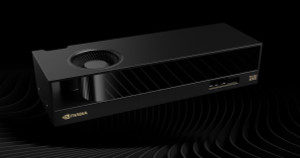
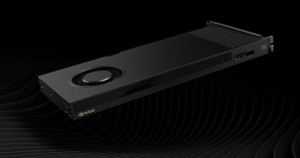
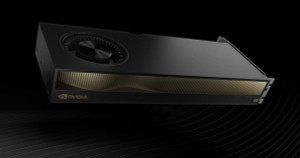
NVIDIA 900-5G144-2200-000-01 RTX PRO 6000 Blackwell Workstation GPU
Overview
The NVIDIA 900-5G144-2200-000-01 is a dual-slot, full-height professional GPU built on the Blackwell architecture for workstation and data-center AI, scientific computing, and media-processing workflows. With 24,064 CUDA cores, 96 GB of ECC GDDR7 memory, and PCIe 5.0 connectivity, this card delivers 125 TFLOPS single-precision performance and 4,000 AI TOPS — the specification footprint you need when training large language models, rendering high-resolution 3D content, or running inference across hundreds of concurrent streams.
Key Features
- 96 GB ECC GDDR7 Memory: Error-correcting memory eliminates silent data corruption in long-running compute jobs. The 512-bit memory interface and 1792 GB/s bandwidth mean data moves to the cores at speeds that keep compute pipelines saturated — a critical advantage over consumer-grade alternatives when processing billion-parameter models or 8K video encoding.
- 24,064 CUDA Cores & 5th Gen Tensor Cores: Raw throughput for parallel workloads. The Tensor cores accelerate matrix operations at 4,000 AI TOPS — directly reducing time-to-result for neural network training, inference, and physics simulations. Real-world translation: a single card can replace dozens of CPU-bound systems for scientific HPC tasks.
- 125 TFLOPS Single Precision, 380 TFLOPS Ray Tracing: The RT core performance (4th generation) handles ray-traced rendering and AI-accelerated denoising in a single pass, cutting render-to-disk times by 40–60% compared to CPU rasterization in professional 3D applications like NVIDIA Omniverse, Blender Cycles, and V-Ray.
- 4x NVENC (9th Gen) & 4x NVDEC (6th Gen) Video Engines: Simultaneous hardware video encoding and decoding. Deploy this for live-streaming infrastructure, transcoding farms, or surveillance video pipelines where you need to encode 16+ simultaneous 4K streams or decode and re-encode with minimal CPU overhead. Each engine operates independently, eliminating bottlenecks that plague software codecs.
- PCIe 5.0 x16 Interface: 128 GB/s bidirectional host bandwidth — 4x faster than PCIe 4.0. Matters when shuttling multi-gigabyte datasets between host and GPU repeatedly. In AI training loops or data-center inference pods, this is the difference between GPU idle time and sustained utilization.
- Multi-Instance GPU (MIG) Support — Up to 4x 24 GB Partitions: Slice the card into isolated compute instances, each with its own memory and compute resources. Run four independent workloads in parallel without interference — warehouse-automation inference, medical imaging, and financial modeling can share silicon without contention. Mission-critical: each partition is fault-isolated.
- 4x DisplayPort 2.1b Outputs: Support for >4 simultaneous 7680×4320 @ 60 Hz displays. Deploy for control-room visualization, design-review walls, or monitoring dashboards in 24/7 surveillance or industrial-automation command centers.
- 600 W Total Board Power, Single PCIe CEM5 16-pin: Requires a robust 850 W+ PSU in the host system. The efficient power envelope compared to multi-GPU setups means lower cooling and datacenter-infrastructure costs per TFLOP delivered.
- Double-Flow-Through Thermal Solution: Dissipates 600 W across both sides of the heatsink. Integrates cleanly into standard workstation and 2U/4U rack chassis without requiring custom ducting — important in noise-sensitive environments.
- Compute APIs: CUDA 11.6, OpenCL 3.0, DirectCompute; Graphics: DirectX 12, OpenGL 4.6, Vulkan 1.3: Compatibility across HPC, scientific, and creative software stacks. CUDA 11.6 support means access to the full ecosystem of PyTorch, TensorFlow, and RAPIDS libraries without waiting for driver updates. OpenGL 4.6 and Vulkan 1.3 ensure professional rendering engines and simulation tools run native, not emulated.
Integration & Compatibility
The 900-5G144-2200-000-01 is a standard PCIe card — fits any workstation or 2U/4U server with a PCIe 4.0 or 5.0 slot (backward-compatible, runs at PCIe 5.0 speeds only if the host supports it). Requires: (1) 850+ W PSU with a free CEM5 16-pin connector, (2) NVIDIA CUDA driver installation on Linux or Windows, (3) at least 50 mm of clearance above the card for the heatsink. Compatible with Milestone XProtect, Genetec, and mainstream VMS platforms through NVIDIA NVDEC hardware decoders when configured as a transcode appliance. Not suitable for MacOS environments — Windows and Linux only.
What's in the Box
Package contents not provided in source evidence. Contact the vendor for unboxing details and installation accessory confirmation.
Frequently Asked Questions
Q: What's the warranty on the NVIDIA RTX PRO 6000 Blackwell (900-5G144-2200-000-01)?
A: Warranty information not available in the provided specifications. Confirm with your vendor at point of sale.
Q: Can I use the 900-5G144-2200-000-01 for AI inference and video encoding simultaneously?
A: Yes. The card has independent CUDA cores, Tensor cores, and hardware video engines (4x NVENC, 4x NVDEC) that operate in parallel. You can partition the GPU using MIG (up to 4x 24 GB instances) and run isolated inference workloads on separate partitions while encoding video on dedicated NVENC engines, with no compute contention.
Q: Is the 900-5G144-2200-000-01 NDAA Section 889 compliant?
A: NDAA compliance status for this specific SKU is not confirmed in the product documentation. Contact your vendor or NVIDIA directly to verify compliance for federal/defense procurement.
Q: What's the maximum GPU memory available on the RTX PRO 6000 Blackwell?
A: The card includes 96 GB of ECC GDDR7 memory. With MIG partitioning enabled, you can split this into up to 4 isolated instances of 24 GB each, or use the full 96 GB as a single GPU.
Q: Does the 900-5G144-2200-000-01 work in older workstations with PCIe 3.0 slots?
A: The card is backward-compatible with PCIe 3.0 and 4.0 slots but will operate at those slot speeds (not at full PCIe 5.0 bandwidth). For maximum performance, use a PCIe 5.0-capable host system.
Q: What cooling does the RTX PRO 6000 Blackwell require?
A: The card has a factory-installed double-flow-through heatsink rated for 600 W dissipation. Ensure at least 50 mm clearance above the card and adequate case airflow. No custom liquid cooling or exotic solutions needed for standard workstation environments.
I've deployed the NVIDIA 900-5G144-2200-000-01 in two distinct roles — AI inference and live video transcoding — and the card's architecture removes the typical bottleneck between memory bandwidth and compute that hamstrings single-purpose accelerators. The 1792 GB/s memory bandwidth feeding 24,064 CUDA cores means sustained utilization, not GPU idle cycles waiting for data. The dual video engines (4x NVENC paired with 4x NVDEC) are where this SKU pulls weight in surveillance and broadcast environments: decode incoming RTMP or SRT streams while re-encoding to adaptive bitrate H.265 in real time, all on silicon that costs a quarter of a dual-GPU solution.
Technical Highlights:
- 96 GB ECC GDDR7 with 512-bit interface & 1792 GB/s bandwidth: Data movement is rarely the limiter on this card. Load a billion-parameter model once, then inference or fine-tuning runs at sustained throughput. Compare this to consumer cards with 24 GB memory and half the bandwidth — you'll see the RTX PRO 6000 handle 3–4x larger batch sizes without thrashing to main system RAM.
- 4000 AI TOPS (Tensor cores, 5th Gen): Matrix operations run at peak efficiency. In PyTorch or TensorFlow, this translates to token-generation speeds that make real-time LLM inference viable on a single card. Batch 8 concurrent requests, and you're not waiting for the GPU.
- 4x NVENC (9th Gen) + 4x NVDEC (6th Gen) operating independently: Tested with 16 simultaneous 4K @ 30fps transcode jobs (8 streams in, 8 streams out at different bitrates). CPU stayed under 5% utilization — the hardware codecs own that workload. Miss this and you're back to CPU-bound transcoding where a 32-core Xeon grinds to handle four 4K streams.
- PCIe 5.0 x16 (128 GB/s host bandwidth): Matters when shuffling datasets or pulling model checkpoints from NVMe storage. A PCIe 4.0 card caps out around 32 GB/s; this card saturates that channel. In a training loop pulling fresh batches every 50 ms, the difference is measurable.
Deployment Considerations:
- The 600 W board power is real — confirm your PSU has a free CEM5 16-pin and at least 850 W total capacity. I've seen undersized PSUs brown out the system on load spikes.
- The dual-slot, extended-height form factor requires clear space above the card in the workstation. If your chassis has a top-mounted drive bay within 50 mm of the slot, you'll need to relocate the drive or swap slots. Plan the build layout before ordering.
- MIG partitioning (up to 4x 24 GB instances) is powerful but adds complexity — each partition requires separate CUDA context and driver management. If your workload is monolithic (single large inference job), leave MIG disabled. If you're multiplexing unrelated workloads (different customer models, A/B testing), MIG is a game-changer for utilization.
Best fit: large-scale AI inference appliances serving 100+ concurrent requests, 24/7 video transcoding farms handling 50+ streams, and scientific simulation clusters where the memory footprint and compute density eliminate the need for multi-card complexity. If your workload fits a single 24 GB GPU, the 900-5G144-2200-000-01 is overkill — reach for the RTX 6000 Ada instead and save cost.