APC by Schneider Electric AR3350 42U NetShelter SX Free-Standing Rack Enclosure
Overview
The APC by Schneider Electric AR3350 is a 42U free-standing steel rack enclosure from the APC by Schneider Electric catalog, engineered for datacenter and server room deployments where structured cable management, predictable front-to-rear airflow, and long-term expandability matter. At 42U, it gives you a full rack column for dense equipment builds — switches, patch panels, servers, UPS units, and KVM infrastructure — without the compromises of a half-rack or open-frame solution. If you're fitting out a new datacenter row or consolidating an existing equipment room, the AR3350 is the enclosure to start from.
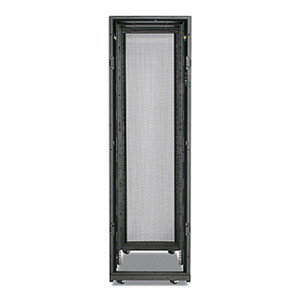
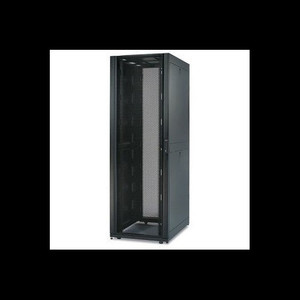
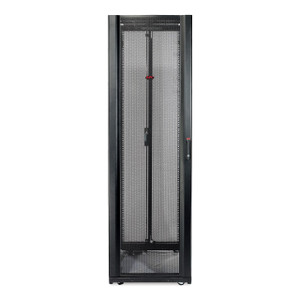
The enclosure ships in black powder-coated steel, with a perforated door on the front designed to support front-to-rear airflow — the dominant cooling architecture in structured server rack enclosures and datacenter rows. Perforations allow conditioned air to pass through without creating a dead-air pocket at the front of the equipment, which matters when you're stacking 1U and 2U servers that pull air from the front bezel.
Key Features
- 42U Capacity: A full 42U column accommodates everything from a 1U top-of-rack switch to a 4U UPS and still leaves room for a full complement of 1U servers. Sizing up from a 24U or 36U half-rack means you won't be pulling equipment and reorganizing in 18 months when density grows.
- 19-Inch Square-Punch Rail System: The 19" square-punched mounting rails are the datacenter standard — compatible with virtually every rackmountable server, network switch, KVM, patch panel, and PDU on the market. Square-punch accepts standard cage nuts, which means you're not locked into any proprietary fastener system.
- Free-Standing Chassis: No wall anchoring required. The AR3350 stands independently, making it deployable on raised floor, concrete slab, or standard tile without structural modifications. Repositioning during a room reconfiguration doesn't require a structural engineer.
- Perforated Front Door: The perforated door style directly supports front-to-rear airflow — the standard cooling path for equipment with front-intake fans. A solid door would restrict airflow and force your CRAC units to work harder; perforated keeps pressure drop low at the rack face.
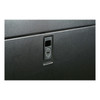
- Lever Handle Lock: The lever handle locking mechanism provides fast physical access for authorized personnel while keeping the enclosure secured against incidental contact. More ergonomic for repeated access than a key-only cam lock in high-touch environments.
- Steel Construction: All-steel construction gives the enclosure the structural rigidity to support fully-loaded rails — switches, dense 1U servers, and heavy UPS trays — without rack flex that can stress cable connections or shift equipment alignment over time.
- Front-to-Rear Airflow Design: The enclosure is designed around front-to-rear airflow, the architecture used by hot-aisle/cold-aisle containment layouts. If your datacenter uses blanking panels and aisle containment, the AR3350 fits the model correctly without requiring airflow workarounds.
- Black Finish: Standard datacenter black finish integrates cleanly into mixed-vendor row deployments and matches the visual standard of most network rack accessories and blanking panel kits.
Integration and Compatibility
The AR3350 is designed for datacenter environments and integrates with the broader APC NetShelter SX ecosystem — side panels, roof sections, aisle containment kits, cable management arms, and power distribution units are all available as add-on components. The 19" square-punch rail standard means any vendor's rackmount equipment installs without adapters. If you're building a structured row with rack PDUs and blanking panels, the NetShelter SX line has the accessory depth to match. For power distribution planning within the enclosure, review your UPS and PDU load requirements against the AR3350's rail capacity before finalizing your equipment layout.
Frequently Asked Questions
Q: What rail standard does the AR3350 use?
A: The AR3350 uses 19-inch square-punched rails, which accept standard cage nuts and are compatible with virtually all rackmount servers, switches, patch panels, and PDUs from any vendor.
Q: Is the AR3350 compatible with APC NetShelter SX side panels and containment accessories?
A: Yes, the AR3350 is part of the APC NetShelter SX family, which includes side panels, roof sections, aisle containment kits, and cable management accessories designed to integrate with this enclosure.
Q: Does the AR3350 require wall anchoring?
A: No. The AR3350 is a free-standing enclosure that does not require wall anchoring. It can be deployed on raised floor, concrete slab, or tile without structural modifications.
Q: What airflow direction does the AR3350 support?
A: The AR3350 is designed for front-to-rear airflow, which is the standard architecture used in hot-aisle/cold-aisle datacenter cooling layouts. The perforated front door supports unrestricted airflow from equipment front intakes.
Q: What is the enclosure height in rack units?
A: The AR3350 provides 42U of usable rack space, accommodating a full column of rackmount equipment including servers, switches, UPS units, and patch panels.
Q: What color and material is the AR3350?
A: The AR3350 is constructed from steel with a black powder-coat finish, the standard for datacenter rack deployments.
When a customer is standing up a new datacenter row and asks which enclosure to build around, the AR3350 is the answer I give without hesitation — the 42U height and 19-inch square-punch rail system cover the widest range of equipment combinations, and the NetShelter SX ecosystem means you can add side panels, blanking kits, and containment hardware from the same product family rather than cobbling together pieces from different vendors.
Technical Highlights:
- 42U Free-Standing Frame: A full 42U column eliminates the mid-term reorg problem — you're not pulling and restacking equipment in 18 months because you undersized the rack. Free-standing means no structural wall work required, which matters on raised-floor datacenters where anchor points aren't always available.
- Perforated Door + Front-to-Rear Airflow: The perforated front door is not cosmetic — it directly supports the airflow path that hot-aisle/cold-aisle containment depends on. Switching to a solid door in this layout forces cold air to route around the rack face rather than through it, which degrades your CRAC efficiency measurably.
- 19-Inch Square-Punch Rails: Square-punch with cage nuts is the universal standard. You won't be calling a vendor's support line to ask if their 1U switch fits — it does. This matters most in mixed-vendor builds where you're installing gear from three or four OEMs in the same column.
Deployment Considerations:
- Plan your PDU and cable management accessories from the NetShelter SX line before loading equipment — retrofitting vertical cable managers and side panels after the rack is populated is significantly harder than installing them during initial build-out.
- The AR3350's depth specification places it in the greater-than-3-foot-to-4-foot range, which is standard for most 1U and 2U servers but worth confirming against your deepest equipment (some hyperconverged nodes and blade chassis push past 36 inches with cable dressing).
The AR3350 is the right enclosure for a structured datacenter row deployment where hot-aisle/cold-aisle containment is in use and the equipment mix spans multiple vendors — the universal rail standard and NetShelter SX accessory ecosystem handle both requirements cleanly.