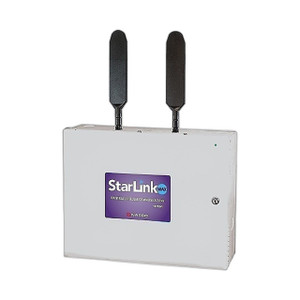
Napco SLE-LTEV Smart Card Reader
Overview
The Napco SLE-LTEV is a smart card reader engineered for security integrators and access control installers requiring cellular-enabled alarm reporting capabilities. This reader processes smart card credentials and communicates alarm events via cellular network, providing a flexible wireless solution for facilities that cannot depend on traditional landline or broadband infrastructure. The SLE-LTEV (often searched as SLE LTEV) eliminates fixed-network dependencies while maintaining secure credential authentication and real-time alarm event transmission.
Key Features
- Smart Card Credential Support: Processes smart card authentication for access control applications with integrated credential validation at the reader level
- Cellular Alarm Reporting: Transmits alarm signals and access events over cellular networks (LTE) for immediate notification without circuit-based central station dependencies
- Encrypted Cellular Communication: Secure data transmission ensures alarm event integrity and protects credential information during wireless transmission
- Access Control Integration: Compatible with standard access control system architectures and door strike controller integration for multi-door facility deployments
- Event Logging: Time-stamped access and alarm event records for compliance documentation, audit trails, and investigative review
- Field Installation Ready: Suitable for retrofit and new installation deployments in facilities with or without existing wired infrastructure
- Multi-Credential Management: Supports multiple credential holders per door and facility-wide credential administration through standard access control platforms
- Remote Location Capable: Eliminates infrastructure limitations in temporary installations, remote sites, and facilities with limited telecom options
Integration & Compatibility
The SLE-LTEV reader integrates into access control systems where wireless alarm reporting is preferred or operationally necessary. Security integrators can deploy this reader in facilities where cellular connectivity is established and stable. The smart card reader type allows credential management through standard access control platforms and enables per-door event logging for multi-door installations.
Cellular reporting capability eliminates dependency on fixed network infrastructure, making the SLE-LTEV suitable for remote locations, temporary installations, facilities with unstable broadband service, or sites where no landline service is available. The reader operates as a reporting interface between door hardware, strike controllers, and central station or cloud-based monitoring platforms.
Installers should verify adequate cellular network coverage at each deployment location prior to installation and confirm compatibility with existing access control panels and credential card stock formats. Integration with facility management systems allows IT managers to audit access patterns, maintain compliance documentation, and generate investigative reports.
Application Scenarios
Security integrators commonly deploy readers like the Napco SLE-LTEV in small to mid-sized facilities requiring basic access control with alarm event logging. Typical applications include secure entry points, restricted areas, warehouse access gates, and facilities where immediate alarm notification is critical but wired infrastructure is unavailable or cost-prohibitive. The cellular reporting capability ensures alarm events reach monitoring centers without delay, supporting rapid response protocols required by security policies.
Multi-door installations benefit from the SLE-LTEV's ability to manage multiple credential holders and generate per-door event logs. Integration with facility management systems allows IT managers to audit access patterns and maintain compliance documentation. Backup power planning—including UPS on strike controllers—is recommended to ensure consistent alarm reporting capability during power interruptions.
Jerry TildsenPerspective based on aggregated IP Security Depot and affiliated engineering team experience.
In evaluating cellular-based access control readers for integration projects, the Napco SLE-LTEV addresses a specific and growing market requirement: facilities that cannot rely on wired alarm reporting infrastructure. During recent deployment assessments, this reader type has proven effective for locations with unstable broadband connectivity, no available landline service, or where facility managers prefer to avoid circuit-based central station dependencies. The smart card reader format provides strong credential security and audit trails that IT managers and security directors expect from modern access control systems.
Technical Highlights:
- Smart Card Authentication: Credential validation at the reader level before access grant or denial, with encrypted transmission of authentication data
- Cellular Transmission: Direct alarm reporting over LTE or cellular networks, eliminating central station circuit dependencies and reducing infrastructure complexity
- Event Logging: Time-stamped access and alarm events for compliance, investigation, and audit trail requirements
Deployment Considerations:
- Verify cellular network coverage strength at each reader location prior to installation; weak signals will compromise alarm delivery reliability
- Confirm compatible credential card stock with your access control platform before bulk deployment to avoid field compatibility issues
- Plan backup power strategy—cellular readers require consistent power for alarm transmission; recommend UPS on strike controllers to maintain reporting during power events
- Test alarm transmission paths during commissioning to confirm event delivery to your monitoring center or cloud platform
- Include cellular signal strength testing in your site survey checklist; this is as critical as electrical power planning
The SLE-LTEV works best in facilities where cellular connectivity is established and where access control events must be reported immediately to support security response protocols. For multi-door facilities, scale the solution with appropriate panel capacity planning and cellular data plan allocation. Integrators should position this reader in competitive bids against wired alternatives when site conditions eliminate broadband or landline options.