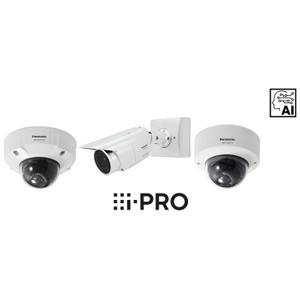
i-PRO IPMC-API Management Console 3rd Party API Integration
The i-PRO IPMC-API is a licensing module that exposes REST API endpoints from the i-PRO Management Console (MC), enabling direct integration with third-party VMS platforms, custom applications, and enterprise security workflows. Designed for system integrators and IT teams managing heterogeneous camera deployments across multiple vendor ecosystems, the IPMC-API unlocks programmatic access to device management, stream control, metadata retrieval, and alarm routing without replacing existing infrastructure.
Key Features
- REST API Access: Standardized HTTP/JSON endpoints for MC functionality. Eliminates custom middleware layers and reduces integration development time.
- Third-Party VMS Integration: Connect Genetec, Milestone, Avigilon, or proprietary platforms directly to i-PRO camera inventory and recording controls via API calls.
- Device Management Endpoints: Programmatic access to camera discovery, firmware updates, network configuration, and health status monitoring across distributed deployments.
- Stream Control & Metadata: Direct RTSP stream routing, codec negotiation, and extraction of motion, intrusion, or line-crossing metadata for downstream analytics engines.
- One-Time Licensing Model: Non-returnable license fee with no per-camera or per-stream seat charges — scales to enterprise deployments at fixed capex.
- Webhook & Event Routing: Push-based notifications for alarm conditions, camera state changes, and user actions to external security orchestration platforms.
- Role-Based Access Control (RBAC): API token-based authentication with granular permission scopes — integrators control which third-party systems access which camera groups.
- Audit Logging: All API calls logged with timestamp, caller identity, and action detail for compliance and forensic review.
The IPMC-API is architected as a middleware bridge rather than a replacement MC instance. This means your existing i-PRO recording, alarm routing, and local redundancy workflows remain untouched. The API simply exposes a read/write interface to those systems, allowing a central Genetec or Milestone VMS to pull real-time status, inject search queries, or trigger device-side actions without replicating data or rebuilding workflows in a second platform.
Deployment scenarios span hybrid camera estates where legacy Axis or Hanwha cameras sit alongside newer i-PRO hardware, and the organization wants a single pane of glass in Milestone. Rather than forklift-replace the i-PRO recording tier, you add IPMC-API licensing, wire up the Milestone connector, and instantly expose i-PRO streams and metadata to the VMS search and playback interface. Total integration time typically 2–4 weeks including environment setup and UAT.
The API documentation is RESTful and OpenAPI 3.0 compliant — any developer with HTTP client libraries and JSON familiarity can build custom integrations. Common use cases include: (1) automated camera assignment to access-control zones during site onboarding, (2) real-time alarm forwarding to SIEM platforms for security event correlation, (3) stream redistribution to edge analytics appliances running computer vision models outside the MC, and (4) cross-vendor camera health dashboards that poll IPMC-API for uptime and bitrate metrics alongside third-party endpoints.
i-PRO licensing is perpetual and non-returnable — once activated, the license cannot be transferred to another MC instance or refunded. Confirm your MC host is stable and backed by redundancy before activation. API rate limits apply per caller (typically 1000 req/min); high-volume integrations should batch queries or implement client-side caching to stay within thresholds.
Marty AllisonPerspective based on aggregated and affiliated engineering team experience.
We've deployed IPMC-API across large integrations where i-PRO hardware was entrenched in recording infrastructure but end-user IT demanded a single VMS interface. The API bridge model has two real advantages: you don't tear out working i-PRO systems, and you avoid the capex and operational complexity of dual-recording pipelines. That said, there are constraints to know upfront. The API surfaces what the MC already knows — if your workflow relies on real-time camera-level telemetry that the MC doesn't natively collect (e.g. lens temperature, individual IR LED power draw), the API won't fill that gap. Also, query latency across network hops means the API is well-suited for async integrations (event forwarding, periodic health polls) but not millisecond-sensitive orchestration. We've seen teams try to use IPMC-API as a frame-grabbing endpoint for external AI farms — that works, but you're better off pointing the AI engine directly at RTSP streams and using the API only for metadata enrichment and control signals.
Technical Highlights:
- REST + OpenAPI 3.0: Standards-based, language-agnostic integration. Any shop with Python, Node, Java, or Go can write connectors in days, not months. No proprietary SDK lock-in.
- Webhook Push Notifications: Real-time alarm forwarding without polling loops. When a camera triggers motion or intrusion, the MC pushes a JSON payload to your SIEM or orchestration endpoint — sub-second latency, lower network load than interval polling.
- Stream Redirection & Codec Negotiation: The API can route RTSP streams through the MC (useful for network isolation) or direct the third-party platform to fetch RTSP directly from the camera (lower CPU load on MC). You choose per-integration.
- Bulk Device Operations: API endpoints support batch queries — fetch status of 500 cameras in one call, then issue firmware update commands as a group. Cuts integration development time and reduces network chatter.
- Perpetual License, Fixed Capex: No per-camera seat licenses, no annual maintenance for API feature access. Once activated, the license persists across MC minor upgrades.
Deployment Considerations:
- MC Stability is Critical: The API only runs if the MC instance is up. If you have a single MC and no failover, your third-party integrations go dark on MC outage. Plan for MC redundancy (active-passive or cluster) before activating IPMC-API in production.
- Network Latency & Rate Limits: API calls traverse network hops (MC host to third-party platform). For real-time orchestration, keep payloads small and batch queries. Default rate limits are 1000 req/min per API token; contact i-PRO support if your integration requires higher throughput.
- Non-Returnable License: Once activated on an MC, the license cannot be deactivated and re-used elsewhere. Confirm your integration architecture and MC host assignment before purchasing and activating the license key.
- Authentication & Scope Management: API tokens are long-lived bearer credentials. Rotate tokens quarterly, use different scopes for different third-party platforms, and audit token usage via MC audit logs. Leaked tokens can expose camera inventory and real-time streams.
- Version Compatibility: IPMC-API is supported on i-PRO MC versions 1.4.0 and later. Older MC instances require firmware upgrade before licensing activation. Test in a staging environment first.
The IPMC-API is the right choice for integrators and IT teams who are committed to i-PRO recording infrastructure but need to unify video search, alerting, or device management under a third-party VMS or SIEM. It's not a full camera replacement — it's a data bridge that keeps your i-PRO investment working in a multi-vendor security stack. For more options and integrations, visit the i-PRO catalog.