Panduit MT172W38-M Stainless Steel Marker Tag with One Hole, 1000-Piece Pack
Overview
The Panduit MT172W38-M is a 1.72" × 0.38" rectangular stainless steel marker tag designed for permanent, machine-printable identification in demanding industrial and infrastructure environments. Built from Type 304 stainless steel, these marker plates pair directly with Panduit's MLT-S cable tie system, MIM marker insertion modules, and PES400 printing equipment — giving structured cabling teams and security infrastructure installers a durable, compliant labeling solution that won't degrade under heat, moisture, or chemical exposure the way vinyl or polyester labels will. Each carton contains 1,000 pieces, with case quantities of 4,000 for high-volume cable plant deployments. If you're specifying permanent identification for a data center cable run, a surveillance camera backbone, or an industrial control panel, MT172W38-M (often searched as MT172W38 M) is the Panduit part to specify.
Key Features
- Type 304 Stainless Steel Construction: 304-grade stainless resists corrosion from humidity, industrial solvents, and cleaning agents far better than aluminum or coated-steel alternatives. In mechanical rooms, outdoor cable trays, and plenum spaces where labels are expected to last the life of the installation, this material choice eliminates re-labeling cycles that cost more than the original tags.
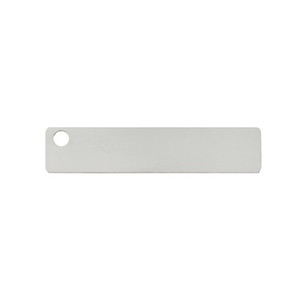
- 1.72" × 0.38" Rectangle Profile: At 1.72 inches long and 0.38 inches (9.7mm) wide, these tags are sized for single-line machine-printed text at a legible font size on standard cable and wire bundles. The narrow profile fits cleanly through the MLT-S lock slot without adding bulk to dense cable runs.
- Single Mounting Hole: The one-hole design accommodates the MLT-S cable tie insertion method — slide the tag into the tie head, cinch, done. No secondary fastener, no adhesive, no guesswork about mounting orientation. This is the correct choice when you need the label to rotate with the bundle for read access without the tag sliding free.
- Machine-Compatible with PES400 and MIM: Compatibility with Panduit's PES400 label printer and MIM marker insertion module means you can batch-print sequential identifiers, IP addresses, circuit IDs, or port designations directly on the metal surface rather than relying on hand-stamping or thermal transfer overlaminates. Consistent print quality across 1,000 tags is the real operational benefit here.
- RoHS Compliant: Compliance with the Restriction of Hazardous Substances directive matters for any installation touching EU-regulated infrastructure or government facilities with environmental materials requirements. The MT172W38-M meets that bar without any special procurement exception.
- 1,000-Piece Package Quantity: A 1,000-piece carton is sized for mid-scale cable plant projects — a typical 300-port IDF or a surveillance system with 150+ cameras plus patch panel labeling. Carton quantity of 4,000 supports full campus or multi-floor deployments without repeated ordering.
- Silver Finish: The natural stainless silver finish provides contrast with dark cable jackets and keeps the label surface reflective enough for barcode scanners to read machine-printed codes under ambient lighting — no additional coating or treatment required.
Integration and Compatibility
The MT172W38-M is explicitly designed for use with Panduit's MLT-S locking cable ties, which accept the marker plate through the tie head before the tie is cinched around the cable bundle. It is also compatible with the MIM marker insertion module and the PES400 printing system, enabling automated batch label production in high-volume cable plant environments. When building out a structured cabling identification scheme — whether for a network infrastructure project, a physical security backbone, or an access control wiring installation — verify that your Panduit cable tie stock is specifically the MLT-S family, as standard locking ties without the marker slot will not accept this tag. For broader labeling system planning, the full Panduit identification and connectivity catalog includes complementary marker plates in different sizes and materials. Integrators sourcing identification hardware for IP camera cabling deployments or structured wiring projects will find that specifying the complete Panduit tie-and-tag system at the design phase simplifies procurement and ensures field crews aren't improvising label attachment in the rack. For guidance on cable plant documentation standards relevant to security installations, consult a security system design guide appropriate to your project scope.
What's in the Box
- 1,000x Panduit MT172W38-M stainless steel marker tags (1.72" × 0.38", one hole, Type 304 SS)
Frequently Asked Questions
Q: What cable tie system is the MT172W38-M designed to work with?
A: The MT172W38-M is designed for use with Panduit MLT-S locking cable ties, which feature a marker slot that accepts the tag through the tie head. It is also compatible with the MIM marker insertion module and PES400 printing equipment.
Q: Is the MT172W38-M RoHS compliant?
A: Yes. The MT172W38-M meets RoHS (Restriction of Hazardous Substances) compliance requirements, making it suitable for use in EU-regulated facilities and government installations with environmental materials requirements.
Q: What material is the MT172W38-M made from, and why does it matter?
A: The tags are made from Type 304 stainless steel. This grade resists corrosion from humidity, industrial cleaning agents, and solvents — suitable for mechanical rooms, outdoor cable trays, and other environments where vinyl or polyester labels would degrade over time.
Q: How many tags are included per package?
A: Each package contains 1,000 tags. The full carton quantity is 4,000 pieces, which covers larger campus or multi-floor cable plant deployments.
Q: What are the exact dimensions of each tag?
A: Each tag measures 1.72 inches (length) by 0.38 inches / 9.7mm (width), rectangular profile with one mounting hole.
Q: Can the MT172W38-M be printed on with standard label printers?
A: The MT172W38-M is designed for machine printing with the Panduit PES400 system and MIM module. Standard desktop thermal label printers are not compatible — you need the Panduit-specific printing equipment to produce machine-quality output on the stainless surface.
The MT172W38-M gets specified on projects where labeling is an afterthought right up until the first audit — then it becomes the thing everyone wishes they'd done right. The key spec here is the Type 304 stainless construction at a 1.72" × 0.38" form factor: that combination gives you a tag that survives the installation environment AND fits cleanly through the MLT-S head without requiring a separate attachment step in the field.
Technical Highlights:
- Type 304 Stainless, 1.72" × 0.38": Long enough to carry a readable circuit ID or IP address at machine-print sizes; narrow enough at 9.7mm to sit flush on 1/4" cable bundles without catching on adjacent runs in a dense tray.
- MLT-S / MIM / PES400 Compatibility: These three call-outs mean the tag is part of a closed Panduit labeling ecosystem — the tie holds it mechanically, the MIM feeds it into the printer correctly, and the PES400 prints a consistent impression. Mix in a third-party tie and the tag can rotate or pull through under vibration.
- 1,000-Piece Pack, 4,000-Piece Carton: At 1,000 per pack you're covering a mid-size IDF or roughly 150 camera drops with perimeter, distribution, and patch panel labels combined. The 4,000-piece carton quantity is the right procurement unit for a campus rollout — order by carton, not by pack, and avoid mid-project restocking delays.
Deployment Considerations:
- Confirm your cable tie stock is specifically MLT-S before pulling these. Standard Panduit locking ties without the marker slot won't accept the tag — a mismatch that shows up at the rack, not at the supply house.
- The PES400 is required for machine printing on the stainless surface. If your team is hand-stamping or using a generic thermal printer, you won't get the print adhesion or legibility the tag is designed to deliver — budget for the compatible printer or coordinate with a firm that already has one in their kit.
This tag is the right call for permanent cable identification in mechanical rooms, outdoor cable trays, and security infrastructure head-ends where a label needs to outlast the installation without a re-labeling budget baked in. Specify it at design phase so the MLT-S ties and PES400 printer are already on the BOM when the crew shows up.