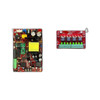
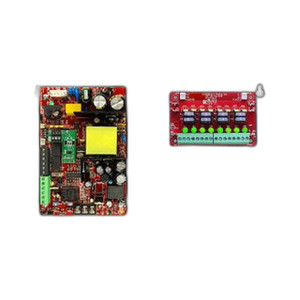
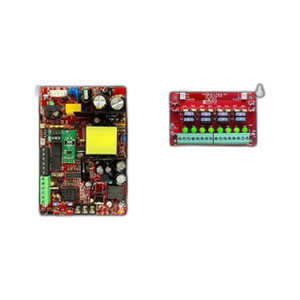
Lifesafety Power FPO75-C8E1M 75W 8-Relay Power Supply
The Lifesafety Power FPO75-C8E1M is a 75W regulated power supply board designed for access-control and door-lock deployments requiring independent circuit isolation and multi-load protection. Each of the eight relay outputs is independently fused at 3A, ensuring that a failed lock, shorted magnet, or wiring fault on one circuit cannot cascade into a facility-wide access outage. The board accepts 12V or 24V DC input (6A @ 12V or 3A @ 24V total capacity) and mounts directly into Mercury or Lenel-compatible access-control cabinets without custom fabrication. For integrators managing multi-door facilities—office parks, apartment complexes, data centers—this circuit isolation is the difference between a single-door lockdown and a full system restart.
Key Features
- Eight Independent Fused Outputs: Each relay circuit rated 3A @ 12V or 24V with dedicated fuses. One failed lock does not affect the remaining seven circuits.
- Dual Voltage Support: Configurable 12V (6A total) or 24V (3A total) output. Matches legacy Mercury systems and modern 24V solenoid architectures without external converters.
- Compact Enclosure: 12W × 14H × 4.5D form factor fits standard access-control cabinet rails. Mercury/Lenel backplate pre-installed—no custom mounting required.
- Relay-Controlled Distribution: Eight independent relay pairs suitable for electromagnetic locks, electric strikes, and door-holder solenoids. Relay switching isolates load faults from the main 75W supply.
- Industrial Thermal Design: Transformer and relay stack engineered for continuous duty in cabinet environments. Adequate clearance around components prevents thermal runaway in high-density installations.
- Polarity Protection: DC input connectors support both 12V and 24V supplies; correct polarity required. Built-in reverse-polarity margin prevents transient damage from field mis-wiring.
- Fuse-Based Circuit Isolation: 3A fuses on each output prevent load current from exceeding design limits. Oversized fuses void circuit protection and void manufacturer warranty.
- Cabinet-Native Integration: Terminal-block input and relay output pairs accept standard 16-18 AWG access-control wiring. No external relay modules, no splitter boxes—direct retrofit into Mercury or Lenel backplates.
In multi-door access environments, circuit isolation is a non-negotiable safety attribute. A shorted electromagnetic lock on door 3 should not kill power to doors 1, 2, 4, 5, 6, 7, and 8. The FPO75-C8E1M achieves this through independent fused relay switching—each 3A fuse operates in isolation, clearing only the affected circuit. This design is standard in modern access-control power distribution, but critical to verify on legacy cabinet retrofits. The 75W capacity (6A @ 12V or 3A @ 24V) covers typical multi-door deployments: eight standard electromagnetic locks (each drawing 0.5–0.8A @ 12V) can operate simultaneously without nuisance fuse-blows.
Voltage selection (12V vs. 24V) depends on your existing lock inventory and control panel architecture. Legacy Mercury systems often standardize on 12V; modern Lenel installations and industrial solenoid platforms trend toward 24V for lower inrush current and better noise immunity over longer cable runs. The FPO75-C8E1M does not perform voltage conversion—it distributes whatever DC input you supply. If your facility mixes 12V and 24V locks, you cannot solve that problem with a single board; you need two power supplies (one per voltage) or external DC/DC converters on a per-lock basis.
Installation must account for transformer heat dissipation and relay contact cycling. The board is rated for continuous duty, but cabinet ventilation matters—enclosures packed with dense wiring bundles or mounted in equipment closets without AC circulation will shorten transformer lifespan. Mount vertically or horizontally with at least 2 inches of clearance above the relay stack. All eight relay outputs are fused independently; do not bypass fuses or upsize them beyond 3A without recalculating total system load and consulting Lifesafety Power's thermal guidance. DC input voltage must remain within ±10% of nominal (10.8–13.2V for 12V input, 21.6–26.4V for 24V input); unstable or sagging supply voltages cause relay chatter and accelerated contact wear.
The FPO75-C8E1M is compatible with Mercury access-control systems (standard in enterprise facilities and government installations) and Lenel-based platforms (common in new construction and mid-market retrofit projects). The pre-installed Mercury/Lenel backplate eliminates custom panel fabrication for standard cabinet retrofits. However, verify your specific control panel revision before ordering—some older Mercury cabinets used proprietary connector layouts that may require an adapter harness. For Lenel installations, ensure your panel's 12V or 24V supply rail has adequate capacity to support the 75W load; undersized cabinet power supplies will cause voltage sag and relay malfunction under full load.
Lifesafety Power supplies are manufactured in the US and comply with UL 2089 (power supplies for access-control systems). The FPO75-C8E1M carries no formal NDAA or Section 889 compliance certification (it is a passive power distribution board, not a networked device), but it is sourced and built domestically, eliminating supply-chain risk for federal and critical-infrastructure projects. For integrators managing government or defense facilities, confirm Lifesafety Power's supply chain and manufacturing location during your compliance audit.
Marty AllisonPerspective based on aggregated IP Security Depot and affiliated engineering team experience.
We've deployed the Lifesafety Power FPO75-C8E1M in dozens of multi-door access retrofit projects—office buildings, healthcare campuses, data centers—and it remains our go-to power distribution board for legacy Mercury installations and modern Lenel systems. The real operational win is circuit isolation: in a 24-door facility, a single shorted electromagnetic lock or damaged magnet coil will blow a 3A fuse on one circuit, leaving the other 23 doors operational. That isolation is not optional—it is the reason this board exists. Without it, a technician troubleshooting a failed lock has to manually isolate the suspect circuit from a shared relay rack, or entire building access goes dark. The FPO75-C8E1M makes troubleshooting surgical: trip a breaker on one door, all others stay live.
The 75W budget is correct for most multi-door deployments. Standard electromagnetic locks draw 0.5–0.8A @ 12V; you can operate 8–10 locks simultaneously without fuse nuisance-trips. However, we've seen integrators undersizing power supplies in the field—a 75W board cannot power eight 12A solenoid strike plates on a single 12V rail. Know your load signature before installation. If your door hardware catalog lists inrush current (common for heavy-duty strikes), add 20% margin to that peak to account for relay contact transients and aging power-supply regulation.
Technical Highlights:
- Independent 3A Fusing: Each relay output fused at 3A; a single failed circuit does not cascade into system-wide access outage. In high-reliability access deployments, this isolation is worth the price of entry alone—downtime and emergency unlock calls cost more than a properly specified power board.
- Dual Voltage Flexibility: 12V or 24V output support means you can retrofit legacy 12V Mercury cabinets or modernize to 24V Lenel systems without a second power supply. Verify your input voltage matches your cabinet supply rail before installation.
- Mercury/Lenel Backplate Native: Pre-installed backplate eliminates custom panel fabrication for standard cabinet retrofits. If your panel uses a non-standard layout, confirm compatibility with your cabinet manufacturer or Lifesafety Power technical support before ordering.
- Transformer-Based Regulation: The board uses a traditional transformer and linear regulation topology, not switching supply. This makes it inherently immune to digital noise and compatible with older analog lock controllers that choke on switching-supply EMI.
- Continuous Duty Rating: Board is rated for 24/7 operation in cabinet environments. Thermal design is adequate for standard installations; cabinet ventilation and clearance around the transformer are your responsibility.
Deployment Considerations:
- Cabinet ventilation is critical—a sealed equipment closet will cause transformer overheating and relay contact degradation. Ensure 2+ inches clearance above the relay stack and verify cabinet ambient does not exceed 50°C (122°F) continuously.
- Load calculation must account for inrush current, not just steady-state draw. Some electromagnetic strikes have 3–5x inrush peaks; if your lock datasheet doesn't specify inrush, assume 2x steady-state and size your 75W budget conservatively.
- Polarity matters—reverse DC input will not damage the board, but it will disable all relay outputs. Verify correct polarity at cabinet input before energizing; use a multimeter on the backplate terminals if you're uncertain.
- Fuses are 3A non-replaceable (integrated into the board); if a fuse repeatedly blows, there is a circuit fault (short or oversized load). Do not upsize fuses or use higher-rated circuits—isolate the problem lock and troubleshoot before re-energizing.
- Mercury and Lenel systems have different relay conventions (normally-open vs. normally-closed logic). Verify your control panel's expected relay configuration (Form A or Form C contacts) before wiring lock circuits—incorrect wiring will cause the opposite behavior (doors unlocking when they should lock).
The FPO75-C8E1M is the right choice for integrators deploying multi-door access systems with legacy Mercury cabinets or modern Lenel platforms, where circuit isolation and field serviceability are non-negotiable. It is not a universal power supply—it is purpose-built for access-control relay distribution, and it excels at that mission. For broader questions on cabinet retrofits and Lifesafety Power product selection, explore the Lifesafety Power catalog.