Marty AllisonPerspective based on aggregated IP Security Depot and affiliated engineering team experience.
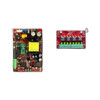
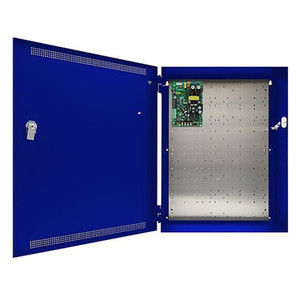
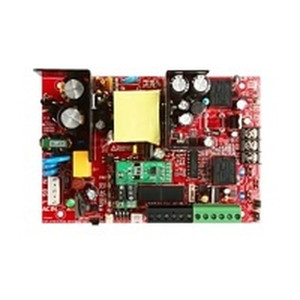
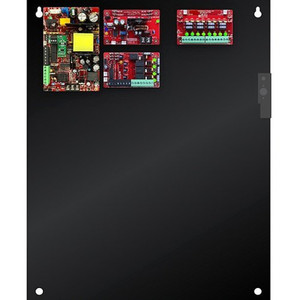
The Lifesafety Power FPO75/75-2C82D8E4 is one of the most frequently underestimated components in mid-scale access control deployments. On paper, it's just a power supply with fused outputs—but in the field, we've seen it eliminate entire categories of troubleshooting headaches. The per-output 3A fusing is the critical differentiator. On systems using shared power buses or external relay modules, a single shorted lock or a mis-wired request-to-exit button can cascade into a facility-wide access failure; the FPO75's architecture prevents that. Each of the 16 relay outputs operates in its own fused circuit, and each of the 16 auxiliary outputs is similarly isolated. A door tech shorts a mag-lock? That door loses power, not your entire building. In a hospital, retail, or office environment where continuous access is non-negotiable, that isolation justifies the entire unit cost in the first week of deployment.
The dual-voltage capability (12V/24V selectable) reflects real-world installer preference drift. Electromagnetic locks still dominate the 12V ecosystem, but solenoid strikes and panel-based locking mechanisms are moving to 24V for efficiency and easier integration with modern card readers. Carrying a single supply that bridges both standards eliminates the warehouse inventory problem: instead of stocking FPO50-12V and FPO50-24V variants, you stock the FPO75 and set the output voltage at commissioning. For a multi-building campus or a retrofit where door hardware varies by age, that flexibility compounds across dozens of installations.
The configurable failsafe/failsecure logic per output is not a marketing gimmick—it's operationally critical. In a high-security building, you might want mag-locks to default to locked (failsecure: de-energize to lock) and emergency-exit routes to default to unlocked (failsafe: de-energize to unlock). The FPO75 lets you set that policy per door without firmware changes or a site visit from the access control vendor. We've deployed this in healthcare facilities where nursing stations require fail-secure behavior and patient rooms require failsafe egress, all on the same power supply.
Technical Highlights:
- Per-Output 3A Fusing: 32 independent circuits (16 relay + 16 auxiliary) each protected by a dedicated fuse. A single overload or short circuit is contained to one output, preserving the other 31—essential for systems where even 30 seconds of widespread power loss triggers evacuation protocols or business disruption.
- Failsafe/Failsecure Selectability: Output-level logic configuration (not firmware-driven) means integrators can change unlock behavior in the field without contacting the host panel vendor. On a retrofit or expansion, this eliminates days of coordination and testing.
- Dual-Voltage Output (12V/24V): Single SKU covers both legacy electromagnetic-lock installations and modern solenoid-based architectures. Reduces inventory SKU count and procurement lead times on large campus rollouts.
- Bus1/Bus2 Auxiliary Routing: 16 DC auxiliary outputs can be segmented into two independent buses, enabling zone-level power loss scenarios (e.g., losing all auxiliary power to Building A while maintaining Building B). Useful for phased evacuations or floor-by-floor maintenance windows.
- Compact E4 Enclosure: 24H × 20W × 4.5D footprint fits standard electrical cabinet depths without requiring custom bracket or DIN-rail gymnastics. Reduces installation labor on retrofit projects in tight mechanical closets.
Deployment Considerations:
- The FPO75 does not include onboard battery backup. It must be powered from a dedicated access control UPS or primary facility power. If the site requires uninterrupted lock control during power loss, spec a 24VDC battery backup system rated for the total auxiliary load (typically 50-100W), and configure failsafe/failsecure logic to match your egress requirement. Do not rely on the supply alone to protect against power loss.
- Fuse replacement requires de-energizing the enclosure; many sites lack spares on-hand. Stock a minimum of 8-10 3A fuses on the premises, and label the fuse panel clearly so field staff can identify the failed output without trial-and-error. Consider a preventive maintenance cycle that inspects fuse condition quarterly on high-traffic facilities.
- The 16-output architecture maps well to 8-door buildings (one relay + one auxiliary per door). If your deployment exceeds 12 doors on a single FPO75, you risk saturation and reduced headroom for future expansion. Daisy-chain two units on larger campuses or multi-building sites rather than forcing all circuits into a single supply.
- Failsafe/failsecure logic must be documented and tested during commissioning. We've seen installations where the integrator set one door to failsafe and the building manager expected failsecure; a power loss exposed the mismatch during evacuation drills. Require signed-off documentation from the site that explicitly lists the unlock behavior for each door.
- The Bus1/Bus2 auxiliary split is powerful for zone-based segmentation, but it requires careful planning on the host panel side. Some access control systems do not expose per-output Bus assignment in the UI; verify with your panel vendor that auxiliary routing is configurable before installation.
The FPO75/75-2C82D8E4 is the right choice for integrators deploying mid-scale access control systems (8-16 doors) on mixed-voltage hardware, or where circuit isolation and failsafe flexibility are non-negotiable. Campus security teams and facility managers appreciate the granular per-door control and the reduced operational overhead. For larger installations or fully-redundant mission-critical access, pair this unit with an external monitoring/distribution module and a dedicated battery backup rack. Explore the full Lifesafety Power catalog for complementary UPS and distribution options.