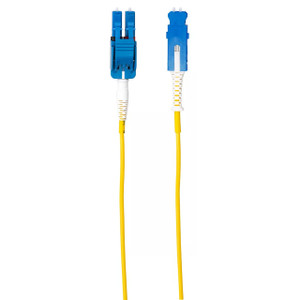
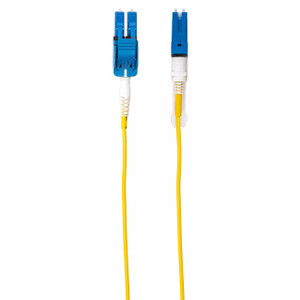
Hubbell DFPCCSLCS1SM CS-LC OM2 Duplex Plenum Fiber Patch Cord
Overview
The Hubbell DFPCCSLCS1SM is a 1-meter OM2 multimode duplex fiber optic patch cord built for structured cabling environments where plenum-rated materials are required by code. It connects CS-connector equipment on one end to LC-connector ports on the other — a combination that comes up in dense fiber panel builds where chassis use CS-style small-form-factor connectors but downstream gear terminates in standard LC. If you are populating a fiber optic cable run inside a building's air-handling plenum space, this cord's jacket rating keeps you on the right side of NFPA 70 (NEC) without an additional conduit run.
The OM2 multimode fiber core supports 1 Gigabit Ethernet at distances appropriate for intra-building links and legacy multimode plant. At 1 meter, this is a patch bay or equipment-room cord — sized for rack-to-rack or panel-to-switch connections within a structured cabling cabinet or IDF closet, not a long horizontal run.
Key Features
- Plenum (CMP) Jacket Rating: Meets the smoke and flame requirements for cables routed through air-handling spaces under NEC Article 800 — eliminates the need for conduit in plenum ceilings or raised-floor plenums, which directly reduces installation labor cost and keeps inspections clean.
- CS-to-LC Duplex Connector Pair: CS connectors deliver a smaller footprint than LC in high-density panels, letting you pack more fiber ports per rack unit. The LC end mates with the overwhelming majority of active switch and transceiver ports in the market, so this cord bridges high-density chassis to standard gear without an adapter in the signal path.
- OM2 Multimode Fiber (50/125 µm): Rated for 1GbE at up to 550 meters and 10GbE at up to 82 meters on 850nm VCSELs. At 1 meter, the link budget is essentially unlimited — OM2 is entirely appropriate for short equipment-room jumpers where you are not pushing distance limits, and it is backward compatible with OM1 infrastructure in older installations.
- Duplex Configuration: Carries simultaneous transmit and receive on separate fibers in a single jacket — required for full-duplex operation on standard SFP, SFP+ and LC-based transceiver ports. No adapter or separate second cord needed.
- 1-Meter Length: Purpose-sized for same-rack or adjacent-rack patching. A 1-meter cord keeps cable management tidy in a cabinet environment; longer cords in short-reach applications create excess slack that obstructs airflow and complicates troubleshooting.
- Yellow Jacket: Industry color convention associates yellow with single-mode fiber, but in this product the yellow jacket identifies the specific variant within Hubbell's LGX Max lineup — verify the OM2 designation (not OS1/OS2) before installing. Color coding aids rapid visual identification during moves, adds, and changes in dense patch environments.
Integration and Compatibility
The DFPCCSLCS1SM fits into any structured cabling backbone or horizontal distribution layer using LGX Max-series fiber optic patch panels and cassettes. The LC end terminates into standard SFP/SFP+ transceivers, network switches, media converters, or LC-port fiber panels without adapters. Verify that your chassis or cassette accepts CS-style connectors before ordering — CS is not mechanically interchangeable with LC, SC, or ST. This cord is suited for structured cabling deployments in commercial office, data center, and IDF/MDF closet environments where plenum routing is required. Review your fiber optic cable selection guide if you are choosing between OM2, OM3, and OM4 for a new installation — OM3 or OM4 is the better long-term investment if your switches already support or will support 10GbE or 40GbE over multimode.
Frequently Asked Questions
Q: What connector types are on the DFPCCSLCS1SM?
A: One end uses a CS connector (small-form-factor, high-density); the other end uses a standard LC connector. The cord is duplex, so each end carries two fibers for full-duplex operation.
Q: Is this cord rated for plenum installation?
A: Yes. The DFPCCSLCS1SM carries a plenum (CMP) jacket rating, making it compliant for routing through air-handling plenum spaces per NEC requirements — no conduit required in those areas.
Q: What fiber type is used — OM2, OM3, or OM4?
A: This cord uses OM2 multimode fiber (50/125 µm). OM2 supports 1GbE at up to 550 meters and 10GbE at up to 82 meters on 850nm transceivers. At 1 meter it is more than adequate, though OM3 or OM4 is recommended for new installations targeting 10GbE or higher sustained throughput at longer distances.
Q: Can I use the LC end with a standard SFP or SFP+ transceiver?
A: Yes. LC is the industry-standard connector for SFP, SFP+, and most modern fiber switch ports. The LC end of this cord connects directly without an adapter.
Q: Is the CS connector compatible with LC ports?
A: No. CS and LC are not mechanically interchangeable. The CS end requires a CS-compatible panel, cassette, or chassis port. Confirm your panel or chassis accepts CS connectors before ordering this cord.
The detail that matters most on the DFPCCSLCS1SM is the CS connector — not the fiber grade or the length. CS is a push-pull small-form-factor connector that lets you fit roughly twice the port density of standard LC in the same panel face. If you are building out an LGX Max chassis with CS cassettes, this cord is the correct jumper to bridge those ports to LC-terminated active equipment. The 1-meter length is the right call for same-cabinet or adjacent-cabinet patching, and the plenum jacket means you can route it overhead without conduit in air-handling spaces.
Technical Highlights:
- CS-to-LC Bridge: Connects high-density CS chassis ports directly to standard LC switch or transceiver ports — no adapter in the path, which eliminates an insertion loss variable and a physical failure point.
- CMP Plenum Jacket: NEC-compliant for air-handling plenum routing, removing the conduit requirement in those spaces and cutting installation time meaningfully on multi-run builds.
- OM2 Multimode Core: At 1 meter, link budget is a non-issue regardless of whether you are running 1GbE or 10GbE — the entire distance overhead is available for the actual cable plant feeding these panels.
Deployment Considerations:
- CS connectors are not cross-compatible with LC ports — double-check that your cassette or chassis explicitly calls out CS before pulling this cord into a build. Mixing up the two on a dense panel wastes a service call.
- OM2 is a legacy-friendly choice for existing multimode plant, but if you are building new infrastructure and your switches already support or will support 10GbE at distances beyond 80 meters, spec OM3 or OM4 instead — the per-cord cost delta is small and you preserve headroom.
This cord is the right fit for structured cabling integrators populating Hubbell LGX Max fiber panels in IDF/MDF closets where CS-to-LC bridging is required and plenum routing is mandated by the building design — a specific, common scenario in commercial office and campus network builds.