Lenovo 7XC7A05524 ConnectX-4 FDR Single-Port QSFP VPI PCIe Adapter
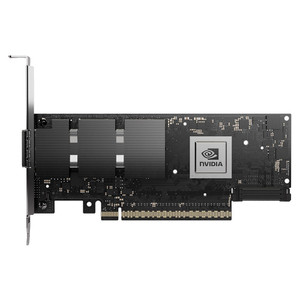
The Lenovo 7XC7A05524 is a single-port ConnectX-4 PCIe adapter delivering FDR (56Gb/s) InfiniBand and Ethernet connectivity through a QSFP interface with Virtual Protocol Interconnect (VPI) — the combination that lets the same physical card operate as either a high-speed InfiniBand HCA or a 56GbE NIC depending on what your fabric demands. For HPC clusters, AI/ML training nodes, or high-density storage back-ends where inter-node latency and bandwidth are the constraint, this is the correct class of adapter to evaluate.
Key Features
- FDR InfiniBand at 56Gb/s: FDR (Fourteen Data Rate) delivers 56 Gb/s per port — roughly four times the throughput of standard 10GbE links. On MPI-heavy HPC workloads or NVMe-oF storage fabrics, that bandwidth headroom keeps compute nodes from stalling on inter-node messaging. A single port at this speed typically saturates what most dual-socket servers can push through a PCIe slot.
- VPI (Virtual Protocol Interconnect): VPI lets you run the same adapter as either InfiniBand or Ethernet — configurable at the firmware level without a hardware swap. This is practically useful when a cluster transitions from an IB fabric to a converged RoCE (RDMA over Converged Ethernet) deployment: the adapter survives the migration, protecting the capital investment.
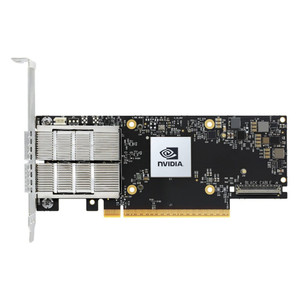
- QSFP Interface: The QSFP connector supports direct-attach copper (DAC) cables for short in-rack runs, as well as active optical cables (AOC) and transceiver modules for longer inter-rack distances. Connector flexibility matters in dense data center environments where cabling options vary rack to rack.
- PCIe Host Interface: The PCIe bus connection integrates directly into the server motherboard — no external power brick, no separate chassis. For Lenovo ThinkSystem servers already provisioned with PCIe slots, the 7XC7A05524 installs into the existing I/O infrastructure without additional racking hardware.
- Single-Port Design: One QSFP port keeps the adapter footprint compact and the per-port cost lower than dual-port variants. The right configuration when each node needs one uplink to a top-of-rack IB or Ethernet switch — not when you need port-level redundancy from a single card (use a dual-port variant for that).
- Lenovo Server Ecosystem Fit: The 7XC7A05524 is part of the Lenovo data center networking line, validated for ThinkSystem platforms. Purchasing within the Lenovo network adapter ecosystem means compatibility testing has been done against current Lenovo server firmware and driver stacks — reducing the integration uncertainty you get with white-box sourcing.
Integration & Compatibility
The ConnectX-4 architecture underlying the 7XC7A05524 is widely supported in Linux (MLNX_OFED driver stack) and Windows Server environments. VPI mode selection is handled at the firmware/software layer, making it compatible with both OpenFabrics-based IB fabrics and standard Ethernet/RoCE deployments. Pair this adapter with a compatible InfiniBand or Ethernet switch rated for FDR or 56GbE speeds to realize the full link bandwidth. For storage-centric deployments, review your NVMe-oF or iSER target configuration to confirm FDR link negotiation is supported on the storage controller side. A network adapter selection guide can help clarify whether FDR or HDR speeds are the right fit for your switch generation.
Frequently Asked Questions
Q: What protocol speeds does the Lenovo 7XC7A05524 support?
A: The 7XC7A05524 uses the ConnectX-4 chipset with FDR (Fourteen Data Rate) InfiniBand, which operates at 56 Gb/s per port. In Ethernet mode via VPI, the same link runs at 56GbE.
Q: Can this adapter run as an Ethernet NIC instead of an InfiniBand HCA?
A: Yes. VPI (Virtual Protocol Interconnect) allows firmware-level configuration to run the adapter as either an InfiniBand HCA or an Ethernet (RoCE-capable) NIC — no hardware change needed.
Q: What cable types are compatible with the QSFP port on the 7XC7A05524?
A: The QSFP interface supports direct-attach copper (DAC) cables, active optical cables (AOC), and QSFP transceiver modules. Cable selection depends on the link distance and the switch port type at the other end.
Q: Is the 7XC7A05524 compatible with Lenovo ThinkSystem servers?
A: The 7XC7A05524 is a Lenovo-branded option validated for the ThinkSystem server platform. Verify slot type and PCIe lane availability in your specific server's configuration guide before ordering.
Q: What is the weight of the 7XC7A05524?
A: The adapter weighs 2.00 lb as packaged, per distribution data.
When I evaluate the 7XC7A05524 for a cluster build, the detail that drives the conversation is VPI — the ability to run FDR at 56 Gb/s over either InfiniBand or Ethernet from the same QSFP port. That protocol flexibility is not a marketing bullet; it directly affects whether you can reuse this card if the fabric architecture shifts mid-deployment lifecycle, which happens more often than planners admit.
Technical Highlights:
- FDR 56Gb/s per port: At 56 Gb/s, a single link saturates the practical write bandwidth of most NVMe arrays attached via NVMe-oF — meaning the adapter is rarely the bottleneck in a well-matched storage-fabric design.
- VPI dual-protocol: Firmware-selectable InfiniBand or RoCE mode eliminates the need to stock separate IB and Ethernet HCAs for mixed environments. One SKU covers both use cases at procurement time.
- QSFP connector flexibility: QSFP accepts DAC, AOC, and optical modules — giving cabling teams options for sub-3m in-rack runs (DAC, lowest cost) or cross-rack distances up to 100m+ (AOC/fiber), without changing the adapter itself.
Deployment Considerations:
- Confirm the target server's PCIe slot is physically accessible and the lane count is sufficient — FDR adapters perform best in x8 or x16 PCIe Gen 3 slots; a narrower or older slot will bottleneck the link before the adapter does.
- Single-port means no on-card redundancy — if the uplink fails, the node loses fabric connectivity. For workloads requiring continuous availability (storage targets, gateway nodes), a dual-port variant or a separate failover link is worth evaluating before specifying this SKU.
The 7XC7A05524 is the right call for HPC compute nodes or AI training racks where each node needs exactly one high-speed uplink to a top-of-rack FDR switch and dual-port redundancy is handled at the cluster topology level rather than the card level.