Lenovo 4XG7A63470 Intel Xeon Gold 5318N 24-Core Processor Option Kit for ThinkSystem SR650 V2
Overview
The Lenovo 4XG7A63470 is a factory-configured processor option kit pairing the 2nd Generation Intel Xeon Gold 5318N with the ThinkSystem SR650 V2 platform — a 24-core, 48-thread CPU running at 2.1 GHz base with a 3.4 GHz boost ceiling. If you're scaling out compute density in a 2U rack server for workloads like VMS recording engines, AI inference at the edge, or virtualization hosts supporting security infrastructure, this is the processor tier that closes the gap between entry-level Xeon Silver throughput and the higher TDP of Platinum-class parts.
The 5318N designation within the Xeon Gold 5000 series targets efficiency-balanced deployments: 150W TDP keeps the heat and power budget manageable in dense rack configurations without sacrificing the thread count that parallel workloads demand. At 24 cores and 48 threads on a single socket, this option kit positions the SR650 V2 to handle simultaneous video analytics, database transactions, or containerized workloads without splitting jobs across slower, narrower chips.
Key Features
- 24 Cores / 48 Threads at 2.1 GHz Base: Thread density matters when your VMS platform is decoding dozens of H.265 streams simultaneously or your virtualization stack is running multiple security-critical VMs. Forty-eight logical processors mean the scheduler rarely stalls waiting for a free core — even under sustained multi-tenant load.
- 3.4 GHz Boost Frequency: Single-threaded peak performance reaches 3.4 GHz, which matters for latency-sensitive workloads — license plate recognition analytics, access control event correlation, or time-series database queries that can't be parallelized. The 1.3 GHz headroom above base keeps burst tasks responsive.
- 36 MB L3 Cache: A 36 MB last-level cache reduces main memory round-trips on working sets that fit within it — relevant for in-memory buffering of video segments or caching frequently accessed access control records. Less cache pressure translates to more predictable latency under load.
- Intel 10 nm Process Node: The 10 nm fabrication geometry improves instructions-per-clock efficiency compared to prior-generation 14 nm Xeon parts, which means more compute throughput per watt — a real factor when you're running 24/7 in a data center or server room where cooling costs compound over months.
- 11.2 GT/s System Bus: The 11.2 GT/s UPI interconnect rate keeps memory bandwidth and inter-processor communication from becoming a bottleneck when the SR650 V2 is configured in dual-socket mode. High bus throughput is particularly relevant for NVR or analytics server builds where storage and network I/O compete for memory bandwidth.
- Hybrid Core Architecture — 8 High-Priority + 16 Standard Cores: The 5318N implements a tiered core structure: 8 cores run at 2.3 GHz (high-priority) and 16 run at 2.0 GHz (standard). The OS and hypervisor can schedule latency-sensitive threads to the faster cores, leaving the lower-frequency cores for background indexing, replication, or batch processing — without requiring manual CPU affinity pinning in most modern workloads.
- LGA 4189 Socket, SR650 V2 Platform: This option kit is designed specifically for the ThinkSystem SR650 V2 chassis. The LGA 4189 socket supports the full 3rd/2nd Gen Xeon Scalable ecosystem, so if you need to upgrade to a higher-core-count or higher-frequency processor later, the platform investment stays intact.
- 64-bit Operating Mode: Full 64-bit instruction support is required for modern hypervisors (VMware vSphere, Microsoft Hyper-V, KVM), large-memory addressing, and current server operating systems — this is a baseline requirement, not a differentiator, but confirms no 32-bit legacy constraint applies.
Integration & Compatibility
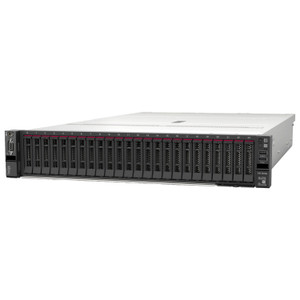
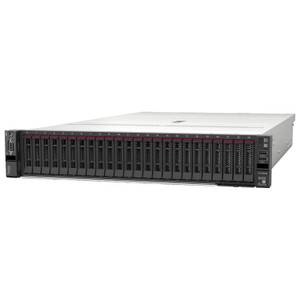
The 4XG7A63470 is validated for the Lenovo ThinkSystem SR650 V2, a 2U dual-socket rack server. As a Lenovo-branded option kit, it is matched to the SR650 V2's BIOS, thermal design, and power delivery specifications — reducing the risk of compatibility issues that arise when pairing third-party processors with enterprise server platforms. Workloads that pair naturally with this processor tier on the SR650 V2 include multi-channel VMS servers (Milestone XProtect, Genetec Security Center, Avigilon Control Center), virtual machine hosts for security operations centers, and AI-assisted video analytics engines requiring parallel inference threads.
For enterprise rack servers running physical security workloads, the Xeon Gold 5318N sits in a practical middle tier: more compute than Xeon Silver entry parts without the power and cost overhead of 32-core Platinum configurations. If your rack is running a purpose-built network video recorder or a virtualized security platform, thread count and cache size are the specs that determine whether the server keeps up during peak event loads. Pair with appropriate DDR4 RDIMM configuration and a PoE network switch infrastructure to fully leverage the SR650 V2's I/O bandwidth.
For detailed platform compatibility, memory population rules, and dual-socket configurations, consult the Lenovo server product family documentation and the SR650 V2 Configuration Guide from Lenovo's support portal.
Frequently Asked Questions
Q: What server platform is the Lenovo 4XG7A63470 compatible with?
A: The 4XG7A63470 is a processor option kit validated for the Lenovo ThinkSystem SR650 V2 server. It uses the LGA 4189 socket and is designed to integrate with the SR650 V2's thermal, power, and BIOS configuration.
Q: What are the base and boost clock speeds of the Intel Xeon Gold 5318N in this kit?
A: The Xeon Gold 5318N runs at 2.1 GHz base frequency and boosts up to 3.4 GHz under single- or lightly-threaded workloads. The processor also implements a tiered core structure: 8 high-priority cores run at 2.3 GHz and 16 standard cores run at 2.0 GHz.
Q: What is the TDP of the processor included in the 4XG7A63470?
A: The Intel Xeon Gold 5318N has a 150W TDP. This is a mid-range thermal envelope within the Xeon Gold 5000 family, suitable for dense rack deployments where power and cooling budgets are managed per-rack-unit.
Q: How many cores and threads does the Xeon Gold 5318N provide?
A: The 5318N provides 24 physical cores and 48 threads via Intel Hyper-Threading. This thread count supports parallel workloads such as multi-stream video analytics, VM hosting, and concurrent database operations without core contention under normal load.
Q: Can the SR650 V2 be configured with two of these processors?
A: The ThinkSystem SR650 V2 is a dual-socket platform. Two 4XG7A63470 kits can be installed to reach 48 cores and 96 threads per server node. Consult Lenovo's SR650 V2 Configuration Guide for memory population and power requirements when running dual-socket configurations.
Q: What process node is the Intel Xeon Gold 5318N built on?
A: The 5318N is fabricated on Intel's 10 nm process node (Intel 10 nm SuperFin), which delivers improved instructions-per-clock efficiency and power characteristics compared to the prior 14 nm Xeon Scalable generation.
The 4XG7A63470 brings the Xeon Gold 5318N's hybrid core architecture to the SR650 V2 platform — and it's the tiered frequency design that I find most relevant for physical security deployments: 8 cores at 2.3 GHz handling latency-sensitive tasks while 16 cores at 2.0 GHz absorb background processing. That maps well to VMS server workloads where live video decoding and motion analytics need fast response, but archival indexing and storage writes can tolerate a slower lane.
Technical Highlights:
- 36 MB L3 Cache: On a VMS platform decoding 40–60 H.265 streams, a larger last-level cache reduces how often the CPU stalls on memory fetches — the 36 MB reservoir keeps frequently accessed decode tables and frame buffers closer to execution units, which shows up as more consistent decode latency under peak load.
- 48 Threads at 150W TDP: Getting 48 logical processors within a 150W thermal envelope matters in 2U chassis where cooling is constrained. Comparable 32-core Platinum parts at 205–250W require higher-grade cooling and more headroom in the rack power budget — the 5318N hits a practical efficiency point for security server builds that don't need the absolute top of the stack.
- 3.4 GHz Boost on a 2.1 GHz Base: The 1.3 GHz boost headroom means single-threaded tasks — license plate recognition queries, real-time event correlation in access control middleware — can spike to near-desktop performance speeds without requiring a dedicated high-frequency chip alongside the parallel workload processor.
Deployment Considerations:
- This is a Lenovo-branded option kit, meaning the processor, thermal interface, and retention hardware are matched to the SR650 V2's validated configuration list — reduces the integration risk of self-sourced CPU upgrades on enterprise server platforms where firmware and thermal tables are tied to Lenovo's validated parts list.
- At 150W per socket, dual-socket SR650 V2 configurations draw up to 300W in CPU TDP alone before memory, storage, and NIC loads are added — confirm your rack PDU and UPS capacity before deploying dual-5318N builds in environments where power budgets are tight.
For a mid-scale VMS server or virtualization host supporting a physical security operations center — 30 to 80 camera channels, multiple analytics engines, and concurrent operator workstations — the SR650 V2 with the 5318N option kit is a well-balanced single-node platform that avoids over-specifying into Platinum TDP territory.