Lenovo 4XG7A63085 Intel Xeon Silver 4215R Processor for ThinkSystem SD530
Overview
The Lenovo 4XG7A63085 is an Intel Xeon Silver 4215R processor option for the ThinkSystem SD530 high-density server platform. Built on Intel's 2nd Generation Xeon Scalable (Cascade Lake) architecture at 14nm, this 8-core, 16-thread processor delivers a 3.2 GHz base clock with a 4.0 GHz boost frequency — giving compute-intensive workloads meaningful headroom without stepping up to a Gold or Platinum SKU. For integrators running server infrastructure that needs reliable multi-threaded throughput at a controlled power envelope, the 4215R sits at a practical inflection point in the Xeon Silver 4000 family.
Key Features
- 8 Cores / 16 Threads at 3.2 GHz Base: With 16 hardware threads available, the SD530 can handle parallel workloads — VMS recording engines, analytics inference tasks, or mixed virtualized workloads — without the per-core licensing cost that comes with higher core-count Xeon Gold SKUs. If your VMS licensing is core-based, 8 physical cores keeps that cost predictable.
- 4.0 GHz Intel Turbo Boost: Short-burst tasks (alarm triggers, event-driven analytics, database queries) benefit from the 800 MHz boost headroom. The processor scales up automatically under transient load and steps back down when demand drops, so power draw stays efficient during steady-state recording.
- 11 MB Last-Level Cache: Eleven megabytes of L3 cache reduces memory latency for frequently accessed data sets — relevant when the SD530 is handling multiple concurrent video streams or running containerized analytics workloads that benefit from hot data staying on-die.
- 130W TDP in a High-Density Platform: The SD530 is a half-width, 1U node designed for high-density chassis. At 130W TDP, the 4215R fits the thermal envelope without requiring extraordinary cooling infrastructure, but it's worth confirming chassis airflow configuration before deploying alongside other high-TDP nodes in the same enclosure.
- Up to 1 TB DDR4 SDRAM Supported: The 4215R supports up to 1 TB of DDR4 memory per socket, which means the SD530 can be provisioned with substantial RAM for memory-heavy workloads — in-memory analytics, large video frame buffers, or virtualization stacks where memory overcommit needs headroom.
- LGA 3647 (Socket P) Platform: Designed for the Socket P ecosystem, this processor is purpose-built for the Lenovo ThinkSystem SD530 and is not a field-serviceable upgrade for arbitrary Socket P boards — compatibility is platform-specific within the Lenovo SD530 node.
- UPI Bus Architecture: Intel's UltraPath Interconnect (UPI) provides the inter-socket fabric for multi-processor configurations, with lower latency than the older QPI bus it replaces. For dual-socket SD530 deployments, UPI ensures coherent shared memory access across both processor nodes.
- 64-bit Operating Mode: Full 64-bit instruction support is expected at this tier, but worth confirming for legacy software stacks that might run 32-bit processes — all modern server OS deployments will operate in 64-bit mode without constraint.
Integration and Compatibility
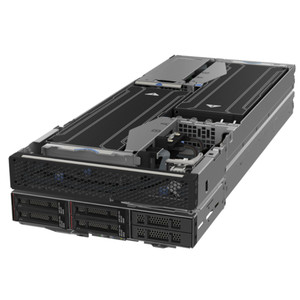
The 4XG7A63085 is a Lenovo-qualified processor option for the ThinkSystem SD530 server. The SD530 is engineered for dense chassis deployments (such as the D2 Enclosure), making it a common choice for edge compute racks, colocation deployments, and HPC-adjacent workloads where rack-unit density matters. Because the 4215R supports DDR4-SDRAM and the UPI interconnect, it integrates with the SD530's memory subsystem and multi-node fabric as designed. Pairing this processor with appropriate server memory modules qualified for the SD530 platform is required — not all DDR4 DIMMs are on Lenovo's compatibility list. Consult the SD530 ServerProven list for validated memory configurations before provisioning. For workloads involving video management, the 4215R's 16 threads and 4.0 GHz turbo make it a practical fit for mid-scale VMS deployments running on network video recorder server platforms, particularly where the SD530 is serving as a dedicated recording or analytics node in a larger security infrastructure stack.
Frequently Asked Questions
Q: What server platform is the Lenovo 4XG7A63085 compatible with?
A: The 4XG7A63085 is a qualified processor option for the Lenovo ThinkSystem SD530. It is not a universal upgrade — compatibility is specific to the SD530 platform and Lenovo's ServerProven qualification list.
Q: How many cores and threads does the 4XG7A63085 provide?
A: The Intel Xeon Silver 4215R in the 4XG7A63085 delivers 8 physical cores and 16 threads via Intel Hyper-Threading, with a 3.2 GHz base frequency and a 4.0 GHz Intel Turbo Boost ceiling.
Q: What is the thermal design power (TDP) of the 4XG7A63085?
A: The Xeon Silver 4215R has a 130W TDP. Chassis airflow and thermal configuration within the SD530 enclosure should be validated for deployments with multiple high-TDP nodes in the same chassis.
Q: What memory type and maximum capacity does the 4XG7A63085 support?
A: The 4215R processor supports DDR4-SDRAM with a maximum of 1 TB of memory per socket. Specific DIMM configurations must be validated against Lenovo's SD530 ServerProven compatibility list.
Q: What generation of Intel Xeon Scalable processor is the 4XG7A63085?
A: The 4XG7A63085 uses a 2nd Generation Intel Xeon Scalable processor (Cascade Lake architecture), built on 14nm lithography and using the LGA 3647 (Socket P) platform.
Q: Is the 4XG7A63085 suitable for virtualization workloads?
A: Yes. The 4215R's 16 hardware threads, 11 MB L3 cache, and up to 1 TB DDR4 memory support make it a capable foundation for virtualized server workloads. For VMS or analytics virtualization, thread count and memory capacity are the primary sizing factors.
When I'm speccing out a dense compute node for a mid-scale security infrastructure — VMS server, analytics engine, or edge virtualization host — the 4XG7A63085 lands in a useful spot. The Xeon Silver 4215R's combination of 8 cores at 3.2 GHz base with a 4.0 GHz turbo ceiling means it handles mixed-thread workloads without the cost premium of a Gold-tier SKU, and the 130W TDP keeps the SD530 chassis thermal budget manageable when you're stacking nodes.
Technical Highlights:
- 16 Hardware Threads: For VMS platforms that parallelize stream decoding or run concurrent analytics tasks, 16 threads from a single 8-core Xeon Silver is a more cost-effective path than stepping to a higher core-count SKU with per-core licensing implications.
- 4.0 GHz Turbo Boost: Event-driven workloads — alarm processing, motion detection triggers, on-demand transcoding — benefit from the 800 MHz headroom above base clock. The processor scales automatically, so steady-state recording stays efficient.
- 1 TB Max DDR4 Support: For virtualized deployments running multiple workloads on the SD530 node, 1 TB of addressable DDR4 is meaningful. Memory is often the first bottleneck in dense VMS virtualization — this ceiling gives provisioning room to grow.
Deployment Considerations:
- The SD530 is a half-width node for high-density enclosures — confirm your chassis configuration and airflow path before deploying multiple 130W TDP nodes side by side. Thermal adjacency in dense enclosures can throttle performance if not planned correctly.
- Memory compatibility is Lenovo-specific: not all DDR4 DIMMs are validated for the SD530. Pull the ServerProven list before ordering DIMMs — an incompatible DIMM won't post, and it's a wasted service call to sort out on-site.
For a security operations center running a mid-scale VMS deployment on Lenovo SD530 nodes — 20 to 60 camera channels per node, with dedicated analytics workloads — the 4XG7A63085 provides a balanced compute foundation without over-speccing into Xeon Gold territory.