Lenovo 4X67A76727 NVIDIA A16 64GB Gen4 PCIe Passive GPU
Overview
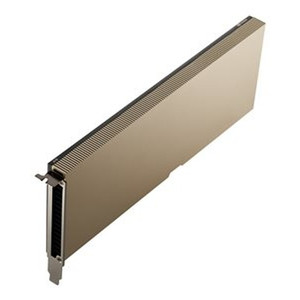
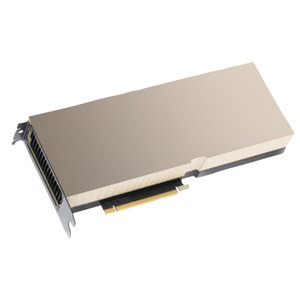
The Lenovo 4X67A76727 is a passively cooled NVIDIA A16 GPU carrying 64 GB of GDDR6 memory across a PCIe 4.0 x16 interface — a purpose-built accelerator for dense virtual desktop infrastructure (VDI), AI inference, and parallel compute workloads in thermally managed server environments. With 5,120 CUDA cores and a 250W TDP handled entirely through passive cooling, this card is designed to slot into rack-optimized servers where airflow is controlled by the chassis rather than on-card fans. If you're building out a multi-tenant VDI deployment or scaling AI inference across blade or rack nodes, the 4X67A76727 belongs on your shortlist.
Key Features
- 64 GB GDDR6 Memory: The full 64 GB frame buffer is the defining spec here. Running multiple virtual GPU (vGPU) profiles simultaneously — think 8 to 16 concurrent VDI sessions or large language model inference batches — requires this memory headroom. Smaller-capacity cards force profile fragmentation or session limits that hurt user density per server.
- 5,120 CUDA Cores: NVIDIA's A16 architecture delivers parallel compute headroom for both traditional graphics rendering and general-purpose GPU (GPGPU) tasks. For AI inference workloads, 5,120 cores across the full A16 die means you can sustain throughput on multiple concurrent inference requests without queuing bottlenecks that would otherwise require additional nodes.
- PCIe 4.0 x16 Interface: The Gen 4 PCIe slot doubles the bandwidth ceiling versus Gen 3 — relevant when transferring large model weights from system RAM to GPU memory or streaming high-resolution display data across multiple virtual desktops simultaneously. Pair this with a Lenovo ThinkSystem server that exposes PCIe 4.0 slots to fully realize the bandwidth advantage.
- Passive Cooling (250W TDP): No on-card fans means no fan failure modes and no acoustic output from the GPU itself. The tradeoff is real: passive cooling at 250W demands adequate chassis airflow, typically provided by server-grade front-to-rear redundant fans. Deploy this only in servers and enclosures rated for passive GPU cards — installing it in a workstation or tower chassis without sufficient airflow risks thermal throttling and potential hardware damage.
- DirectX 12.07 and OpenGL 4.68 Support: These API levels cover the graphics stack required by enterprise VDI clients and legacy CAD/visualization workloads running on virtualized Windows desktops. If your VDI users run AutoCAD, SolidWorks, or 3D visualization tools, these API versions confirm compatibility with the underlying graphics stack those applications depend on.
- Shader Model 5.17 Compliance: Shader Model 5.x support ensures compatibility with the compute shader pipelines used in modern GPU-accelerated data processing and visualization tools. This matters when your workloads mix standard desktop rendering with GPU-accelerated analytics or simulation tasks on the same card.
- NVIDIA A16 Graphics Processor Family: The A16 sits in NVIDIA's Ampere generation, which introduced third-generation Tensor Cores and second-generation RT Cores. For inference workloads using mixed-precision (FP16/INT8) computation, Tensor Cores on the A16 deliver significantly higher throughput than pure FP32 paths — a meaningful efficiency gain when running transformer-based models at scale.
Integration and Compatibility
The 4X67A76727 connects via PCIe x16 Gen 4 and exposes an Ethernet interface alongside the primary PCIe data path — the Ethernet port supports out-of-band management or network-direct GPU access depending on the server platform and NVIDIA driver configuration. This card is compatible with NVIDIA vGPU software for VMware vSphere, Citrix Hypervisor, and KVM-based environments, enabling partitioned GPU resources across virtual machines. Verify that your hypervisor version and NVIDIA vGPU license tier support the A16 before provisioning; not all vGPU profiles are available on all hypervisor releases.
For GPU accelerator deployments in Lenovo ThinkSystem servers, confirm PCIe 4.0 slot availability and chassis airflow specifications before ordering. The passive cooling design is non-negotiable for slot selection — this card cannot be installed in positions with insufficient airflow. Review Lenovo's server component compatibility matrices for your target platform to validate slot assignments and power delivery requirements. Buyers evaluating broader datacenter compute infrastructure should also cross-reference chassis power budgets, as a fully populated server with multiple A16 cards can approach or exceed standard PDU circuit ratings.
If your deployment requires active cooling or a lower TDP envelope, consider other cards in the NVIDIA GPU portfolio. For storage-heavy AI pipelines pairing GPU compute with NVMe-based model storage, cross-reference available enterprise storage options to ensure the storage tier doesn't bottleneck GPU utilization.
Frequently Asked Questions
Q: What server chassis are compatible with the Lenovo 4X67A76727?
A: The 4X67A76727 requires a PCIe 4.0 x16 slot in a server chassis with managed front-to-rear airflow sufficient to cool a 250W passively cooled GPU. Lenovo ThinkSystem rack servers that explicitly support passive GPU cards are the primary target platforms. Verify chassis compatibility in Lenovo's server configuration guides before ordering.
Q: Does the 4X67A76727 support NVIDIA vGPU for virtual desktop deployments?
A: The NVIDIA A16 GPU is designed for vGPU workloads. The 64 GB GDDR6 frame buffer allows multiple concurrent vGPU profiles, enabling high virtual desktop user density per server. An active NVIDIA vGPU software license is required for virtualized GPU partitioning — this is separate from the hardware cost.
Q: Can the 4X67A76727 be installed in a workstation or tower PC?
A: This card uses passive cooling and requires 250W of sustained thermal dissipation via external chassis airflow. Standard workstation or tower enclosures do not provide the directed, high-volume airflow needed. Installing this card in an unsuitable chassis risks thermal throttling and potential hardware failure. It is intended for rack-mount server environments only.
Q: What is the memory configuration of the 4X67A76727?
A: The card carries 64 GB of GDDR6 memory, which is the full memory complement of the NVIDIA A16 GPU. This enables large vGPU profile allocations and supports AI inference with large model weight sets that would otherwise not fit on lower-capacity cards.
Q: How does PCIe Gen 4 affect performance compared to Gen 3?
A: PCIe 4.0 x16 delivers approximately double the bandwidth of PCIe 3.0 x16. For workloads that move large data sets between system memory and GPU memory — such as loading large AI model weights or streaming high-resolution display buffers for multiple virtual desktops — this bandwidth increase reduces transfer latency and can improve overall throughput.
The spec that drives every deployment decision on the 4X67A76727 is that 250W passive TDP — it's the constraint that determines whether this card even fits your server platform before you look at anything else. I've seen integrators order A16s and discover their chassis airflow specs don't support passive GPU cards only after the hardware arrives. Confirm chassis compatibility first, then build around what the Lenovo 4X67A76727 actually delivers: 64 GB of GDDR6 and 5,120 CUDA cores in a server-native form factor.
Technical Highlights:
- 64 GB GDDR6 Frame Buffer: At 64 GB, you can run high-density vGPU profiles without fragmenting memory across cards. This is the spec that enables double-digit concurrent VDI session counts per card without dropping to low-memory profiles that limit graphics fidelity.
- PCIe 4.0 x16 Interface: Gen 4 bandwidth matters when you're loading 10–40 GB model weight files from system RAM into GPU memory for inference. The doubled bandwidth ceiling over Gen 3 means less time blocked on data transfer and more time on actual compute — measurable in throughput at scale.
- Passive Cooling Design: No on-card fans eliminates the most common GPU failure mode in 24/7 datacenter environments. The card runs entirely on chassis airflow, which means it lives or dies by your server's thermal management — not a concern in properly configured rack infrastructure, but a hard constraint that rules out non-server deployments entirely.
Deployment Considerations:
- Verify that your target Lenovo ThinkSystem server platform explicitly lists support for passive GPU cards at 250W — not all PCIe 4.0 slots in all chassis configurations provide the airflow this card requires at full load.
- NVIDIA vGPU licensing is a separate procurement line item. Budget for vGPU software licenses before deployment; the hardware alone does not enable GPU virtualization without an active license entitlement from NVIDIA.
The 4X67A76727 is the right call for high-density VDI rack buildouts and AI inference nodes where thermal management is handled at the chassis level and per-card fan maintenance isn't acceptable in the operational model. It's not the card for mixed workstation/server environments or any deployment where chassis airflow hasn't been explicitly validated for passive GPU operation.