Lenovo 4X67A71311 NVIDIA A10 24GB PCIe Gen4 Passive GPU
Overview
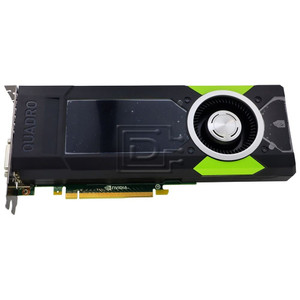
The Lenovo 4X67A71311 is a full-height, full-length PCIe Gen4 GPU built around the NVIDIA A10 processor with 24 GB of GDDR6 on-board memory. It is purpose-built for dense server environments where active cooling is not viable — think high-density rack deployments where airflow is managed at the chassis level rather than the card. At 150 W TDP with a single 8-pin supplementary power connector and a passive heatsink, this card is designed to integrate into servers and workstations that already provide the required forced-air cooling. If you are evaluating GPU options for AI inference, virtual workstation, or GPU-accelerated analytics workloads in a managed data center, the 4X67A71311 belongs on your shortlist. Browse the full Lenovo compute catalog for compatible host platforms.
Key Features
- 24 GB GDDR6 Memory: 24 GB of on-board GDDR6 means large AI models, multi-stream video analytics pipelines, and virtual desktop (vGPU) workloads can run entirely in GPU memory without spilling to system RAM — critical for throughput consistency in production inference deployments.
- 600 GB/s Memory Bandwidth: At 600 GB/s peak bandwidth, the A10 moves data between the GPU cores and VRAM fast enough to sustain high-concurrency inference batches without memory stalls. This is the spec that separates the A10 from entry-level inference accelerators in multi-tenant environments.
- PCIe Gen4 x16 Interface (64 Gbit/s): The PCIe 4.0 x16 slot delivers 64 Gbit/s of host-to-GPU bandwidth — double the effective throughput of a Gen3 x16 connection. For workloads that move large tensors or raw video frames from host memory to GPU frequently, Gen4 meaningfully reduces that transfer bottleneck.
- Passive Cooling (150 W TDP): No onboard fan means no fan-failure risk and no fan noise contribution, which matters in long-running 24/7 server deployments. The tradeoff is non-negotiable: the host server must provide adequate forced airflow across the heatsink. Do not install this card in a workstation or tower that lacks chassis-managed airflow — thermal shutdown will follow.
- Full-Height / Full-Length (FH/FL) Single-Slot Form Factor: The FH/FL footprint fits standard server slot bays without special riser adapters. Single-slot width makes it possible to populate adjacent slots in high-density configurations — relevant for multi-GPU inference nodes where slot spacing is tight.
- Single 8-Pin Supplementary Power Connector: One 8-pin PCIe power connector covers the full 150 W TDP budget. Most modern server power supplies include these natively; no custom cabling or additional power supply capacity is required beyond what a 150 W draw demands.
- PCIe + Ethernet Interface Support: The card exposes both PCIe and Ethernet interface paths, supporting flexible deployment topologies — including configurations where GPU workloads communicate directly over the network fabric rather than routing exclusively through the host CPU.
- NVIDIA A10 GPU Processor: The A10 is NVIDIA's data center GPU targeting inference, vGPU, and graphics virtualization workloads. It supports NVIDIA's enterprise virtualization stack (vPC, vCS, vWS profiles) and is compatible with CUDA-based AI inference frameworks including TensorRT and Triton Inference Server.
Integration and Compatibility
The 4X67A71311 is a Lenovo-qualified option card designed for integration into Lenovo ThinkSystem servers that support the PCIe Gen4 x16 slot spec. Passive GPU cards require chassis platforms that guarantee minimum airflow across the card — verify your target server's thermal configuration against Lenovo's system configuration guides before ordering. This card is not suitable for open-bench or low-airflow enclosures. For AI-driven video analytics and NVR acceleration workloads, confirm that your VMS or analytics software supports NVIDIA A10 GPU offload; most major platforms supporting CUDA will enumerate the A10 correctly. Enterprises building out network-connected GPU inference nodes should also account for the 150 W TDP in rack power budget planning — a full chassis of GPU-accelerated servers will saturate PDU capacity quickly if not planned for. For broader GPU compute cards across brands and configurations, see the full category.
Frequently Asked Questions
Q: Does the Lenovo 4X67A71311 require active cooling from the card itself?
A: No. The 4X67A71311 uses a passive heatsink with no onboard fan. The host server chassis must provide forced airflow across the card to maintain safe operating temperatures. Installing this card in a system without adequate chassis-managed airflow will cause thermal throttling or shutdown.
Q: What PCIe slot generation does the 4X67A71311 require?
A: The card uses a PCIe Gen4 x16 interface, delivering up to 64 Gbit/s of host-to-GPU bandwidth. It will physically seat in a Gen3 x16 slot but will operate at reduced bandwidth. For full performance, a PCIe Gen4-capable host platform is required.
Q: How much GPU memory does the 4X67A71311 have, and what type?
A: The 4X67A71311 carries 24 GB of GDDR6 memory with a peak bandwidth of 600 GB/s. This capacity supports large AI inference models and multi-stream GPU-accelerated workloads without requiring host memory as an overflow buffer.
Q: What supplementary power does the 4X67A71311 need?
A: One standard 8-pin PCIe supplementary power connector. The card's TDP is 150 W, which falls within the capacity of a single 8-pin connector. Most server power supplies include these connectors natively.
Q: Is the 4X67A71311 a single-slot card?
A: Yes. It occupies one slot in the host server, using a full-height, full-length (FH/FL) form factor. The single-slot width allows adjacent slots to remain available for other add-in cards in high-density configurations.
The detail I keep coming back to on the 4X67A71311 is the 600 GB/s memory bandwidth paired with 24 GB of GDDR6 — that combination is what makes the NVIDIA A10 viable for production inference at scale, not just a spec sheet number. If you are running concurrent inference sessions against large transformer models, that bandwidth is what keeps GPU utilization high rather than stalled waiting on memory reads.
Technical Highlights:
- 24 GB GDDR6 at 600 GB/s: Large model inference (7B+ parameter LLMs, multi-stream video analytics) stays entirely resident in GPU memory — no PCIe round-trips to host RAM mid-inference, which would crater your batch latency.
- PCIe Gen4 x16 at 64 Gbit/s: Doubling Gen3 host bandwidth matters for pipelines that move raw video frames or large tensor batches from host to GPU repeatedly. This is especially relevant in multi-camera AI analytics deployments where frame ingestion is continuous.
- 150 W Passive TDP: No moving parts on the card itself — mean time between failure on the thermal solution is effectively unlimited compared to active-cooled cards. In a properly configured server bay, this is a net positive for long-duration 24/7 deployments.
Deployment Considerations:
- Verify your target Lenovo ThinkSystem server's thermal design explicitly supports passive GPU cards before ordering — not every chassis configuration provides sufficient airflow at the card slot position, and Lenovo's system configuration guides call this out per model.
- The 150 W TDP is modest for a data center GPU, but rack-level power budgeting still matters: a chassis populated with multiple 4X67A71311 cards will add 150 W per slot to your PDU draw, and that accumulates fast in a fully loaded rack.
This card is the right fit for enterprise AI inference nodes, GPU-virtualized VDI deployments, and multi-stream video analytics servers where the host chassis guarantees thermal management and the workload demands 24 GB of high-bandwidth GPU memory on a Gen4 platform.