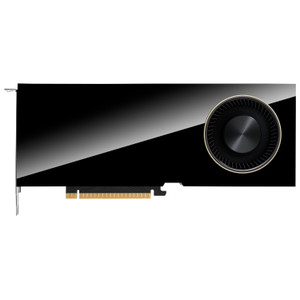
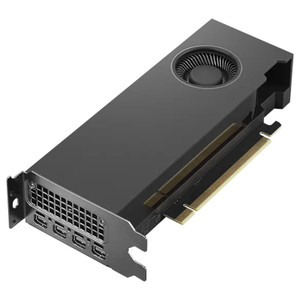
Lenovo 4X61L84590 NVIDIA RTX 6000 Ada 48GB Professional Graphics Card
The Lenovo 4X61L84590 is a professional-grade discrete graphics card built around NVIDIA's RTX 6000 Ada Generation GPU — the workhorse for workstations running AI-accelerated rendering, large-dataset visualization, and multi-display professional workflows. With 48 GB of GDDR6 memory on a 384-bit bus delivering 960 GB/s of bandwidth, this card is positioned for tasks where GPU memory capacity and throughput are the actual bottleneck: high-polycount 3D scenes, large AI model inference, medical imaging, and multi-stream video processing. If you're specifying a professional GPU for a dense workstation build and need to stay within a validated Lenovo workstation ecosystem, the 4X61L84590 is the channel-direct option to evaluate.
Key Features
- 48 GB GDDR6 on a 384-bit Bus: 48 GB of on-card memory means large datasets, complex scenes, and multi-application GPU workloads don't require constant swapping to system RAM. The 384-bit bus delivers 960 GB/s of peak memory bandwidth — enough headroom for latency-sensitive parallel compute tasks where starving the GPU is the performance ceiling.
- PCIe 4.0 x16 Interface: The PCIe 4.0 x16 slot interface doubles the theoretical bandwidth available versus PCIe 3.0, keeping CPU-to-GPU data transfers from becoming a bottleneck in pipelines that move large textures, model weights, or frame buffers frequently. Confirm your workstation motherboard and platform support PCIe 4.0 to realize the full benefit — PCIe 3.0 hosts will run the card in compatibility mode at reduced peak transfer rates.
- Four DisplayPort 1.4a Outputs: Four native DisplayPort 1.4a outputs support up to four simultaneous displays at resolutions up to 7680×4320 (8K) — relevant for multi-monitor control room setups, video wall configurations, or high-resolution CAD/GIS environments where screen real estate directly affects operator workflow. No adapters required for standard DP monitors.
- Maximum Resolution 7680×4320: 8K output support future-proofs multi-display deployments against monitor refresh cycles. For security operations centers or broadcast environments moving toward 4K/8K reference monitors, this eliminates the GPU as the resolution constraint.
- DirectX 12.0 and OpenGL 4.6 Support: Full DirectX 12.0 and OpenGL 4.6 compatibility ensures broad API coverage across professional visualization, simulation, and engineering applications. Shader Model 6.6 support keeps the card aligned with current-generation rendering pipelines.
- VR Ready: The RTX 6000 Ada meets VR-ready specifications, supporting immersive training environments, architectural walkthroughs, and simulation platforms where VR headsets are part of the workflow. Verify headset and platform VR compatibility requirements separately.
- CUDA-Enabled NVIDIA Architecture: CUDA support opens the card to NVIDIA's GPU compute ecosystem — accelerating AI inference, scientific simulation, and parallel processing workloads natively. Applications built on CUDA (including many AI security analytics platforms) can offload compute to the GPU without additional middleware.
- No TV Tuner, No Dual-Link DVI: This is a purpose-built professional card — no TV tuner or legacy DVI outputs. If your environment includes legacy DVI displays, plan for active adapters. This is the right tradeoff for a card targeting modern professional deployments, but worth confirming against your display inventory before ordering.
Integration and Compatibility
The 4X61L84590 installs into any workstation or server with a PCIe x16 4.0 slot and sufficient physical clearance for a full-length, double-slot professional graphics card form factor. Verify your platform's PCIe slot availability, physical card length clearance, and system power supply headroom against NVIDIA's published TDP for the RTX 6000 Ada before specifying. The card's four DisplayPort 1.4a outputs are directly compatible with modern professional displays; daisy-chaining via DP 1.4a Multi-Stream Transport (MST) is supported where the display chain and cable spec permit. For workstation component builds in environments running AI-accelerated video analytics or NVR platforms with GPU offload, confirm the software stack supports CUDA and the RTX 6000 Ada driver branch. OpenGL 4.6 and DirectX 12.0 coverage is broad enough for the majority of professional ISV applications in AEC, media, and simulation verticals.
Frequently Asked Questions
Q: What PCIe slot does the Lenovo 4X61L84590 require?
A: The 4X61L84590 uses a PCIe x16 4.0 interface. It will operate in PCIe 3.0 x16 slots in compatibility mode, but peak CPU-to-GPU bandwidth will be reduced compared to a native PCIe 4.0 platform. Confirm your workstation's slot spec before ordering.
Q: How many monitors can the 4X61L84590 drive simultaneously?
A: The card supports up to four simultaneous displays via its four DisplayPort 1.4a outputs, at resolutions up to 7680×4320 (8K) per display. No TV tuner or DVI outputs are included.
Q: Is the 4X61L84590 suitable for AI inference workloads?
A: Yes. CUDA support is confirmed and the RTX 6000 Ada architecture is NVIDIA's professional-grade platform targeting AI compute, rendering, and simulation. For specific framework compatibility (TensorRT, CUDA toolkit version), verify against NVIDIA's current driver and software documentation.
Q: Does the 4X61L84590 support virtual reality?
A: The card is VR Ready per spec. Verify headset platform requirements and GPU connection type (DisplayPort vs. proprietary) against your specific VR system before deploying.
Q: What display connection types does the 4X61L84590 include?
A: Four DisplayPort 1.4a outputs. No HDMI, no DVI, no TV tuner. Active adapters can extend compatibility to HDMI or DVI displays if needed.
The 4X61L84590 is one of the few professional GPU options I'd specify without hesitation for a workstation anchoring a GPU-accelerated video analytics platform — specifically because of the 48 GB GDDR6 frame buffer. At 960 GB/s memory bandwidth on a 384-bit bus, this card handles the kind of parallel multi-stream inference workloads that mid-range cards simply can't sustain without stalling the pipeline.
Technical Highlights:
- 48 GB GDDR6 / 960 GB/s Bandwidth: In AI-accelerated deployments running simultaneous inference across many camera streams, GPU memory is almost always the constraint that gets underspecified. 48 GB gives substantial headroom for large model weights plus active frame buffers without eviction overhead.
- Four DisplayPort 1.4a @ 8K: Four native DP 1.4a outputs at up to 7680×4320 — directly useful in command-and-control environments where operators manage multiple high-resolution displays from a single workstation without a secondary GPU or display controller.
- PCIe 4.0 x16: The PCIe 4.0 interface doubles the host-to-GPU transfer ceiling versus PCIe 3.0 — meaningful when the pipeline is feeding large batches of decoded frames into the GPU from system RAM or NVMe storage, which is the typical AI analytics ingest pattern.
Deployment Considerations:
- Verify the host platform supports PCIe 4.0 natively — AMD Ryzen/EPYC and Intel 12th-gen+ platforms do, but older Xeon-W or desktop boards may fall back to PCIe 3.0, reducing peak bandwidth by roughly half.
- The card has no DVI or HDMI outputs — four DisplayPort 1.4a only. If your display inventory includes HDMI monitors or legacy DVI panels, budget for active adapters and verify compatibility with your specific monitor models before deployment.
This card is the right specification for a GPU-compute workstation anchoring a multi-stream AI video analytics node — where sustained memory bandwidth and a large frame buffer matter more than raw clock speed, and where four independent high-resolution display outputs let a single analyst monitor a full surveillance grid without a secondary display card.