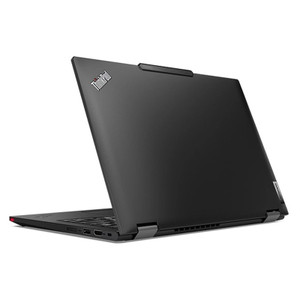
Lenovo 21G20022US ThinkPad P14s Gen 5 Mobile Workstation
Overview
The Lenovo 21G20022US is a 14.5-inch aluminium clamshell mobile workstation built around Intel's Core Ultra 7 155H processor, 16GB of RAM, a 512GB SSD, and a dedicated NVIDIA RTX 500 Ada Generation GPU with 4GB GDDR6 — a combination that puts discrete graphics horsepower in a sub-7-pound package suited to field engineers and on-site security integrators who need more than a standard business ultrabook. The WQXGA (2560 × 1600) IPS touchscreen at a 16:10 aspect ratio gives you noticeably more vertical workspace than a 16:9 panel, which matters when you're reviewing multi-stream VMS layouts or working through configuration dashboards on-site.
If you work across commercial laptops for field deployment or are evaluating the broader Lenovo workstation catalog, the P14s Gen 5 sits in the thin-and-light professional tier — more GPU than a standard ThinkPad T-series, less bulk than a P-series tower replacement.
Key Features
- Intel Core Ultra 7 155H processor: Intel's H-series Core Ultra architecture delivers multi-core throughput well beyond mainstream ultrabook CPUs. For integrators running simultaneous VMS client sessions, video export, or on-site configuration tools, the performance headroom means you're not waiting on the machine when a client is watching.
- NVIDIA RTX 500 Ada Generation, 4GB GDDR6: This is a discrete mobile GPU based on Ada Lovelace architecture — not an integrated graphics solution. If your workflow includes GPU-accelerated video decoding, AI-assisted analytics configuration, or point-cloud visualization for physical security layout, this card earns its place. The 4GB GDDR6 frame buffer is sufficient for 1–4 stream GPU decoding but will constrain heavy multi-stream workloads that larger workstation GPUs handle without ceiling.
- 14.5-inch WQXGA IPS display, 2560 × 1600 at 16:10: The extra vertical pixels of 16:10 versus the standard 16:9 widescreen format translate directly to fewer scroll actions in long configuration trees and more simultaneous camera grid rows in a VMS dashboard. At 90Hz maximum refresh rate, navigation feels responsive without the power draw of a 120Hz+ gaming panel.
- 350 cd/m² brightness, 1500:1 contrast, 100% sRGB: Adequate luminance for indoor office and vehicle use. The 100% sRGB coverage and 1500:1 contrast ratio means colour-critical work (forensic image review, heat-map analytics dashboards) renders accurately. Anti-glare coating reduces specular reflection in mixed-light environments like lobbies and warehouse floors.
- Touchscreen with anti-glare IPS panel: Touch input accelerates on-site configuration workflows where a mouse isn't practical — mapping camera positions, signing off inspection checklists, or navigating tablet-style installer apps directly on the screen without an external peripheral.
- 512GB SSD storage: Enough local capacity for a full VMS client installation, local video clip exports, firmware packages for an entire site's camera inventory, and installer documentation — all simultaneously without juggling external drives.
- 16GB RAM: Running a VMS client, a browser-based configuration portal, and remote desktop to a head-end NVR concurrently is the typical on-site load. 16GB handles this without page-file thrashing. Upgradeability depends on the specific platform configuration — confirm with Lenovo's configuration guide if your workflow trends heavier.
- Aluminium clamshell chassis, 6.22 lb: The all-aluminium construction adds structural rigidity versus plastic-chassis competitors at this price tier — important when the machine travels between job sites in a laptop bag rather than a padded pelican case. At 6.22 lb, it's heavier than a consumer ultrabook; plan for it in a shoulder bag rather than a slim briefcase sleeve.
- Ethernet interface: On-site commissioning almost always requires a wired connection to the camera subnet or NVR management port. Built-in Ethernet eliminates the dongle dependency that plagues thinner ultrabooks and removes a failure point during critical bring-up sequences.
Integration and Compatibility
The 21G20022US runs on the Intel Core Ultra 7 155H platform, which supports a broad range of VMS and NVR management software used in commercial security deployments. The RTX 500 Ada GPU supports NVIDIA CUDA and hardware video decode acceleration, which is leveraged by Milestone XProtect, Genetec Security Center, and other major VMS platforms for GPU-assisted stream handling — reducing CPU load during high-channel playback sessions. The built-in Ethernet port ensures direct connectivity to isolated security network segments without relying on Wi-Fi, which is the correct posture for commissioning and forensic work on segregated security LANs.
For teams managing mixed hardware environments, this machine pairs naturally with a managed PoE switch during site bring-up — connect directly to the switch management port over Ethernet to configure VLANs and camera power budgets without touching the production IT network. Integrators sourcing accessories alongside this unit should also consider a KVM or remote access solution for head-end rack work that complements field laptop deployments.
Lenovo's ThinkPad platform has broad driver and firmware support through Windows-based enterprise deployment tools. The aluminium build and commercial-grade positioning of the P14s line align with IT procurement standards at enterprise accounts.
Frequently Asked Questions
Q: What processor is in the Lenovo 21G20022US?
A: The 21G20022US ships with an Intel Core Ultra 7 155H processor — an H-series multi-core mobile CPU from Intel's Core Ultra (Meteor Lake) generation, designed for performance-intensive mobile workstation use.
Q: Does the 21G20022US have a discrete GPU, and what is it?
A: Yes. It includes an NVIDIA RTX 500 Ada Generation GPU with 4GB GDDR6 dedicated video memory, based on NVIDIA's Ada Lovelace architecture. This enables GPU-accelerated video decode and CUDA workloads beyond what integrated graphics can handle.
Q: What is the display resolution and panel type on the 21G20022US?
A: The display is a 14.5-inch IPS touchscreen with WQXGA resolution (2560 × 1600 pixels), a 16:10 native aspect ratio, 90Hz maximum refresh rate, 350 cd/m² brightness, 1500:1 contrast ratio, LED backlight, anti-glare coating, and 100% sRGB colour gamut coverage.
Q: How much does the 21G20022US weigh, and what are its dimensions?
A: The unit weighs 6.22 lb (approximately 2.82 kg). Physical dimensions are 18.80 inches long × 11.60 inches wide × 3.00 inches tall (L × W × H).
Q: Does the 21G20022US include a wired Ethernet port?
A: Yes. The 21G20022US includes a built-in Ethernet interface — an important feature for on-site security network commissioning where wired connectivity to camera subnets or NVR management ports is required.
Q: What storage and memory does the 21G20022US include?
A: It comes configured with 16GB of RAM and a 512GB SSD. This configuration supports simultaneous VMS client software, remote access tools, and local clip storage without external drives.
The 21G20022US stands out in field-deployment kit lists because of one specific combination: a 14.5-inch WQXGA 2560×1600 IPS touchscreen paired with a discrete NVIDIA RTX 500 Ada GPU. Most mobile workstations in this weight class compromise on one or the other — you get the high-res panel on a thin machine with integrated graphics, or you get the dedicated GPU on a heavier 15-inch body. The P14s Gen 5 threads that needle at 6.22 lb in an aluminium clamshell, which is a real differentiator for integrators who commission multi-camera systems on-site and need GPU-accelerated playback without hauling a 7.5-lb workstation replacement.
Technical Highlights:
- WQXGA 2560×1600 at 16:10: The extra vertical pixel rows versus a 16:9 1920×1200 panel are immediately noticeable when working inside a VMS camera grid — you fit an additional row of camera thumbnails without scrolling, which cuts down review time during site acceptance testing.
- RTX 500 Ada, 4GB GDDR6: Ada Lovelace architecture supports AV1 hardware decode, which newer IP camera platforms and cloud VMS exports increasingly use. 4GB GDDR6 is the working limit for simultaneous multi-stream GPU decode — at high channel counts (16+), CPU offload via the Core Ultra 7 155H becomes the fallback, which it handles well.
- Built-in Ethernet: At 18.80 × 11.60 × 3.00 inches, this is not a razor-thin ultrabook, and it earns that footprint partly by retaining native Ethernet — no dongle, no USB-C adapter to forget in the office on install day.
Deployment Considerations:
- At 6.22 lb, budget for a padded laptop compartment in your field bag; the aluminium chassis protects the machine but doesn't make it lighter than it is — this is not a travel-light conference machine.
- The RTX 500 Ada's 4GB GDDR6 frame buffer is the binding constraint for GPU-heavy workloads; if your team's standard VMS workflow involves simultaneous decoding of 32+ streams during forensic review, validate frame buffer utilisation before standardising on this configuration across a fleet.
The 21G20022US is the right specification for a lead integrator or systems architect who commissions mid-to-large camera deployments in person — the WQXGA touchscreen and discrete GPU justify the weight premium over a lighter ultrabook, and the built-in Ethernet makes it genuinely self-sufficient on a camera subnet without any accessories.