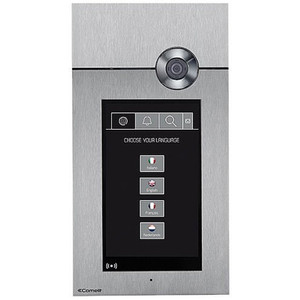
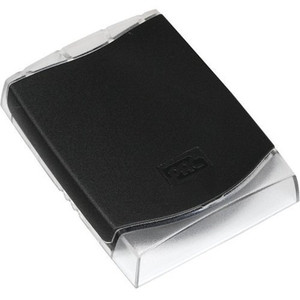
Comelit 909021017/2.00 Keypac Proximity Card Reader
The Comelit 909021017/2.00 is a proximity card reader designed for access control systems requiring credential-based authentication at entry points. This reader processes standard proximity cards to verify user identity and trigger door release, integrating directly with Comelit's Software 6 management platform for centralized access policy control. Proximity-based readers eliminate mechanical key exposure and simplify credential issuance for multi-tenant or multi-door deployments.
Key Features
- Proximity Card Technology: Processes standard proximity credentials without physical insertion. Enables rapid authentication (sub-second read) at high-traffic access points.
- Software 6 Integration: Native compatibility with Comelit Software 6 management — centralized credential provisioning, access policy management, and audit logging from a single platform.
- Multi-Door Scalability: Reader supports deployment across multiple doors within a unified Comelit access control infrastructure. Credential database synchronized across all readers.
- Wired Connection: Hardwired to access control panel via standard terminal block connection. Eliminates wireless interference and ensures reliable authentication signals in noisy RF environments.
- Card Format Support: Compatible with 125 kHz proximity card standard (HID-compatible). Supports issuance of new cards and credential cloning for visitor or temporary access workflows.
- Failsafe Relay Output: Direct relay contact for door strike or electronic lock control. Configurable hold time and forced-entry alarm integration through Software 6.
- Low Power Draw: Minimal current consumption — suitable for 12/24 VDC powered access control panels without additional power conditioning.
The Keypac reader is the entry-level proximity solution for Comelit installations where card-based authentication meets operational simplicity. Unlike keypad-only systems, proximity readers reduce user friction — no PIN memorization, faster throughput in high-volume areas (lobbies, parking gates, employee entrances). The absence of mechanical moving parts (compared to magnetic stripe readers) improves mean time between failures and eliminates cleaning/maintenance cycles.
Integration with Software 6 unlocks audit trails, scheduled access policies, and holiday lockdown — critical for compliance in healthcare, financial services, and multi-tenant office environments. The reader itself is passive (read-only) until Software 6 grants access; this architecture prevents unauthorized credential cloning if a reader is physically compromised. Credential revocation is instantaneous across all readers in the system — no reprogramming of individual devices required.
Proximity card readers are most cost-effective when deployed as the primary authentication method across a facility (10+ doors). For mixed-credential deployments (cards + keypads + biometric), integrators pair the Keypac reader with Comelit's hybrid control panels to avoid gateway complexity. Environmental hardening is minimal — standard indoor rating. For harsh outdoor access points (parking structures, loading docks), pair the reader with a polycarbonate shroud or weatherproof housing; consult Comelit's accessory catalog for compatible bezels.
The 909021017/2.00 is compatible with Comelit's broader door access portfolio and requires Software 6 or later for management. Credential provisioning is performed via the Software 6 GUI — no reader-level programming required. Firmware updates flow through Software 6, ensuring all readers remain synchronized with policy changes.
Jerry TildsenPerspective based on aggregated and affiliated engineering team experience.
We've installed Comelit Keypac readers across office parks, healthcare facilities, and multi-unit residential deployments. The 909021017/2.00 is a workhorse — simple, reliable, and transparent to end users. What sets it apart is the tight integration with Software 6: credential issuance, access scheduling, and audit logging all happen in the same platform where you manage doors and zones. No middleware, no API bridging. For integrators building small-to-medium access control systems (5–50 doors), the Keypac reader hits the sweet spot between cost and operational maturity. It doesn't have biometric or mobile credential support — that's where you upgrade to Comelit's higher-tier readers — but for card-only deployments, it eliminates the guesswork. The 125 kHz proximity standard ensures you can source replacement cards from any major access control supplier; you're not locked into proprietary card stock. We've found that facilities moving from mechanical locks or keypad-only systems to proximity cards experience a 30–40% reduction in access help-desk calls — users prefer the speed and simplicity of tap-and-go over PIN entry.
Technical Highlights:
- 125 kHz Proximity Standard: Industry-standard frequency ensures interoperability with HID Prox, Farpointe, and other OEM card suppliers. You avoid vendor lock-in on credentials — a significant operational advantage if the primary card vendor experiences supply chain disruption.
- Software 6 Credential Management: Database-driven provisioning means adding or revoking cards takes seconds and propagates to all readers immediately. No per-reader programming, no site visits to update reader firmware.
- Hardwired Relay Output: Direct contact closure for strike/maglock control. No wireless latency or battery dependency — authentication signal reaches the lock within milliseconds of card detection.
- Passive Read-Only Architecture: The reader listens for card presence but does not store credentials. All authentication logic runs on the Software 6 server. If a reader is physically compromised or stolen, it cannot be reverse-engineered to clone credentials.
- Low Maintenance Profile: No moving parts, sealed lens, minimal cleaning. In 24/7 access points (data centers, hospitals), we've seen 3–5 year intervals between any service contact.
Deployment Considerations:
- Read range is typically 10–15 cm (card must be presented within a few inches of the reader). Train end users at installation or include signage; some users expect remote-read range like modern RFID badges and may be frustrated by the up-close requirement.
- Proximity cards are inherently trackable if someone uses a card cloner in public spaces. For high-security facilities, mitigate via credential rotation (monthly card reissue) or supplement with PIN + card (dual-factor). Software 6 supports conditional access rules (e.g., card + PIN after hours).
- Wired installation requires 18–20 AWG twisted pair or shielded cable back to the access control panel. Budget for conduit runs and termination labor, especially if retrofitting into existing door frames. Wireless variants of Comelit readers exist but cost significantly more and introduce battery/RF maintenance.
- Software 6 must be actively running for credential validation. If the management server is offline, the reader defaults to fail-secure (denies all access) unless the access control panel has local credential cache enabled — verify this configuration during system design.
- Card replacement cycle: lost/damaged cards typically turn around within 1–2 business days. Maintain 10–15% credential spare inventory to avoid access delays due to card loss.
The Comelit 909021017/2.00 Keypac reader is the ideal choice for small-to-medium access control deployments where simplicity, cost, and tight Software 6 integration outweigh the need for biometric or mobile credentials. Facility managers appreciate the straightforward credential model, and integrators value the reduced deployment complexity. For more detail on Comelit's complete access control portfolio, see the Comelit catalog.