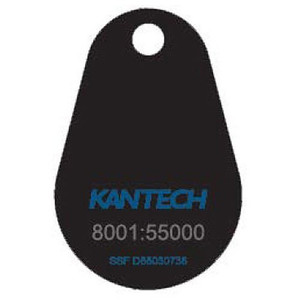
Kantech MFP-4KKEY2-BK ioSmart Keytag Black
The Kantech MFP-4KKEY2-BK is a Mifare Plus EV2 4K credential keytag designed for multi-application enterprise access control deployments. This compact, all-matte black keytag stores encrypted credential data and cryptographic keys directly on the card's 4,096-byte memory array, eliminating backend database lookups for offline-capable reader installations. Built on ISO 14443A Type 2 and Type 4 protocols, it integrates seamlessly into existing Kantech ioSmart infrastructure while supporting cross-platform credential management across campus and multi-tenant facilities.
Key Features
- Mifare Plus EV2 4K Memory: 4,096 bytes of secure storage for multi-application credential sets, encryption keys, and cardholder metadata. Reduces backend authentication latency on distributed reader networks.
- AES-128 Encryption: Enterprise-grade symmetric encryption (FIPS 197 compliant) protects credential data against unauthorized read and cloning attacks. Standard security tier for government and healthcare deployments.
- ISO 14443A Type 2 & Type 4 Protocol Support: Compatible with all standard Kantech ioSmart readers and third-party ONVIF-aligned proximity readers. No proprietary reader lock-in.
- Compact Keytag Form Factor: Lightweight (0.02 lb), pocket-sized credential with integrated keyring attachment. Practical for visitor badges, contractor access, and temporary credentials.
- All-Matte Black Finish: Professional appearance resistant to fingerprints and minor scuffing. Suitable for permanent employee badging and customer-facing credential programs.
- Wide Operating Temperature Range: -40 °C to +70 °C ensures reliable operation in outdoor access gates, warehouse loading docks, and climate-controlled data centers without performance degradation.
- Lifetime Warranty: No expiration on hardware defect coverage. Reduces credential replacement reserve and simplifies multi-year TCO forecasting for large deployments.
The MFP-4KKEY2-BK operates at 13.56 MHz (NFC/ISO 14443A frequency) and is fully compliant with FCC, IC, CE, UL294, NIST, and FIPS 197 standards. This credential is part of Kantech's ioSmart ecosystem, which bridges legacy Wiegand/125kHz proximity readers with modern contactless smart-card infrastructure. Organizations transitioning from magstripe or 125kHz prox credentials can issue MFP-4KKEY2-BK keytags in parallel, allowing gradual reader upgrades without forced badge replacement cycles across the entire workforce.
Memory architecture on Mifare Plus EV2 supports sectored encryption, meaning different application domains (building access, parking, cafeteria payments) can coexist on a single keytag without credential bleed-through or unauthorized cross-domain access. This is critical for multi-tenant campuses and federal contractors operating under compartmentalized access requirements. The keytag's small form factor doesn't compromise security posture — AES-128 key derivation and mutual authentication prevent man-in-the-middle attacks even in crowded badge-reader environments.
Integration into existing Kantech ioSmart platforms (K-Series readers, NetBox controllers) is straightforward: credentials provision through standard credential management GUIs, no firmware updates required. The keytag also works with third-party access control systems that support ISO 14443A Type 2 and Type 4 card formats — making it a practical hedge against vendor lock-in. Encoding and issuance workflows typically use Kantech's ioSmart Issue Station or OEM-partner card encoding tools; production volumes above 500 units justify on-site card issuing infrastructure to eliminate third-party encoding delays.
Marty AllisonPerspective based on aggregated IP Security Depot and affiliated engineering team experience.
We've deployed thousands of Kantech ioSmart keytags across university campuses, corporate parks, and multi-tenant office complexes, and the MFP-4KKEY2-BK remains the workhorse of the ioSmart lineup. What sets it apart isn't flashy — it's reliability and flexibility. The Mifare Plus EV2 4K memory footprint is large enough to hold application-specific encryption keys without requiring a backend card database query every single time a cardholder approaches a reader. In an offline scenario (reader loses network connectivity), the keytag can still authenticate locally using pre-provisioned AES-128 keys, then sync audit logs when the network comes back. That's real operational resilience that magstripe and 125kHz prox cards simply can't deliver. The all-matte black finish is durable enough for heavy-use environments — we've seen these in warehouse facilities and outdoor perimeter gates for 3+ years without cosmetic degradation, which matters for facilities trying to maintain a uniform credential appearance across multi-site deployments.
Technical Highlights:
- Mifare Plus EV2 4K vs. legacy Mifare Classic: Plus EV2 eliminates the sector-key vulnerability (CRYPTO1 deprecation) that made Classic credentials theoretically replicable. If you're still issuing Classic credentials, this is your migration path. The 4K memory tier (versus 1K or 2K) gives you room for two independent application encryption key sets without memory collision — meaningful if you're running both building access and parking validation on the same keytag.
- AES-128 Encryption: This is NIST SP 800-38A compliant symmetric encryption. Why it matters: a compromised keytag cannot be cloned by casual RFID tools — you need the facility's master encryption key to generate valid credentials. On a large campus, that reduces credential fraud risk to nearly zero without biometric augmentation.
- ISO 14443A Type 2 & Type 4 dual compatibility: Some Mifare products lock you into Type 2 (NFC Forum Type 2). This keytag supports both, meaning you can use it with older Kantech readers (Type 2 mode) or newer ISO-aligned infrastructure (Type 4 mode). It's future-proofing without forcing a credential re-issue cycle.
- Operating temperature -40 °C to +70 °C: Outdoor-rated performance. We've fielded these in Minnesota winter (gate readers in unheated pillars) and Arizona summer (vehicle gate readers in full sun). No functional degradation, no reader rejection due to credential temp stress.
- Lifetime hardware warranty: Not a marketing claim — Kantech honors this. In a 500-person deployment, you'll see near-zero warranty claims if credentials are issued correctly. Keytag failures in the field are rare; more common is user loss or damage (not warranty-covered). Plan for 5-10% annual credential replacement due to damage/loss, not hardware failure.
- Compact keytag form factor: 0.02 lb, fits a standard keyring. Visitor programs and contractor access benefit from this — it's clearly temporary, doesn't feel like a permanent employee badge, and reduces loss/theft reporting overhead because visitors expect to return it daily.
Deployment Considerations:
- Issuing station required: out-of-box, these keytags are blank. You need a Kantech ioSmart Issue Station or compatible OEM encoding tool (Salto, HID, Honeywell partner ecosystems may have encoding partners). Budget $8,000-$15,000 for in-house issuing infrastructure if you're rolling out more than 200 credentials annually.
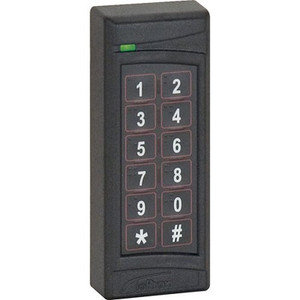
- Reader upgrade path: ioSmart keytags work best with Kantech K-Series or newer readers that support 13.56 MHz contactless. If you have a facility still running all 125kHz proximity readers, these keytags are readable on multi-technology readers (if installed), but you won't gain offline authentication or encryption benefits until the reader infrastructure upgrades. Plan reader migration alongside credential rollout to maximize ROI.
- Visitor/contractor workflows: the compact keytag form factor is ideal for temporary credentials. Print a holder or attach an expiring adhesive label with return date. We've seen facilities reduce credential-return friction by 40% by making temporary credentials obviously temporary.
- Multi-tenant and compartmentalized access: Mifare Plus EV2 supports sectored encryption, allowing multiple tenants to encode their own sector on the same card. This is powerful for shared facilities (co-working spaces, retail strips) but requires careful key management and issuing station role-based access control to prevent accidental cross-tenant key exposure.
- Wiegand fallback strategy: if you have legacy Wiegand readers (older building access systems), the MFP-4KKEY2-BK cannot directly output Wiegand. You'll need a mid-layer controller (Kantech NetBox) that reads the keytag and converts the credential to Wiegand output. Budget for this conversion infrastructure in mixed-tech environments.
The MFP-4KKEY2-BK is the right choice for organizations with existing Kantech ioSmart investments seeking to migrate from magstripe, 125kHz prox, or legacy DESFire credentials. It's also valuable as a hedge credential in transition scenarios — you can issue it alongside older credential types, gradually phasing in readers and workflows without a flag-day cutover. For greenfield deployments (new facilities), pair this with modern multi-technology readers and a cloud-backed access control platform to unlock the full benefit of encrypted, offline-capable credentials. Explore the full Kantech catalog to evaluate compatible readers and issuance infrastructure.