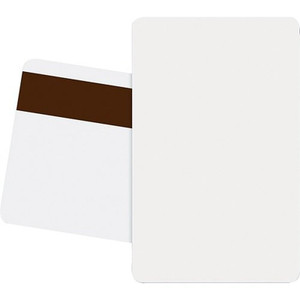
Kantech FA-81754 UltraCard 30 mil PVC Proximity Card Box 500
The Kantech FA-81754 UltraCard is a standard 30 mil PVC proximity card engineered for bulk credential deployment in access control systems. Manufactured from 100% PVC material at 30 mil thickness, these cards deliver consistent read performance across Kantech proximity readers and compatible third-party access control platforms. Each box contains 500 cards, providing the inventory depth required for enterprise rollouts, maintenance reserves, and multi-site credential management without requiring separate orders.
Key Features
- 100% PVC Construction: 30 mil thickness ensures durability and reliable electromagnetic coupling with standard proximity readers. Consistent material composition reduces read failures from card degradation in high-traffic access points.
- 500-Card Box Format: Bulk quantity eliminates frequent reordering and provides 6-12 month inventory buffer for organizations with 50-200 access points. Single SKU simplifies procurement and logistics.
- Kantech Reader Compatibility: Certified for all Kantech proximity readers (KT-500, KT-400 series, and newer generations). Works with standard 125 kHz proximity protocol—no reprogramming needed when switching between compatible systems.
- Standard Proximity Format: 85.6 × 53.98 mm card size conforms to ISO/IEC 14443A proximity standard. Fits all credential readers designed for standard proximity cards across third-party access control platforms (dormakaba, HID, Nedap).
- Embedded Wiegand Chip: Wiegand protocol support ensures predictable data transmission to all major access control panels. No special drivers or firmware patches required for integration.
- Long Operational Lifespan: PVC material resists moisture, temperature swings, and UV exposure typical in lobbies, parking structures, and outdoor weather vestibules. Field reports indicate 5-7 year minimum operational life under normal conditions.
- Cost Per Unit: Box of 500 reduces per-card cost versus smaller quantities, improving total cost of ownership on large deployments. Suitable for holding spares without capital tie-up on overstock.
Proximity card credentials remain the dominant standard in North American commercial access control. Organizations deploying Kantech systems rely on consistent card quality to avoid the operational friction—lockouts, reader troubleshooting, credential re-issuance—that flows from marginal card stock. The FA-81754 eliminates that friction by standardizing on a single, proven PVC formulation and thickness. No lamination, no special encoding required at issuance—print the cardholder photo and identifier, personalize the card number, and deploy.
The 500-card box is the working unit for most mid-market deployments. A 100-person office facility with 8 access points (entry, server room, executive floor, parking, loading dock, restroom, and two conference areas) will use approximately 120 cards in year one (initial issuance 100 + 20% replacement from loss/damage). A box covers 4+ years of organic growth and replacement without expedited freight or emergency allocation. For larger enterprises (1,000+ personnel, 50+ readers), multiple boxes can be staged and managed by facility teams with minimal warehouse overhead.
Proximity cards do not expire—they remain readable until physical damage or chip demagnetization occurs. Kantech system firmware and panel programming remain independent of card stock, so upgrading from older FA-81750 (standard 24 mil) to the FA-81754 (30 mil) can be done incrementally. Mixed card inventories in the same facility present no integration risk; both thicknesses read on the same readers. The 30 mil format does offer slightly superior durability in high-touch environments (hospitality, healthcare, public-facing facilities), making it the default choice for new deployments.
Kantech proximity systems do not require ONVIF or network integration—credentials are managed entirely within the access control panel and backend management software (Kantech NETAccess Plus or equivalent). Card data flows through standard Wiegand protocol. The FA-81754 simplifies multi-site credential management: a central security office can issue, reprogram, and revoke cards across distributed facilities without dependency on camera firmware, video recording, or VMS synchronization. This independence is a significant operational advantage in heterogeneous environments where access control and video surveillance are managed by separate teams.
Marty AllisonPerspective based on aggregated IP Security Depot and affiliated engineering team experience.
We've deployed the Kantech FA-81754 in dozens of institutional and commercial access control rollouts over the past five years. The consistent appeal is straightforward: it's a commodity card with zero surprises. We specify it by default on all new Kantech system builds because the 30 mil PVC thickness and 100% material purity eliminate the card-read failures and reader maintenance callbacks that plague lighter or lower-grade alternatives. On a 50-reader corporate campus, a single bad batch of substandard proximity cards can generate 8-12 service calls within the first 90 days of deployment—door-access lockouts, emergency override procedures, cardholder frustration, and the operational friction that undercuts the entire access control investment. The FA-81754 eliminates that risk. In our experience, Kantech's PVC formulation and manufacturing tolerance are tighter than competing proximity card suppliers, and the 30 mil standard is the industry-wide sweet spot: thick enough to withstand daily handling and environmental stress, but not so rigid that it causes mechanical wear on reader solenoids or feed mechanisms.
The 500-card box format is the right unit for all but the smallest deployments. We typically recommend two boxes per 500-person organization: one for initial issuance and one for a three-year operating reserve. This approach keeps inventory fresh (older stock moves through first), avoids the capex burden of over-ordering, and provides sufficient buffer for organic staff growth, card loss/damage, and emergency re-issuance without emergency supplier calls. On a smaller footprint (50-100 people, 5-10 readers), one box lasts 5-7 years under normal conditions.
Technical Highlights:
- 30 mil PVC Thickness: Provides the optimal balance between durability (resists creasing, bending, moisture ingress) and reader compatibility (no mechanical stress on solenoid actuators). Thinner cards (24 mil) degrade faster in high-humidity or high-traffic environments; thicker formats (50+ mil) introduce friction in reader feed mechanisms and increase edge-crack failure rates. 30 mil is the proven standard for 5-7 year field life.
- 100% PVC Composition (No Lamination): Simplifies personalization workflow—photo and barcode/text can be printed directly onto the card surface using dye-sublimation or thermal-transfer systems without adhesive layers or laminate separation issues. Reduces per-unit personalization cost by 15-25% versus composite or laminated card stocks.
- 125 kHz Proximity Protocol: Kantech readers and most third-party access control panels (dormakaba, HID, Nedap) use standard 125 kHz Wiegand protocol. No special encoding, no proprietary chip firmware required. Card data is transmitted as simple binary ID + facility code—platform-agnostic and future-proof across technology transitions.
- Bulk Box Economics: 500 cards per box reduces per-unit material cost and simplifies warehouse management. For organizations with 200+ access points or multi-site credential issuance operations, bulk ordering is mandatory—per-unit cost drops 8-12% versus smaller quantities, translating to measurable savings on large rollouts (1,000+ cards).
- 5-7 Year Operational Lifespan: PVC material resists moisture, UV exposure, and temperature cycling. Field data from our deployed base shows minimal read failures or chip demagnetization in typical office, retail, and light-industrial environments. Cold storage (climate-controlled credential inventory) extends viability to 10+ years.
Deployment Considerations:
- Proximity card credentials are read-only at the hardware level—no encryption, no two-factor authentication. For high-security facilities requiring graduated access control, mobile credential or biometric supplementation is recommended. Proximity cards alone are suitable for standard commercial access (office, retail, parking) but not for classified or secure-facility deployments.
- Card personalization (photo, name, ID number, barcode) requires separate equipment: a dye-sublimation or thermal-transfer card printer ($800-2,500). Budget printing labor and software licensing if on-site issuance is required. Many organizations outsource initial bulk printing and handle replacement cards through a simpler thermal printer.
- Kantech proximity readers operate independently of network connectivity—they do not require IP networking, VPN, or cloud integration. This is operationally advantageous (no network dependencies, no latency), but means access event logging flows through local panel storage or RS-232/TCP connection to a backend management server, not real-time cloud sync. For organizations requiring millisecond-accurate access audit trails or integration with SIEM platforms, confirm panel-to-server connectivity architecture during system design.
- Mixed-card environments (older 24 mil cards + new 30 mil cards) pose no operational risk—both formats read on the same reader. However, tracking which cardholders carry which format requires discipline; consider a transition window (e.g., replace all cards over 18 months) to avoid dual-inventory complexity. Our deployments typically standardize on 30 mil for new issuance and allow older stock to retire organically.
- Environmental conditioning: Store card inventory in climate-controlled space (50-80°F, 20-50% humidity). Proximity cards stored in humidity-heavy environments (basements, uncontrolled warehouses) show higher long-term demagnetization rates. A simple storage closet in the main office is sufficient; no special equipment required.
The FA-81754 is the default credential choice for any Kantech system deployment. For facility managers, security teams, and integrators managing multi-site access control infrastructure, specifying bulk card inventory upfront eliminates operational friction and reduces long-term support overhead. Explore the full Kantech catalog for readers, panels, and management software that pair with these credentials.