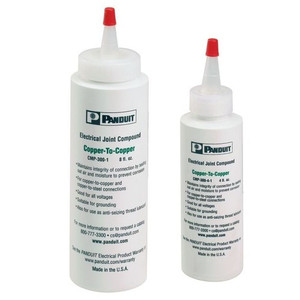
Panduit CMP-200-1 Joint Compound for Compression Connections
Overview
The Panduit CMP-200-1 is a joint compound formulated for use with compression connectors, providing the corrosion-inhibiting and conductivity-enhancing interface layer that compression terminations depend on for long-term reliability. Whether you're terminating copper or aluminum conductors in panel rooms, junction enclosures, or electrical distribution points, the CMP-200-1 (often searched as CMP 200 1) is the Panduit-specified compound designed to pair with their compression connector line.
The compound's flash point exceeds 260°C (500°F), which means it is not classified as a flammable material under standard handling conditions — relevant when working near live panels or in environments with ignition-source restrictions. For facilities with strict materials-management protocols, the fact that it is not regulated for transport simplifies procurement, storage documentation, and site delivery logistics.
Key Features
- High Flash Point (>260°C / >500°F): Not classified as flammable under standard conditions, so it can be stored and handled in electrical rooms without triggering flammable-materials storage requirements.
- Non-Regulated Transport: Ships without hazmat placarding or special carrier requirements, keeping freight costs and documentation overhead low for distributed site projects.
- Zinc Oxide-Based Formula: The zinc oxide component (OSHA PEL 15 mg/m³ total dust) provides the metallic interface layer that inhibits oxidation at the conductor-to-connector interface — a primary failure mode in compression terminations over time.
- Silicon Carbide Abrasive Content: The silicon carbide fraction (NIOSH REL 10 mg/m³) functions as a mild abrasive to break through oxide films on conductor surfaces during installation, improving contact quality without mechanical wire brushing.
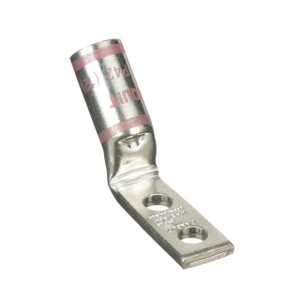
- Panduit Compression Connector Compatibility: Formulated to the specifications of Panduit's compression connector product line, ensuring the compound volume and viscosity match connector pocket geometry.
Safety and Handling Notes
Like all compounds containing zinc oxide and silicon carbide particulates, standard PPE applies during application: avoid generating dust or aerosols, work in ventilated areas, and follow site SDS protocols. Zinc oxide TWA is 2 mg/m³ (NIOSH) with a STEL of 10 mg/m³ — relevant in enclosed spaces with repeated application. Silicon carbide carries an IARC Group 2A classification in fibrous form; the respirable fiber TWA is 0.1 fibers/cm³ (NIOSH). In normal compression connector application — where the compound is applied in small quantities with a tool or brush — these exposure thresholds are not a practical concern, but the SDS should be on file for any facility with a formal chemical management program.
Frequently Asked Questions
Q: Is the Panduit CMP-200-1 classified as a hazardous material for shipping?
A: No. The CMP-200-1 is not regulated for transport, which simplifies ordering and delivery to job sites without special hazmat carrier requirements.
Q: What is the flash point of the CMP-200-1?
A: The flash point exceeds 260°C (500°F), so it is not classified as a flammable material under standard conditions.
Q: What connectors is the CMP-200-1 designed for?
A: It is formulated for use with Panduit compression connectors. Consult Panduit's connector selection guides to confirm compatibility with your specific connector series and conductor size.
Q: Are there any PPE requirements when applying CMP-200-1?
A: Standard electrical work PPE applies. In enclosed or poorly ventilated spaces, respiratory protection appropriate for zinc oxide and silicon carbide dust is recommended per the SDS exposure limits (zinc oxide TWA 2 mg/m³ NIOSH; silicon carbide 10 mg/m³ NIOSH).
The CMP-200-1 is one of those products that rarely gets scrutinized until a compression termination fails an inspection or develops resistance over time. The compound's flash point above 260°C means you're not introducing a flammable material into a live panel environment — a practical consideration when working in occupied buildings where hot-work permits are a process burden.
Technical Highlights:
- Flash Point >260°C: Not flammable under standard use conditions — no special storage classification required in most electrical rooms.
- Non-Regulated Transport: No hazmat documentation needed at the shipping stage, which matters on multi-site rollouts where procurement is centralized and sites receive direct shipments.
- Zinc Oxide / Silicon Carbide Formulation: The abrasive fraction mechanically cleans the conductor surface on insertion; the zinc oxide provides the oxidation barrier at the interface — both are doing real work, not just filling the connector pocket.
Deployment Considerations:
- In confined electrical rooms or vaults with limited air exchange, apply in short durations and confirm ventilation against the zinc oxide STEL of 10 mg/m³ — the TWA of 2 mg/m³ (NIOSH) is the threshold that matters on a full shift.
- Silicon carbide carries an IARC Group 2A classification in fibrous form; keep the SDS on file for facilities with formal chemical management programs, even though application quantities in compression work are small.
For panel rooms, bus duct terminations, and compression lug work in commercial electrical distribution — where long-term joint integrity matters more than day-one convenience — the CMP-200-1 is the specified compound to reach for when installing Panduit compression connectors.