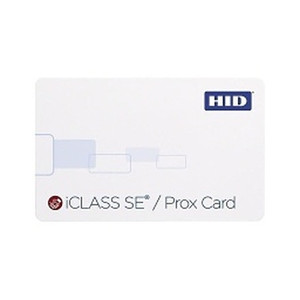
HID 3150RGGNNM iCLASS Prox Programmable Credential
When you're managing a mixed-technology access control environment or executing a phased migration from legacy 125 kHz prox to 13.56 MHz iCLASS, you need credentials that bridge both systems without forcing a forklift upgrade. This programmable dual-technology credential reads on both iCLASS and proximity readers, letting you maintain backward compatibility with existing prox infrastructure while deploying iCLASS readers at critical entry points. Ideal for staged rollouts where budget or operational constraints prevent simultaneous replacement of all readers across a facility.
Key Features
- Dual-technology design supports both 13.56 MHz iCLASS and 125 kHz proximity read operations
- Programmable configuration allows customization of access privileges and facility codes
- Standard credit card form factor for compatibility with existing badge holders and lanyards
- Operates on both iCLASS and legacy HID prox readers without modifications
- PVC construction delivers durability for daily use in commercial environments
- Facilitates phased technology migrations without disrupting access for existing cardholders
The programmable architecture addresses a common integration challenge: you can't always rip out every proximity reader on day one of an iCLASS deployment. Loading docks, secondary gates, and legacy panels may continue running 125 kHz infrastructure for months or years. This credential eliminates the need to issue separate cards or force users to carry multiple credentials during transition periods. Program the iCLASS side with encrypted access data for high-security zones while maintaining the prox component for areas still running older technology.
Deploy these credentials when you're consolidating multiple sites with inconsistent reader technology, or when tenants in a shared facility require access to both legacy common areas and newer secured spaces. The dual-frequency operation ensures cardholders present a single credential regardless of which reader generation they encounter, reducing help desk calls and credential management overhead during extended migration windows.