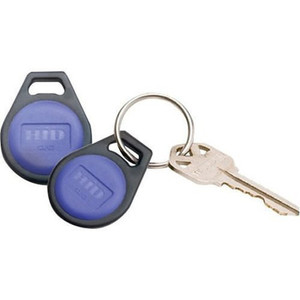
HID 2050HNNRN iCLASS KF 2K/2 SR Programmable Card
When you're deploying a multi-application access control system that needs to support both proximity and smart card credentials on a single platform, you need cards that can handle segmented data structures without cross-application interference. The HID iCLASS KF 2K/2 SR Programmable Card delivers two independent 2K-bit application areas in a standard CR80 form factor, giving you the flexibility to separate physical access from logical access, meal plans, time-and-attendance, or print management on the same credential.
Key Features
- Two independent 2K-bit (256-byte) application areas with discrete security keys
- Short-range (SR) read distance optimized for controlled access points and close-proximity readers
- 13.56 MHz contactless smart card technology with secure mutual authentication
- Fully programmable credential structure supports custom data layouts per application zone
- CR80 standard card dimensions (3.375" x 2.125") compatible with existing photo ID badging workflows
- PVC construction suitable for direct-to-card printing and lamination
- Compatible with HID iCLASS readers and multi-technology readers supporting iCLASS protocols
- Supports HID secure identity object (SIO) data model for future application expansion
The KF configuration (key diversified, fully programmable) means you control the encoding process and credential data structure at the integrator level. Each application area maintains independent read/write keys, so a compromised key in one zone doesn't expose data in the other. This is critical for enterprises that need to isolate HR-controlled access data from IT-managed logical access credentials or third-party applications managed by facilities or food service vendors. The short-range read profile reduces the risk of skim attacks in high-traffic areas while still providing reliable reads through wallets and badge holders.
These cards work within existing iCLASS infrastructures without reader firmware changes, and they're backward-compatible with legacy proximity systems when deployed with multi-technology readers. The programmable architecture gives you room to add applications post-deployment without reissuing credentials, which matters when you're managing large cardholder populations across multiple buildings or campuses.