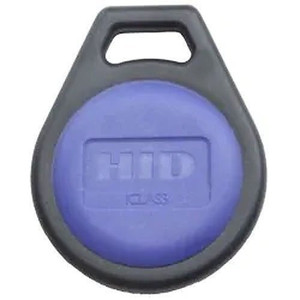
HID 2051CNNSN iCLASS Keyfob 16K/2 Configured
When you need reliable contactless credentials that integrate seamlessly with existing HID iCLASS infrastructure, pre-configured keyfobs eliminate provisioning delays and simplify deployment. The HID 2051CNNSN delivers 16K bit memory across two application areas, arriving factory-programmed and ready to encode with your site-specific access data. This keyfob format puts credential management in users' hands—literally—reducing card carrier complaints while maintaining the security standards your commercial installations demand.
Key Features
- iCLASS 13.56 MHz contactless technology for fast, reliable reads at standard HID proximity distances
- 16K bit (2K byte) memory capacity provides ample space for access credentials plus auxiliary data applications
- Two application areas support logical separation of access control and secondary functions like cashless vending or time-and-attendance
- Factory-configured format ships ready for site encoding, reducing deployment time and eliminating format setup errors
- Durable keyfob housing withstands daily pocket carry, key ring wear, and typical commercial environment exposure
- Standard HID keyfob form factor maintains compatibility with existing card holder expectations and processes
- Mutual authentication and encrypted data transfer protect credential data from cloning and eavesdropping attacks
- Direct drop-in compatibility with iCLASS readers across all HID reader families
The dual-application architecture makes this keyfob particularly valuable in mixed-use facilities where you're managing both physical access and auxiliary credential functions. Encode building access in one application area while reserving the second for parking, printer release, or cafeteria systems—all from a single credential. The 16K capacity handles complex credential structures including multiple facility codes, cardholder data fields, and future expansion requirements without forcing credential replacement down the road.
Pre-configuration eliminates the format setup variables that can delay new deployments or create compatibility issues across multi-site installations. You're encoding to a known, tested format rather than troubleshooting custom configurations. For integrators managing credential lifecycles across multiple buildings or campuses, this consistency translates directly to reduced support calls and faster user onboarding.