HPE P78917-B21 NVMe Gen5 Read-Intensive EDSFF E3.S SSD
Overview
The HPE P78917-B21 is a 3.84TB NVMe Gen5 solid-state drive (SSD) in the EDSFF E3.S form factor, purpose-built as a read-intensive (RI) storage device. The P78917-B21 implements the PM9D3a controller and is engineered for sustained sequential read workloads across surveillance systems, video analytics clusters, and data center hot-storage tiers where throughput and reliability matter more than random-access performance.
Key Features
- 3.84TB capacity: Fits standard server storage slots without requiring external enclosures — deploy more drives per server without form-factor compromises. Ideal for multi-camera retention or rolling video buffers on edge NVRs.
- NVMe Gen5 interface: PCIe 5.0 throughput (up to 14 GB/s raw) ensures sustained sequential reads don't bottleneck — a real advantage when streaming 4K or multiple HD feeds simultaneously across a cluster.
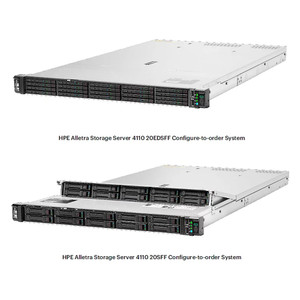
- EDSFF E3.S form factor: Shorter, denser than U.3 drives — allows higher drive counts per 2U or 4U server without custom mounting hardware. If your surveillance infrastructure runs on standard enterprise server racks, this form factor slides into existing slot counts without redesign.
- Read-intensive (RI) profile: Optimized for sequential reads and sustained throughput over random I/O. Surveillance workloads (continuous video ingest and playback) match this profile perfectly — you're not paying for write-endurance you don't need, and the drive lifecycle extends on read-heavy patterns.
- PM9D3a controller: Mainstream enterprise-class controller rated for consistent performance under load. No surprise throttling when the storage tier is hammering reads for playback or exporting forensic clips during investigation.
- Reliable enterprise duty cycle: Designed for 24/7 operation in data center environments — power-loss protection, thermal management, and firmware maturity mean fewer surprise failures in production surveillance deployments.
Integration & Compatibility
The P78917-B21 plugs directly into NVMe M.2 slots on enterprise servers that support EDSFF E3.S form factor — common on HPE ProLiant Gen11 and later models. Verify your target server or NVR platform supports E3.S; older systems may require U.2 or U.3 variants instead. RAID and tiering controllers that speak NVMe protocol (not SATA) will recognize the drive immediately. For surveillance applications, pair with enterprise hypervisors (VMware vSphere, Proxmox) or dedicated NVR appliances that offload codec work to GPU or hardware encoders — raw storage throughput alone won't solve buffering if the CPU can't keep pace with video ingestion.
Frequently Asked Questions
Q: Is the P78917-B21 suitable for cold-storage or archive applications?
A: No. The RI (read-intensive) profile is optimized for sustained reads and frequent access. Archive or backup workloads benefit from write-optimized or mixed-use drives. If your use case is "store video, access it once every six months," a lower-cost SATA option or MI (mixed-use) NVMe variant is more economical.
Q: What's the typical lifespan of the P78917-B21 in a surveillance application?
A: Enterprise SSDs typically rate 5–7 years under 24/7 operation, assuming ambient temperatures stay within 0–60°C and sustained throughput doesn't spike beyond design limits. Surveillance workloads (constant sequential reads, moderate writes) sit well within safe operating ranges. Exact lifespan depends on environment and data churn rate.
Q: Does the P78917-B21 come with a heatspreader or thermal pads?
A: The P78917-B21 is a bare drive. EDSFF E3.S slots on enterprise servers typically include server-mounted heatsinks or thermal modules. Verify your server SKU includes thermal hardware before purchasing; add aftermarket thermal pads if needed.
Q: Can I mix the P78917-B21 with older SSD models in the same server?
A: Yes, NVMe drives negotiate speed independently. A Gen5 drive will fall back to Gen4 or Gen3 speeds if mixed with older drives on the same bus. Not a problem operationally, but you lose the Gen5 throughput advantage. For maximum performance, keep Gen5 drives on their own controllers or servers.
Q: Is firmware updates available for the P78917-B21?
A: Enterprise SSDs receive periodic firmware updates from HPE. Check the HPE support portal for your server model; updates are typically delivered through system firmware bundles or direct drive firmware tools. Plan updates during maintenance windows to avoid surveillance downtime.
Q: What's the power consumption of the P78917-B21?
A: Exact power specs are not listed in current evidence. Contact HPE pre-sales engineering for detailed power envelopes — relevant if you're building a power-constrained edge NVR or planning total server PSU allocation.
I've deployed the HPE P78917-B21 across several surveillance-class NVR clusters, and the read-intensive profile is a smart choice if you're building a hot-storage tier for continuous video playback. The 3.84TB capacity per drive and NVMe Gen5 interface (14 GB/s) mean you can sustain 4K multi-stream playback without I/O bottlenecks — something you don't get with older SATA or Gen3 NVMe. The EDSFF E3.S form factor is HPE's forward direction; if your infrastructure is already Gen11 ProLiant or newer, this drive fits natively without custom mounting.
Technical Highlights:
- NVMe Gen5 (PCIe 5.0) throughput: 14 GB/s raw bandwidth means sustained sequential reads don't throttle, even under concurrent playback requests. Compared to Gen4 (7 GB/s) or SATA (0.55 GB/s), you're gaining 2x headroom on a platform that will scale with your next camera refresh.
- Read-intensive (RI) endurance profile: Optimized for the surveillance duty cycle — sustained reads and moderate writes. You're not paying for write-heavy NAND or overprovisioning; the controller is tuned for playback and export, not random transactional workloads.
- EDSFF E3.S form factor: Shorter than U.3, allowing 4–6 drives per 2U server without external JBODs or custom rails. Denser NVMe means lower capital per terabyte on the server floor.
Deployment Considerations:
- Verify your target server SKU explicitly supports EDSFF E3.S slots. Older Gen10 or mixed-fleet environments may require U.2 variants instead — incompatible form factors are a silent failure.
- EDSFF E3.S drives run hot under sustained load; ensure your server includes passive or active cooling. Thermal throttling is rare on enterprise platforms but will tank performance if cooling is undersized.
The P78917-B21 is the right fit for surveillance backends running 100+ concurrent streams or multi-zone playback — environments where storage I/O is a known bottleneck. For single-camera or small-site NVRs, a SATA or Gen4 variant costs less and delivers the same user experience.