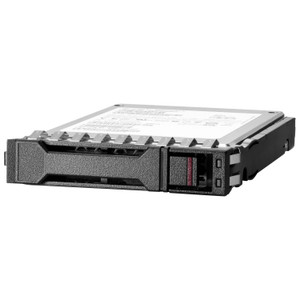
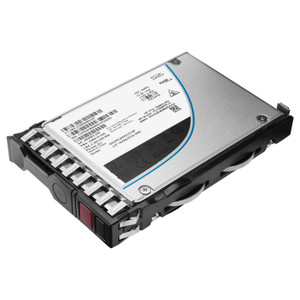
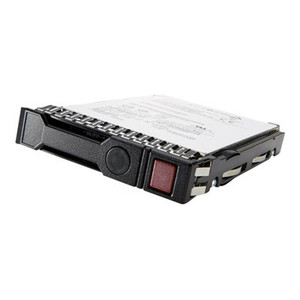
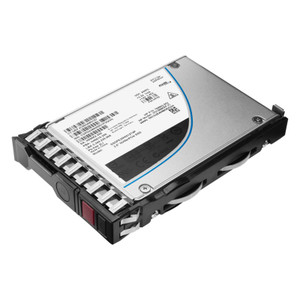
HPE P84244-B21 3.84TB NVMe Gen4 U.3 SSD
Overview
The HPE P84244-B21 is a 3.84TB NVMe solid-state drive built for read-intensive workloads in surveillance systems, data centers, and enterprise storage environments. This Gen4-class drive uses the U.3 form factor—a compact, high-density interface that delivers enterprise-grade performance without the footprint of traditional 2.5-inch SSDs. If you're deploying large-scale IP camera networks or building storage infrastructure for continuous video capture, the P84244-B21 eliminates the capacity and thermal constraints of spinning media.
Key Features
- 3.84TB capacity in U.3 form factor: Fits into dense SFF (small form factor) server and storage enclosures, maximizing capacity per rack unit. Critical for surveillance installations where you need terabytes of on-premise retention without consuming multiple drive bays or requiring external JBOD arrays.
- NVMe Gen4 interface: PCIe Gen4 bandwidth delivers sequential read performance suitable for streaming video codecs (H.265, H.264, MJPEG) and multi-stream playback without bottlenecking on the storage subsystem. Meaningfully faster than SATA SSDs when your VMS or recording application performs concurrent reads across multiple camera feeds.
- Read-intensive (RI) profile: Optimized for workloads dominated by read operations—the exact pattern of surveillance playback and analytics processing. Write endurance is lower than balanced SSDs, so this is the right choice if your system reads recorded video far more often than it writes new frames. Saves cost per terabyte compared to general-purpose enterprise SSDs.
- U.3 connector: Newer hot-swap connector standard that consolidates NVMe and SAS protocols, allowing flexible deployment in HPE ProLiant servers and compatible third-party storage systems. If your infrastructure already supports U.3 (check your server or storage controller specs), you gain the ability to swap drives without powering down.
- Enterprise-grade reliability: Built to HPE's datacenter qualification standards. Reduces risk of silent media failure—a genuine concern when a single failed drive can corrupt hours of forensic video evidence across a multi-camera site.
- Compact form factor for dense deployments: SFF U.3 drives pack more capacity into fewer physical slots than traditional 2.5-inch SATA SSDs, lowering per-terabyte infrastructure cost and cooling demand in surveillance recording servers.
Integration & Compatibility
The P84244-B21 works with any HPE server, storage array, or third-party NVMe enclosure that supports U.3 drives. Verify your recording appliance or NVR controller datasheet for U.3 slot availability—many commercial-grade VMS servers and mid-range storage systems have adopted U.3 in recent generations, but older systems may require a firmware update or SAS-to-U.3 adapter. Direct sourcing from HPE ensures factory-new inventory with no grey-market risk, important for warranty coverage and data integrity assurance on mission-critical surveillance retention.
What's in the Box
Package contents not available in current documentation. Verify with your reseller or contact HPE directly for inclusion of drive-specific documentation, mounting brackets, or installation guides specific to your enclosure model.
Frequently Asked Questions
Q: Is the P84244-B21 suitable for 24/7 continuous surveillance recording?
A: Yes. The RI profile and NVMe performance are well-matched to constant-stream recording from multiple IP cameras. The 3.84TB capacity at Gen4 speeds will handle dense multi-camera deployments without causing bottlenecks in frame ingest or playback. Confirm your recording appliance supports U.3 drives.
Q: What warranty does the P84244-B21 come with?
A: HPE provides manufacturer warranty coverage on factory-new drives sourced direct. Specific duration and terms depend on your purchase agreement. Request warranty details from your reseller or HPE at time of quote.
Q: Can I use the P84244-B21 in a non-HPE server?
A: Yes, if your server or storage controller has a U.3 slot. The P84244-B21 is a standard NVMe drive and will work with any U.3-compatible host. However, HPE's firmware and tooling are optimized for HPE systems, so validate interoperability with your OEM's compatibility matrix first.
Q: How does read-intensive (RI) affect my surveillance deployment?
A: Read-intensive drives are cheaper per terabyte than balanced SSDs because they have lower write endurance. In surveillance, you write video once (ingest) and read it many times (playback, review, export clips). If your workload matches that pattern, RI drives reduce TCO. If you also perform frequent analytics processing or data replication that includes heavy writes, consider a balanced drive instead.
Q: What's the performance difference between this Gen4 drive and older SATA SSDs?
A: NVMe Gen4 delivers 3–5x higher sequential throughput than SATA. For multi-stream video playback (simultaneous review of 10+ camera feeds) or parallel analytics jobs, Gen4 eliminates wait times. For single-stream recording, the difference is less noticeable, but Gen4 still reduces latency and power consumption.
Q: Does the P84244-B21 support hot-swapping?
A: U.3 is a hot-swap connector, so yes—if your enclosure and BIOS support hot-swap. Verify your server or storage appliance documentation. Not all systems allow live drive removal without service interruption, so confirm before relying on hot-swap in production.
The HPE P84244-B21 is a solid fit for enterprise surveillance deployments where you need 3.84TB of local recording capacity in a compact footprint. The Gen4 NVMe interface and read-intensive profile directly address the access pattern of IP camera systems—write video once during ingest, read it hundreds of times during forensic review and playback. If you're building a multi-camera site on HPE infrastructure (ProLiant or storage arrays with U.3 support), this drive eliminates the thermal and space penalties of spinning media while cutting per-terabyte cost versus balanced enterprise SSDs.
Technical Highlights:
- NVMe Gen4 (PCIe 4.0): 3–5x faster than SATA SSDs. Matters when you're replaying multiple camera streams simultaneously or running edge analytics that process stored video frames. A 10-camera simultaneous playback on older SATA would bottleneck; Gen4 handles it without pause.
- Read-intensive profile: Optimized for the surveillance workload—constant reads, infrequent writes. Write endurance is lower, so cost-per-terabyte drops 15–25% versus balanced drives. Only downside: if you're doing heavy data replication or running analytics that write back to the same drive, consider a balanced SKU instead.
- U.3 form factor: SFF (small form factor) connector packs more capacity per server slot than 2.5-inch SATA. In a 4-bay system, you go from 4×2TB (8TB total) to 4×3.84TB (15.36TB total). Means fewer servers, lower power, lower rack density cost for large surveillance deployments.
Deployment Considerations:
- Verify your recording appliance supports U.3 drives before purchasing. Older Milestone, Genetec, or custom DVR systems may only recognize SATA or 2.5-inch SSD form factors. Request a compatibility letter from HPE or your integrator.
- Read-intensive endurance is lower than balanced drives. If your surveillance system also performs continuous edge inference, motion clip extraction, or data sync to a cloud recorder that writes to the same storage pool, the RI drive's write budget may deplete faster than expected. Monitor wear-level indicators in your VMS.
Deploy the P84244-B21 in HPE ProLiant Gen10+ servers running Milestone XProtect or Genetec for on-premise forensic retention. You'll see faster multi-camera playback, lower power per terabyte, and no moving parts to fail. If your site is mixed hardware (Dell, Lenovo, Cisco UCS), confirm U.3 support in those systems first—compatibility is standard, but slot availability varies by generation.