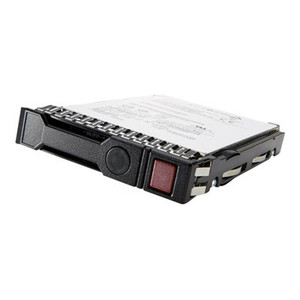
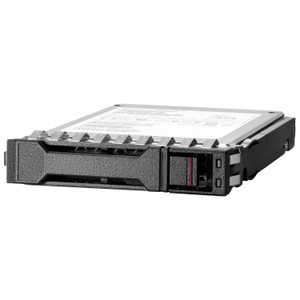
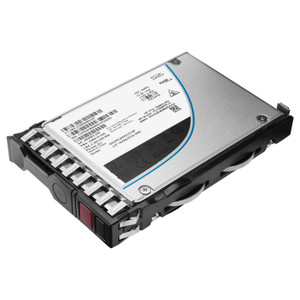
HPE P63841-B21 15.36TB NVMe Read-Intensive SFF Hot-Plug U.3 CM7 SSD
Overview
The HPE P63841-B21 is a 15.36TB NVMe U.3 solid-state drive engineered for read-intensive server and storage workloads where throughput, capacity, and hot-plug serviceability all matter at once. At a workload class of read-intensive (RI), it targets environments where reads vastly outnumber writes — surveillance video repositories, analytics platforms, content delivery back-ends, and enterprise object storage tiers. The SFF small form factor fits standard HPE ProLiant and Apollo server bays, and the hot-plug design means you can swap a failed unit without scheduling downtime.
P63841-B21 (often searched as P63841 B21) delivers a peak random read IOPS figure of 1,225,944 at Q128 queue depth — a number that matters when dozens of concurrent streams are hitting the same array simultaneously, as they do in multi-channel NVR deployments or large-scale VMS servers pulling recorded footage for simultaneous review.
Key Features
- 15.36 TB Raw Capacity: At 15.36TB per drive, a single populated server bay carries enough raw storage for weeks of continuous high-resolution video at typical surveillance bitrates — reducing the number of drives needed per chassis and simplifying cabling and bay management in dense configurations.
- Peak 1,225,944 Random Read IOPS (4KiB @ Q128): This figure reflects the drive's ceiling when a deep queue of parallel requests land simultaneously. In practice, a multi-camera VMS playback server issuing concurrent read requests across many streams will rarely saturate this — meaning the drive stays well inside its performance envelope during normal operation, with headroom to spare for burst retrieval events.
- 312,673 Random Write IOPS (4KiB, Q=16): Even at the more conservative Q=16 queue depth that reflects realistic sustained write workloads, the write IOPS figure is strong enough to handle high-ingest surveillance recording without write stalls. This is the number to check when sizing for simultaneous record-and-playback scenarios.
- NVMe U.3 Interface: U.3 is the tri-mode interface standard that gives HPE platform architects flexibility — the same physical bay supports NVMe, SATA, and SAS depending on the backplane configuration. NVMe eliminates the SATA/SAS command overhead, dropping latency meaningfully compared to legacy interfaces. If your workload involves random small-block reads (metadata lookups, index scans, concurrent stream seeks), the protocol choice here is directly visible in application response times.
- Hot-Plug SFF Design: The BC (basic carrier) hot-plug configuration lets you replace a drive in a live array without powering down the server. In 24/7 surveillance or storage environments where any unplanned downtime has operational consequences, this is the servicing model you want — pull the failed unit, slide in the replacement, let the RAID or erasure-coding layer rebuild.
- 28,032 TB Total Bytes Written (TBW) Endurance: At 28,032 TB lifetime writes, this drive is rated for sustained ingest over years of operation. For a surveillance system writing, say, 10 TB/day across a drive array, the endurance headroom per drive is substantial — endurance exhaustion is unlikely to be your first failure mode in a properly sized deployment.
- 25W Maximum Power Draw: The 25W max power envelope is a real input for chassis power budgeting. Dense SSD configurations multiply quickly — eight drives at 25W each is 200W from storage alone. Size your PSU and chassis thermal budget accordingly, especially in fully-populated 2U configurations where airflow is already working hard.
- Read-Intensive Workload Class: The RI designation is not just marketing segmentation — it reflects a different NAND optimization profile versus mixed-use (MU) or write-intensive (WI) drives. RI drives trade some write endurance for higher read throughput and lower read latency. If your workload is genuinely read-heavy (video playback, analytics, cold storage retrieval), RI is the correct tier. If you have heavy balanced write/read workloads (active databases, transactional systems), a mixed-use variant is the better fit.
Integration and Compatibility
The P63841-B21 is designed for HPE ProLiant Gen10/Gen10 Plus and later server platforms that support U.3 NVMe SFF bays via the BC (basic carrier) tray format. Before ordering, confirm your server's backplane supports U.3 NVMe and that your HBA or direct-attach controller has the appropriate NVMe driver stack loaded. HPE's Smart Array controllers do not present NVMe drives — these require either direct CPU-attached PCIe lanes or an NVMe-capable HBA. In VMware ESXi and Linux environments, the drive presents as a standard NVMe block device with no additional driver requirements on modern kernels.
For network video recorders and VMS server builds, the 15.36TB capacity and high sequential read throughput make this a strong candidate for the storage tier in purpose-built surveillance servers — particularly in environments running IP camera arrays at high bitrates where simultaneous multi-channel playback generates the kind of deep-queue read patterns this drive handles efficiently. Pair with a supported network switch infrastructure to ensure the upstream data path matches the drive's throughput capability. See the storage and memory category for compatible HPE drives and accessories. If you're evaluating storage sizing for a surveillance deployment, the HPE server and storage line includes a range of capacity and performance tiers to match different retention and throughput requirements.
Frequently Asked Questions
Q: What workload type is the P63841-B21 optimized for?
A: It is a read-intensive (RI) class drive, optimized for environments where reads significantly outnumber writes — such as video surveillance repositories, analytics platforms, and content delivery back-ends. RI drives use a NAND profile tuned for high read throughput and lower read latency, trading some write endurance versus mixed-use or write-intensive variants.
Q: What is the peak random read IOPS for the P63841-B21?
A: At a queue depth of Q128 with 4KiB blocks, the drive reaches 1,225,944 random read IOPS. At the more conservative Q=16 queue depth, random read IOPS is 227,113 — the figure more representative of moderate-concurrency workloads.
Q: Does the P63841-B21 support hot-plug replacement?
A: Yes. The drive ships in a basic carrier (BC) hot-plug tray, allowing replacement in a live server without powering down — important for 24/7 surveillance and storage systems where unplanned downtime is not acceptable.
Q: What interface does the P63841-B21 use, and which HPE platforms support it?
A: The drive uses a U.3 NVMe interface — the tri-mode standard that fits SFF bays on HPE ProLiant Gen10/Gen10 Plus and later platforms with U.3-capable backplanes. Confirm your specific server model's backplane supports U.3 NVMe before ordering. Note that HPE Smart Array controllers do not support NVMe; a direct-attach or NVMe HBA configuration is required.
Q: What is the total write endurance (TBW) rating for this drive?
A: The P63841-B21 is rated for 28,032 TB total bytes written over its lifetime — a substantial endurance figure suited to continuous-ingest surveillance and archival workloads running around the clock.
Q: What are the physical dimensions of the P63841-B21?
A: The drive measures 8.63 x 9 x 5.75 inches in its carrier form factor, fitting standard HPE SFF drive bays.
When sizing storage for a high-density surveillance server, the number I go back to first is TBW endurance — and the P63841-B21's 28,032 TB lifetime write rating means you're not going to endurance-exhaust this drive in a typical surveillance ingest scenario before something else in the system needs attention. At 10 TB/day ingest per drive, you're looking at roughly 7.5 years of rated endurance. That's the kind of number that makes long-term TCO conversations straightforward.
Technical Highlights:
- 1,225,944 Peak Read IOPS (Q128): In a multi-channel VMS environment running simultaneous playback across dozens of cameras, read queue depth climbs fast. This drive stays well inside its envelope at the queue depths surveillance software typically generates — meaning no read latency spikes during forensic review events.
- 15.36 TB SFF Capacity: Fitting 15.36TB into a single SFF slot changes the drive-count math significantly in 2U chassis builds — fewer drives means less backplane stress, less power draw aggregated across the array, and simpler RAID rebuild times when a unit eventually needs replacement.
- 25W Max Power Draw: In a fully-populated 8-bay SFF chassis, that's up to 200W from drives alone. This is not a number to ignore when speccing chassis power supplies or calculating rack PDU load in a dense surveillance server room.
Deployment Considerations:
- U.3 requires a U.3-capable backplane — verify your specific ProLiant SKU supports tri-mode U.3 NVMe SFF bays before committing. HPE's configurator tools are the reliable check here; don't assume Gen10 automatically means U.3 support on every model.
- HPE Smart Array controllers will not see this drive. You need direct CPU-attached NVMe lanes or an NVMe-capable HBA. This is a common gotcha when retrofitting NVMe drives into an existing ProLiant fleet that was originally configured with Smart Array for SAS/SATA.
The P63841-B21 is the right drive for a purpose-built HPE surveillance video server where you're combining high per-drive capacity with the read throughput needed to serve concurrent multi-stream playback — specifically in enterprise physical security operations centers running 50+ camera channels from a single server node.