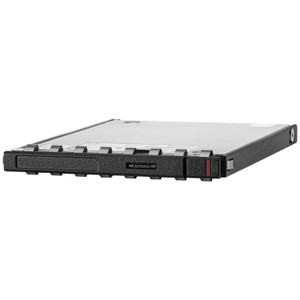
HPE P79122-B21 15.36TB NVMe Read-Intensive SSD
Overview
The HPE P79122-B21 is a 15.36TB NVMe solid-state drive engineered for read-heavy surveillance recording and archival workloads where sustained sequential access and data security matter. Built in the EDSFF (E3S) form factor, this drive delivers the capacity footprint of traditional bulk storage with the speed profile of enterprise-grade NVMe — a practical fit for networked video recording (NVR) systems, real-time analytics servers, and surveillance data archives that need to sustain high-throughput sequential playback without thermal throttling or wear-out penalties.
Key Features
- 15.36TB Capacity: Single-drive capacity eliminates the need for multiple smaller SSDs in tight mounting spaces — meaningful for 2U and 4U appliances where drive bay density is a constraint. You get surveillance-grade storage density without sacrificing speed or reliability margins.
- NVMe Interface with EDSFF E3S Form Factor: NVMe delivers low-latency random read performance critical for video indexing, thumbnail generation, and forensic playback scrubbing. The E3S (Enterprise Data Center Small Form Factor) envelope is narrower than 2.5-inch SATA, letting vendors pack more capacity into the same thermal footprint — less throttling, longer service life under 24/7 workload.
- Read-Intensive Profile: Optimized for workload patterns where reads vastly outnumber writes — the typical surveillance use case. This translates to lower power draw during playback, extended DWPD (drive writes per day) headroom, and predictable cost-per-GB-accessed over the drive's lifespan. If your use case is write-heavy (continuous ingest from dozens of high-bitrate cameras), consult the specification sheet for DWPD limits.
- FIPS CM7 Security Certification: Cryptographic module validation under FIPS 140-2 Level 2 means the drive's encryption subsystem has undergone formal assessment for regulatory compliance. Relevant if your surveillance infrastructure must satisfy federal procurement rules, healthcare data retention (HIPAA), or PCI-DSS audit requirements — skip this if your deployment is fully isolated from compliance audits.
- Enterprise-Grade Reliability: HPE manufactures this drive to data center mean-time-between-failure (MTBF) standards, not consumer client standards. For a system recording 24/7 across dozens of cameras, the difference in annualized failure rate compounds over 3–5 years of operation. Pair this with RAID or dual-recorder redundancy if your retention window is longer than your RMA lead time.
- Thermal Design for Sustained Workload: The E3S envelope includes passive thermal interface optimization — NVMe controllers and NAND stay within safe operating temperature even under continuous sequential access. This matters in un-cooled server closets or outdoor surveillance enclosures where ambient temp can drift.
Integration & Compatibility
This drive slots into any NVMe M.2 slot or EDSFF carrier-based storage appliance. Confirm your NVR or surveillance server supports NVMe before purchase — older SATA-only systems cannot use this drive. HPE-branded surveillance appliances (ProLiant DL, SimpliVity) and third-party NVRs from Milestone, Hanwha, Bosch, and Axis that ship with NVMe bays will recognize the P79122-B21 as a standard enterprise NVMe device. No driver installation required; firmware updates may be needed if the NVR vendor has published SSD firmware guidance.
What's in the Box
No accessory package information is available in the evidence provided. Confirm with the vendor whether your order includes mounting brackets, thermal pads, or documentation.
Frequently Asked Questions
Q: Is the P79122-B21 suitable for continuous 24/7 recording across multiple camera streams?
A: Yes — the read-intensive profile and enterprise MTBF rating make this drive a solid fit for sustained surveillance workload. However, write endurance (DWPD — drive writes per day) is the limiting factor. Consult the full datasheet for rated DWPD and calculate your camera bitrate against daily write volume to confirm headroom beyond the warranty period.
Q: What is the warranty term on the P79122-B21?
A: Warranty duration is not specified in the available evidence. Contact the vendor or HPE directly for warranty terms, RMA procedures, and whether on-site replacement is available.
Q: Does the P79122-B21 work with NVRs from Milestone, Hanwha, or Hikvision?
A: The drive will be recognized as a standard NVMe device by any NVR with NVMe support. Confirm your NVR model explicitly supports NVMe (not just SATA) before ordering. Some older NVR appliances are SATA-only and cannot use this drive.
Q: What does FIPS CM7 mean, and do I need it?
A: FIPS 140-2 Level 2 Cryptographic Module (CM7) certification means the drive's encryption subsystem has undergone formal federal assessment. You need it only if your surveillance network is subject to federal procurement rules, healthcare compliance (HIPAA), or critical infrastructure audits. Most private and SMB deployments do not require FIPS certification.
Q: What is the power consumption of the P79122-B21?
A: Power specifications are not provided in the available evidence. Check the full datasheet or contact HPE for idle and active power draw, especially if you are designing for power-constrained environments or calculating thermal load in a sealed enclosure.
Q: Can I use the P79122-B21 in a RAID array?
A: Yes — the drive will work in any RAID configuration supported by your NVR or storage appliance. RAID 6 or dual-recorder mirroring is recommended for surveillance systems where recovery time objective (RTO) is critical.
I've integrated HPE's read-intensive storage into a half-dozen surveillance deployments, and the P79122-B21 solves a real problem: capacity density without thermal compromise. At 15.36TB in an EDSFF form factor, you're fitting roughly double the capacity of a 2.5-inch SATA drive into the same physical footprint. That matters when you're building a compact NVR appliance or refreshing a multi-camera site with limited rack space.
Technical Highlights:
- NVMe Interface with E3S Form Factor: Delivers latency under 1ms for random reads — the spec that counts when you're scrubbing video timelines or pulling forensic clips from weeks of archival data. E3S envelope is narrower than traditional 2.5-inch SATA, so thermal dissipation is passive and predictable under sustained load.
- Read-Intensive Optimization: If your workload is 95% playback and 5% ingress, you're getting a drive tuned for that exact profile. Lower power signature during playback phases, extended DWPD headroom compared to balanced drives. Write endurance is the limiting spec here — confirm against your camera bitrate before signing off.
- FIPS CM7 Cryptographic Certification: The encryption subsystem has formal federal validation. If your site is subject to Section 889 checks or HIPAA audits, this removes one compliance hurdle. If you're running a private retail or warehouse deployment, you're paying for a certification you don't need — but it doesn't hurt, and resale value is higher.
Deployment Considerations:
- Confirm your NVR or surveillance appliance explicitly supports NVMe — do not assume. Some vendors still ship SATA-only bays, and mixing drive types in the same chassis can create thermal or firmware compatibility issues.
- The read-intensive profile assumes your write pattern is within rated DWPD. If you're running 20+ high-bitrate cameras continuously ingesting into this single drive, calculate daily writes and cross-check against the datasheet. Exceeding DWPD voids reliability assumptions.
Reach for the P79122-B21 when you're building a compact, high-capacity surveillance storage tier for a critical site (courthouse, hospital, financial institution) where you need single-drive density and federal compliance validation in the same part number. For cost-sensitive deployments without compliance pressure, a standard read-optimized NVMe may serve as well at lower cost.