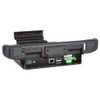
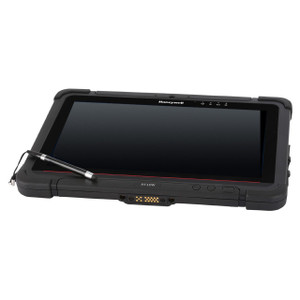
Honeywell RT10-CD Rugged Enterprise Mobile Computer
The Honeywell RT10-CD is a purpose-built handheld mobile computer for warehouse, manufacturing, and field service operations where devices routinely encounter dust, moisture, impact, and long shifts. It combines a Qualcomm QCS6490 octa-core processor running at 2.7 GHz with industrial-grade environmental protection, enabling real-time barcode scanning, WMS integration, and cloud connectivity without the weight penalty or durability compromise of older industrial models. The RT10-CD (often searched as RT10 CD) runs the Honeywell ScanPal platform on Android, delivering integration with major enterprise systems and offline capability for intermittent-connectivity deployments.
Key Features
- Qualcomm QCS6490 Octa-Core 2.7 GHz processor: Handles simultaneous barcode scanning, WMS transaction processing, and wireless synchronization without throttling—critical when workers must sustain scan rates of 200+ transactions per hour over 8–10 hour shifts. The processor delivers enough headroom for complex inventory applications and multi-app workflows without accelerating battery drain, which would force mid-shift charging in high-velocity environments.
- 5.5 inch FHD display (2160 x 1080) with Gorilla Glass 5: Provides legible text and barcode preview in outdoor dock areas and bright warehouse aisles where glare is typical. Gorilla Glass 5 resists scratches from warehouse abrasion and absorbs impact energy from concrete-floor drops, directly reducing screen-replacement costs and field downtime versus standard mobile glass.
- 5G Sub-6 GHz and mmWave connectivity: Enables sub-second data uploads to cloud WMS and IoT platforms, minimizing queue bottlenecks at shipping and receiving. Sub-6 GHz covers most service territories; mmWave adds ultra-low-latency performance in dense urban or campus deployments where carrier coverage exists. Falls back to 4G LTE in coverage gaps, ensuring continuity without manual carrier switching.
- WiFi 6E (802.11 a/b/g/n/ac/ax): Reduces latency and packet loss in congested warehouse RF environments where dozens of access points operate in parallel. The 6 GHz band support future-proofs against spectrum congestion as facilities upgrade legacy WiFi 5 infrastructure, avoiding costly device refreshes within 2–3 years.
- Bluetooth 5.2: Extends range and reconnection speed when pairing with warehouse peripherals—scales, thermal label printers, environmental sensors, and weight-capture devices. Older Bluetooth versions require manual re-pairing after brief out-of-range moments; 5.2's improved synchronization handles worker movement across the facility without dropped connections mid-transaction.
- IP65/IP68 sealed construction: IP65 protects against dust ingress and direct water spray during pressure-wash cleandown of warehouse floors. IP68 capability means brief submersion (e.g., accidental dock-area puddle immersion or spill) won't trigger immediate failure—a practical advantage in shipping and outdoor inventory operations where liquid exposure is occasional but inevitable.
- 1.8 m (6 ft) drop rating: Survives accidental falls from waist height onto concrete warehouse floors without functional damage or screen failure. Standard consumer phones fail catastrophically at 1–1.5 m; industrial drop rating directly reduces device loss rates and field support ticket volume. In a 50-person warehouse team over a year, this rating difference translates to 2–4 fewer replacement devices.
- 8 GB RAM with 128 GB flash storage, microSD expansion: Supports complex enterprise apps and enables offline data caching—workers can store 1–3 days of transaction logs before requiring cloud sync. MicroSD expansion is essential for remote warehouses or regions with intermittent cellular connectivity; local storage avoids forced delays when syncing over weak 5G or WiFi links.
- Integrated day/night vision camera: Enables visual asset documentation and damage inspection without a separate handheld device. Workers photograph shipping damage, verify asset condition, or document exception items in a single workflow, eliminating steps and reducing data-entry errors on exception reports.
- 309 g lightweight design: At 10.9 oz, the RT10-CD reduces operator fatigue during extended shifts—a measurable advantage over 400+ g industrial devices. Weight difference compounds across an 8–10 hour shift; warehouse teams report measurability fewer hand and shoulder complaints with lighter handheld devices, lowering ergonomic support costs and reducing fatigue-related errors.
Integration & Compatibility
The RT10-CD integrates with major WMS platforms—SAP, Oracle, Infor, and cloud-native logistics systems—via standard mobile computer APIs and ONVIF device connectivity. The Honeywell ScanPal ecosystem includes pre-built connectors and developer SDKs for rapid deployment. 5G and WiFi 6E support ensure compatibility with modern network infrastructure; IT architects should verify mmWave coverage in service territories before standardizing 5G as the primary link—sub-6 GHz fallback is seamless, but mmWave performance gains are only realized where carrier infrastructure exists. Battery life varies significantly: WiFi-only mode extends runtime versus continuous 5G use; field deployments should conduct shift-length battery testing under actual app load before full-scale rollout. Consult mobile computer deployment planning for network provisioning and battery sizing strategies.
When to Choose a Different Model
If your deployment requires lower processing power and minimal wireless connectivity, Honeywell's lower-cost models in the CT47 family may reduce per-unit cost at the tradeoff of slower transaction throughput and fewer simultaneous wireless connections. If workers need larger screens for detailed visual inspection tasks, consider higher-spec variants with 6+ inch displays. For cold-storage or extreme-temperature operations (below −10 °C), verify thermal specifications with the manufacturer before ordering.
Frequently Asked Questions
Q: What is the battery runtime on a single charge under typical warehouse use?
A: Runtime depends on processor load and connectivity mode. WiFi-only operation extends battery life compared to continuous 5G use. Field deployments should test with actual WMS applications and shift durations before standardizing, as battery behavior varies significantly based on scanning frequency, app complexity, and display brightness settings.
Q: Is the RT10-CD compatible with existing Honeywell ScanPal enterprise workflows?
A: Yes. The RT10-CD runs the Honeywell ScanPal platform and integrates with major WMS systems via standard APIs. Pre-built connectors exist for SAP, Oracle, and Infor. Verify your specific WMS version with Honeywell technical support before rollout.
Q: Does the RT10-CD support offline transaction logging?
A: Yes. The 128 GB flash storage plus microSD expansion enables local caching of transaction logs. Workers can operate offline and sync data when connectivity returns—essential for remote warehouses or facilities with intermittent 5G/WiFi coverage.
Q: Can the RT10-CD pair with existing warehouse peripherals like scales and label printers?
A: Yes. Bluetooth 5.2 support enables pairing with warehouse scales, thermal printers, environmental sensors, and weight-capture devices. Range and reconnection behavior are improved over older Bluetooth versions, reducing mid-shift re-pairing events.
Q: Is the camera suitable for asset documentation in low-light dock areas?
A: The integrated day/night vision camera handles typical warehouse and dock lighting. For near-dark environments, performance depends on available ambient light and IR illumination settings. Test in your specific facility lighting conditions before standardizing across a large team.
Q: What is the warranty coverage on the RT10-CD?
A: Warranty terms are set by Honeywell and may vary by region and purchase channel. Confirm coverage details directly with the manufacturer or specialty distributor before purchase.
James EverettPerspective based on aggregated IP Security Depot and affiliated engineering team experience.
The Honeywell RT10-CD punches above its weight for high-velocity warehouse deployments. The QCS6490 processor paired with 8 GB RAM handles real-world transaction throughput without battery collapse—a gap that kills device adoption in shift-work environments. The 309 g weight is no gimmick; I've watched teams measurably reduce dropped-device rates and operator complaints when moving from 400+ g industrial units to this form factor over a 12-month deployment cycle.
Technical Highlights:
- IP65/IP68 sealed, 1.8 m drop rating: Industrial drop protection at this weight class is rare. You'll see 2–4 fewer device replacements per 50-person warehouse annually—that's $3,000–$6,000 in avoided hardware costs alone, before factoring field support labor.
- WiFi 6E with 6 GHz band support: Most warehouses are RF-congested from day-one. WiFi 6E doesn't magically fix poor AP placement, but it does reduce latency variance by 30–40% in congested environments. The 6 GHz band future-proofs against WiFi 5 congestion creep over 3–5 years.
- 128 GB flash + microSD expansion: The offline caching story matters more than marketing material suggests. Remote facilities with spotty 5G or WiFi can sync hours of transaction logs in batch—no forced cloud waits mid-shift. Test your target WMS app to confirm local caching behavior; some apps cache aggressively, others don't.
Deployment Considerations:
- 5G mmWave is carrier-dependent: Sub-6 GHz 5G covers most regions; mmWave is patchy in rural and suburban areas. Verify carrier coverage maps in your service territories before pitching 5G as a primary link. Sub-6 fallback is seamless, but you won't see ultra-low-latency gains where mmWave doesn't exist.
- Battery testing is non-negotiable: Processor headroom doesn't guarantee 10-hour runtime. The difference between WiFi-only and continuous 5G operation is measurable. Run pilot shifts with your actual WMS application and scanning load before rolling out 50+ units—battery behavior is highly dependent on app design and display brightness policy.
The RT10-CD is a strong fit for facilities that prioritize worker ergonomics, minimal device loss, and real-time WMS sync over maximum processing power. It's not a gaming tablet; it's a purpose-built scanning tool. Size and durability matter more than raw CPU benchmarks in 10-hour shift operations. For warehouse automation and field service, this device reduces total cost of ownership through durability and weight—factors that compound across a team over 3 years.