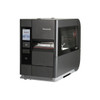
Honeywell PX940A00100000302 Industrial Label Printer 300 DPI
The Honeywell PX940A00100000302 is a professional-grade industrial label printer engineered for high-volume production environments. With 300 DPI thermal transfer printing at speeds up to 300 mm/s (12 ips), the PX940 delivers sharp, consistently scannable barcode output across warehouse, manufacturing, and logistics operations. The 114 mm (4.5 in) maximum print width accommodates shipping labels, compliance tags, product identification, and asset tracking labels in a single unified platform.
Key Features
- 300 DPI thermal transfer printing with ±0.2 mm precision: Ensures mission-critical barcode quality and compliance across temperature variations. Tighter tolerance means reduced label waste and faster barcode-read cycles — a real factor when processing 500+ labels per shift.
- Print speeds of 25–300 mm/s (1–12 ips): Variable throughput allows you to balance speed and print quality. At 300 mm/s, you move 12 inches of label stock every second — critical for high-mix production runs where dwell time costs money.
- Dual Core ARM Cortex-A9 1 GHz processor with 1 GB DDR3 SDRAM: Handles complex variable-data templates with embedded graphics without queuing delays. 256 MB of onboard Flash provides enough storage for hundreds of label designs, reducing dependency on external template servers.
- Ink-In/Out thermal transfer ribbon: Minimizes media waste by using ribbon supply efficiently. Thermal transfer printing (as opposed to direct thermal) produces labels with longer shelf life — essential for compliance labeling and asset tags exposed to light and heat.
- Multiple emulation support (ZPL II, ZSim2, Direct Protocol, Fingerprint, IPL): Drop-in compatibility with legacy Zebra and other vendor-based label systems. If you're consolidating a mixed printer fleet, this compatibility avoids costly label template rewrites.
- Wired connectivity with Ethernet (10/100 Mbps), USB 2.0, RS-232, Bluetooth, and NFC: Integrates directly with WMS/ERP systems via Ethernet or USB. Bluetooth and NFC enable mobile-initiated print jobs from warehouse devices — reduces centralized printer bottlenecks.
- Operating range 5–40°C (41–104°F), humidity 10–90% non-condensing: Suitable for climate-controlled warehouse and manufacturing floors. Not rated for extreme cold or condensation; skip this if you need outdoor or freezer deployment.
- Compact footprint: 261 × 506 × 398.7 mm (10.3 × 19.9 × 15.7 in), 22.0 kg (48.5 lbs): Fits standard production-line workstations without occupying excessive floor space. Weight allows single-technician relocation if workflow changes.
Deployment Context
The PX940A00100000302 suits high-volume supply chain operations where barcode scanability and throughput directly impact downstream processes. Typical use cases include warehouse label generation, manufacturing compliance tagging, logistics and shipping label production, retail product identification, and enterprise asset tracking systems.
Enterprises running legacy Zebra ZPL-based fleets will appreciate the native emulation support — you can migrate devices without rewriting label templates. The combination of wired Ethernet and USB connectivity enables tight WMS integration, while Bluetooth support reduces workflow friction in mobile-heavy warehouses.
Integration & Compatibility
The PX940A00100000302 integrates with any WMS or label-design system that supports ZPL II, Direct Protocol, or Fingerprint output. Ethernet connectivity (10/100 Mbps) provides direct network printing for Windows Print Spooler and CUPS environments. USB 2.0 supports both device (printer) and host (peripheral control) modes, enabling integration with industrial PCs and warehouse-specific label platforms. Bluetooth and NFC add flexibility for mobile-initiated jobs where direct network access is limited.
Frequently Asked Questions
Q: What's the maximum print resolution and when would I use it?
A: The PX940A00100000302 prints at 300 DPI, which is the standard for barcode labels in logistics and warehouse environments. 300 DPI is sufficiently sharp for 1D and 2D codes (QR, Data Matrix) up to 4.5 inches wide; you don't need higher resolution for typical barcode work.
Q: Is the PX940A00100000302 compatible with my existing ZPL label templates?
A: Yes. The printer supports ZPL II, Zebra's de facto standard printer language. If your templates are written in ZPL II, they'll run on the PX940A00100000302 without modification, making migration from older Zebra devices straightforward.
Q: What's the difference between thermal transfer and direct thermal printing?
A: The PX940A00100000302 uses thermal transfer (ribbon-based) printing, which produces durable labels resistant to light and heat exposure. Direct thermal (no ribbon) is cheaper per label but produces lighter images that fade over time. Choose thermal transfer for compliance tags, long-term asset labels, or outdoor-exposed labels.
Q: Can I connect the PX940A00100000302 directly to a Windows PC or WMS server?
A: Yes. Ethernet and USB connectivity support standard Windows Print Spooler setup. Configure the printer's IP address via the integrated network settings, add it as a network printer in Windows, and route ZPL output directly from your WMS or label-design software.
Q: What's the typical runtime cost per label for media and ribbon?
A: Thermal transfer labels and ribbon depend on your supplier and label size; expect 5–15 cents per label all-in (media + ribbon). The ±0.2 mm precision and 300 mm/s throughput reduce waste and speed cycle time, offsetting media costs in high-volume runs.
Q: Does the PX940A00100000302 support mobile printing via Bluetooth?
A: Yes. Bluetooth connectivity allows warehouse devices (mobile computers, tablets running ZPL-capable apps) to initiate print jobs without physical connection to the Ethernet or USB network. Useful in pick-and-pack workflows where label printers are stationed away from primary WMS infrastructure.
Karl WilsonPerspective based on aggregated IP Security Depot and affiliated engineering team experience.
The PX940A00100000302 balances industrial durability with enterprise-grade networking. The combination of 1 GB RAM and dual-core ARM Cortex-A9 1 GHz processing enables handling of variable-data templates with embedded graphics without performance degradation — critical for high-mix production environments where you're printing 50+ different label designs per shift.
Technical Highlights:
- 300 DPI at 25–300 mm/s: The variable speed range is deliberate. At 25 mm/s you get crisp, high-contrast barcodes suitable for dense 2D codes; at 300 mm/s (full speed), you're moving 12 inches of label stock per second, enabling throughput of 500+ labels per hour on a single printer. The ±0.2 mm precision ensures scanability across all speed settings and temperature ranges (5–40°C).
- Ethernet, USB, Bluetooth, NFC, RS-232: Multiple connectivity pathways reduce infrastructure complexity. Ethernet and USB integrate directly with WMS/ERP systems for centralized label design; Bluetooth/NFC enable mobile-initiated jobs without network dependency. RS-232 is a legacy tether for older warehouse equipment integration.
- Ink-In/Out thermal transfer ribbon with 256 MB onboard Flash: Thermal transfer produces image permanence superior to direct thermal — labels won't fade under light or moderate heat. The onboard Flash stores hundreds of label templates, reducing reliance on external servers and enabling offline label printing if network connectivity is interrupted.
Deployment Considerations:
- Operating range 5–40°C: This is standard for indoor warehouses, but if your deployment includes cold-storage (freezer) or outdoor dock areas, you'll need to validate actual print quality at temperature extremes. Condensation (humidity >90%) will damage the print head — not suitable for steam environments.
- Maximum print width 114 mm (4.5 in): This is a narrow-format printer optimized for shipping labels, compliance tags, and small product labels. If you need wide-format labels (6+ inches), consider a different printer family entirely. This is a hard constraint, not a limitation to work around.
- Wired Ethernet vs. wireless: The lack of native Wi-Fi is deliberate — wired Ethernet is more reliable in high-RF industrial environments (forklifts, warehouse scanners, mobile devices all transmitting simultaneously). If you need wireless, you'd run the PX940A00100000302 through a print server appliance that bridges Ethernet to Wi-Fi, adding cost and latency.
Position the PX940A00100000302 in high-volume logistics operations (500+ labels/day) where barcode scanability and media cost matter, and where ZPL II compatibility shortens your migration timeline from legacy Zebra fleets. It's not a small-office label printer; it's a production-floor workstation device.