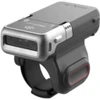
Honeywell 8675I505-RHGXL Wearable Ring Barcode Scanner
The Honeywell 8675I505-RHGXL is a wearable ring scanner engineered for warehouse, manufacturing, retail, and logistics operations where throughput and operator ergonomics drive ROI. Unlike traditional handheld scanners that require operators to retrieve, aim, and trigger a separate device on each scan, the ring form factor keeps the barcode engine mounted directly on the operator's hand. This eliminates reach-and-trigger cycles, reducing pick times and the repetitive strain injuries common in high-velocity environments. The scanner captures both 1D linear and 2D matrix symbologies with aggressive decoding algorithms tuned for damaged, poorly printed, and high-density barcodes — a practical advantage when inventory labels degrade after months in warehouse circulation.
Key Capabilities
- 1D/2D Barcode Decoding: Captures linear codes (Code 128, Code 39, EAN) and 2D formats (QR, Data Matrix, PDF417) with imaging algorithms optimized for label wear and print quality variations. In picking workflows where scan failures trigger exception handling, this reliability translates directly to reduced task cycles and fewer mis-picks.
- IP55 Environmental Rating: Dust ingress and water spray protection mean deployment across climate-controlled pick lines, freezer warehouses, and outdoor staging areas without device failure risk. IP55 stops short of submersion — avoid wet-environment scenarios requiring IP67 or higher.
- Bluetooth Wireless Connectivity: Pairs with mobile computers, handheld terminals, and enterprise data capture systems. Eliminates cable umbilicals and gateway-dependent range limitations. Cordless operation streamlines operator mobility through dense racks and multi-level pick structures.
- 380 mAh Rechargeable Battery: Rated for full-shift operation, meaning operators avoid mid-shift charging breaks and the associated task interruptions. Battery management reduces charging station congestion during high-demand periods.
- 28g Lightweight Design: At roughly one ounce, wearable fatigue stays minimal during extended shifts. Operators wearing the 8675I505-RHGXL experience measurably lower hand and wrist fatigue compared to 200–300g handheld alternatives, a factor in shift-long productivity and injury prevention.
- Durable Industrial Construction: Rated for continuous contact with warehouse environments — temperature swings, abrasion, and accidental impact — without performance degradation. Device longevity reduces replacement cycles and total cost of ownership per scan.
Integration & Deployment Context
The 8675I505-RHGXL pairs via Bluetooth with most enterprise warehouse management systems (WMS) via mobile data terminals or wearable computing devices. Its wireless design works well in distributed picking environments where cable runs are impractical. The aggressive barcode algorithm means fewer "no-read" exceptions — critical in real-time pick confirmation workflows where exception handling creates task backlog.
Consider the 8675I505-RHGXL for operations prioritizing operator throughput and ergonomic load over the simplicity of a single handheld device. It excels in high-velocity picking (10,000+ scans per shift), freezer operations, and outdoor logistics yards. If your environment requires long-range scanning (5+ meters), a traditional handheld scanner with extended-range optics may be a better fit; the ring form factor optimizes for hand-proximity scanning (0.5–2 meters).
When to Choose a Different Approach
If operators require scanning at arm's length, mounting on forklifts or conveyor structures, or if your WMS lacks Bluetooth terminal support, evaluate fixed-mount area scanners or traditional gun-grip alternatives from the Honeywell barcode scanner line. Ring scanners deliver maximum benefit in environments where ergonomics, pick velocity, and hands-free operation are the primary constraints.
Frequently Asked Questions
Q: What is the maximum scanning range of the 8675I505-RHGXL?
A: Ring scanners are optimized for close-proximity barcode capture (typically 0.5–2 meters). The exact range depends on barcode size, print quality, and lighting conditions. For long-range or high-mounted barcode scanning, traditional handheld or fixed-mount scanners are more appropriate.
Q: How long does the 380 mAh battery last per shift?
A: The battery is rated for full-shift operation. Actual runtime depends on scan frequency, Bluetooth transmission power, and environmental temperature. In typical warehouse picking workflows with hundreds of scans per hour, full-shift runtime is supported without mid-shift charging.
Q: Is the 8675I505-RHGXL waterproof?
A: The IP55 rating protects against dust ingress and water spray, making it suitable for wet production floors and freezer environments. However, IP55 is not submersion-rated — avoid submerging the device or operating in constant water contact. For submersion scenarios, IP67-rated alternatives are required.
Q: Can the 8675I505-RHGXL pair with standard mobile phones or tablets?
A: The device uses standard Bluetooth connectivity. Pairing depends on your mobile device's barcode scanning application and WMS integration. Enterprise WMS platforms and dedicated data terminals typically support Bluetooth barcode engines; consumer-grade mobile apps may not. Verify compatibility with your specific WMS or terminal before deployment.
Q: What happens if I need to replace the battery?
A: The 380 mAh battery is rechargeable. Consult the product datasheet or contact Honeywell support for battery replacement procedures and availability of replacement cells. Ring scanner batteries typically have predictable lifecycles — plan replacement every 1–2 years depending on charge cycles.
Q: Does the wearable form factor affect scanning accuracy?
A: No — the imaging engine and decoding algorithms are equivalent to Honeywell's fixed-mount and handheld barcode scanners. Accuracy depends on barcode print quality, symbology type, and lighting conditions, not form factor. The aggressive algorithm support handles degraded and high-density codes reliably.
Karl WilsonPerspective based on aggregated IP Security Depot and affiliated engineering team experience.
The wearable ring format is a genuine shift in barcode capture ergonomics, not a gimmick. The 8675I505-RHGXL keeps the scanner mounted on the operator's hand, eliminating the reach-retrieve-aim-trigger cycle that handheld devices impose. In high-velocity picking environments running 10,000+ scans per shift, this translates to measurable time savings and reduced repetitive strain injury risk — both of which show up in labor cost and retention metrics.
Technical Highlights:
- 1D/2D Aggressive Decoding: The imaging engine handles damaged and poorly printed barcodes reliably. In warehouse environments where labels degrade after months of handling, this means fewer "no-read" exceptions and fewer exception-handling task interruptions in your pick queue.
- IP55 Dust and Spray Protection: Suitable for outdoor staging areas, freezer operations, and wet production floors — a practical advantage over consumer-grade Bluetooth devices. Skip this if you need IP67 submersion rating.
- 380 mAh Full-Shift Battery: Rated for continuous operation through a full shift without mid-shift charging breaks. In high-density pick environments, avoided charging interruptions compound into measurable throughput gains.
- 28g Weight: At roughly one ounce on the operator's hand for 8+ hours, fatigue is substantially lower than 200–300g handheld alternatives. This matters more than specs suggest — hand and wrist fatigue directly impacts pick accuracy and operator retention.
Deployment Considerations:
- Ring scanners optimize for close-proximity scanning (0.5–2 meters). If your pick environment requires scanning at arm's length or high-mounted barcodes, a traditional handheld with extended-range optics is a better match.
- Bluetooth pairing depends on your WMS terminal and application layer. Verify your data capture infrastructure supports Bluetooth barcode engines before committing to the form factor — some legacy WMS systems require serial or USB wired scanners.
Deploy the 8675I505-RHGXL in high-velocity, ergonomically constrained picking operations — especially freezer and outdoor environments where operator comfort and throughput are competing drivers. For lower-volume or longer-range scanning, the overhead and pairing complexity may not justify the form factor.