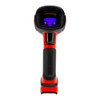
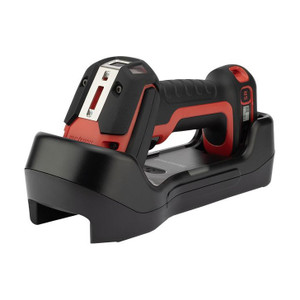
Honeywell 2105IHD-3USB-CLHN Xenon XP 1952g 2D Area Imager Scanner
The Honeywell Xenon XP 1952g model 2105IHD-3USB-CLHN is an industrial-grade area imager scanner built for high-volume 1D and 2D barcode capture in environments where durability matters. This device bridges retail point-of-sale workflows, warehouse receiving operations, and field asset management without requiring you to maintain separate single-line and 2D scanners.
Why This Scanner
The 2105IHD-3USB-CLHN combines simultaneous 1D and 2D decoding in a single form factor—a real cost advantage if your operations mix traditional UPC/Code 128 barcodes with QR codes or Data Matrix labels. You avoid dual-scanner infrastructure and reduce training overhead. The area imager approach also means faster read times in high-velocity environments: no need to align or hunt for the optimal scan angle.
IP65 ingress protection shields against dust and water splash without adding bulk to the device. This rating is meaningful in warehouse loading docks, manufacturing floors, or outdoor receiving areas where moisture and particulate matter are routine. The 2.0 m (6.5 ft) drop rating indicates the scanner can survive accidental concrete contact—a practical concern when equipment changes hands across shifts or moves between stations frequently.
Working range spans 2.5 to 50.8 cm (1 to 20 inches), covering both close POS coupon scanning and mid-distance label capture on conveyor systems or pallets. This flexibility reduces the need for operator repositioning or multiple scan attempts, directly lowering exception handling time.
Key Features
- Area Imager (1D/2D) Optical Engine: Decodes EAN, UPC, Code 128, QR Code, Data Matrix, and other symbologies in a single capture. Eliminates the need for separate laser and 2D devices, reducing hardware costs and inventory complexity.
- IP65 Environmental Rating: Dust and water-resistant design tolerates warehouse spray-downs, outdoor staging areas, and damp manufacturing environments without sealed enclosures or protective cases.
- 2.0 m (6.5 ft) Drop Survivability: Withstands concrete floor impacts typical in busy distribution centers, retail backrooms, and field service routes. Reduces replacement frequency and unplanned downtime.
- Bluetooth 4.2 + USB Dual Connectivity: Deploy wirelessly for mobile receiving or checkout workflows; fall back to USB for stationary POS terminals or legacy host systems without re-provisioning. No single point of connection failure.
- 2.5–50.8 cm Flexible Working Range: Accommodates close barcode scanning at countertops and extended-distance label capture on elevated shelves or moving merchandise, minimizing operator repositioning steps.
- Multi-Symbology Support: Reads EAN-13/UPC-A, Code 128, GS1-128, ITF-14, QR Code, Data Matrix, PDF417, and more in one optical pass. Scales as your labeling strategy evolves.
- Variable Lighting Optimization: Maintains first-pass read accuracy under fluorescent, LED, and natural light conditions common in retail and warehouse spaces, reducing rescan overhead.
Integration & Compatibility
The 2105IHD-3USB-CLHN (often searched as 2105IHD 3USB CLHN) pairs with standard host systems via USB or Bluetooth without custom drivers on most Windows, macOS, and Linux environments. Integrates directly into barcode scanners management platforms and retail POS software that accept HID-compliant input devices. For warehouse management systems (WMS) or inventory platforms, verify OPOS (OLE for Point of Sale) or serial protocol support with your software vendor before purchase—most enterprise WMS solutions support these standards natively.
Frequently Asked Questions
Q: Can the 2105IHD-3USB-CLHN handle both 1D and 2D codes simultaneously, or do I need to choose?
A: The area imager technology reads both 1D and 2D barcodes in a single scan without mode switching. No configuration required—place any supported barcode (UPC, QR, Data Matrix, etc.) in front of the scanner and it will decode automatically.
Q: Is the IP65 rating sufficient for outdoor use?
A: IP65 protects against direct water spray and dust, making it suitable for covered outdoor loading docks and staging areas. It is not rated for submersion or sustained rainfall without an overhang. If the device will be used in full weather exposure, consider a protective enclosure or weatherproof case.
Q: What happens if I drop the 2105IHD-3USB-CLHN?
A: The 2.0 m (6.5 ft) drop rating means the scanner is designed to survive a concrete floor impact at that height. Drops from greater heights or onto sharp edges may cause damage. This is a design tolerance, not a guarantee of unlimited durability.
Q: Does the 2105IHD-3USB-CLHN work with my legacy USB barcode reader port?
A: Yes. The USB connectivity option ensures backward compatibility with existing host systems (terminals, registers, PCs) that expect HID-compliant keyboard input or serial barcode reader protocols. Verify your host system's barcode reader configuration settings with your IT team before deployment.
Q: Can I use the Bluetooth connection alongside USB simultaneously?
A: No. The scanner operates in either Bluetooth or USB mode, not both at the same time. You will need to configure which connection type the device uses before deployment. Switching modes typically requires a settings adjustment or firmware reset.
Q: What is the PoE Class rating for the 2105IHD-3USB-CLHN?
A: The scanner is classified as PoE Class 2, meaning it draws a moderate amount of power suitable for standard PoE infrastructure. However, note that this device uses Bluetooth or USB for connectivity—it does not receive power or transmit data over Ethernet. PoE Class 2 refers to the device's power budget in network environments where it may be deployed alongside other Class 2 devices.
Ted PerryPerspective based on aggregated IP Security Depot and affiliated engineering team experience.
The Xenon XP 1952g 2105IHD-3USB-CLHN is a pragmatic choice for operations that have outgrown single-line laser scanners but don't have the budget or volume to justify enterprise-grade mobile computers. The area imager architecture eliminates the alignment fussiness of laser scanners—your team simply points and shoots, regardless of barcode type or orientation. Combined with IP65 durability and a 2.0 m drop tolerance, this is a device built to absorb real warehouse and retail floor punishment.
Technical Highlights:
- Area Imager 1D/2D Decoding: Single optical engine handles EAN, UPC, Code 128, QR, Data Matrix, PDF417, and more without mode switching or reconfiguration. In high-velocity environments, this translates to fewer misreads, faster throughput, and lower exception handling overhead.
- IP65 + 2.0 m Drop Rating: Rated for dust and water splash in the IP65 class; survives concrete drops at 6.5 feet. Real insurance against equipment churn in busy facilities where scanners move between receiving, picking, and returns stations multiple times per shift.
- 2.5–50.8 cm Working Range: Broad depth of field covers both countertop POS scanning and mid-distance pallet or shelf label capture. No need for operator repositioning or multiple scan attempts—a significant productivity multiplier in high-transaction environments.
- Bluetooth 4.2 + USB Fallback: Wireless mobility for receiving workflows, USB tether for stationary POS or legacy terminal integration. Not a true dual-mode device (you choose one or the other), but the flexibility eliminates re-cabling during system transitions.
Deployment Considerations:
- Connection Mode Lock: The device operates in either Bluetooth or USB mode, not simultaneously. Plan your infrastructure and operator workflows around this constraint—wireless for mobile receiving, USB for fixed POS stations. Switching modes requires device reconfiguration, not a runtime toggle.
- PoE Class 2 Caveat: The rating refers to power budget classification, not actual PoE power delivery. This scanner uses Bluetooth or USB for connectivity and communication—it does not derive power from Ethernet. PoE Class 2 is relevant only if you're managing mixed-device networks and need to budget power headroom.
- Host Compatibility Verification: USB mode works as an HID-compliant device on standard PCs, registers, and terminals. WMS and POS platforms vary in barcode reader protocol support (OPOS vs. serial vs. keyboard emulation). Confirm compatibility with your software vendor before purchasing, especially if you're integrating with custom or legacy applications.
Position this scanner for warehouse receiving teams transitioning from laser-only deployments to mixed-barcode environments, or retail operations balancing UPC velocity with emerging QR-based workflows (digital receipts, price lookups, loyalty scans). It is not a mobile computer replacement and lacks on-device intelligence—it is a workhorse scan engine for stationary or semi-mobile operations where durability and decode reliability matter more than software features.