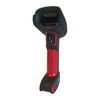
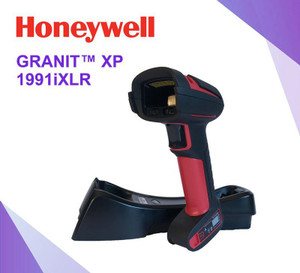
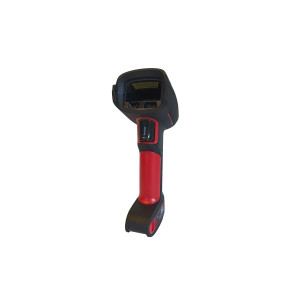
Honeywell 1990IXLR-3-N Granit XP 199Xi 1D/2D Area Imager Scanner
The Honeywell Granit XP 199Xi 1990IXLR-3-N is a corded area imager barcode scanner engineered for high-velocity warehouse, retail, and logistics operations where durability and first-pass read accuracy matter. Unlike single-symbology laser scanners, the area imager optical engine in this scanner captures both traditional 1D barcodes (EAN, UPC, Code 128) and 2D codes (QR, Data Matrix) in a single device—eliminating the need to stock multiple scanner types across locations. For multi-location deployments, this consolidation reduces training burden and inventory overhead significantly.
Key Specifications & Deployment Benefits
- Area Imager (1D/2D Symbology) — Captures linear and 2D barcodes without switching devices. Particularly valuable in receiving operations where pallets may arrive with either barcode format, or in field service roles where QR codes supplement traditional labels. No need to train operators on device selection.
- IP65 Environmental Rating — Protects against water spray and dust ingress. Critical for wet-area scanning in shipping docks, outdoor inventory operations, and cold storage zones. Skip this model only if your environment requires submersion or frequent washdown at high pressure (that would require IP67 or higher).
- 2.0 m (6.5 ft) Drop Rating — Withstands accidental drops from table height or upper shelving. In fast-paced picking and packing areas, this impact resistance reduces device replacement costs and minimizes downtime from equipment damage. Corded scanners mounted on stands or attached to workstations benefit from this robustness.
- Close-Range Working Distance (5–80 cm) — Optimized for point-of-sale checkouts, receiving counters, and precision picking workflows where the scanner is held or mounted close to the barcode. Avoid this model if you need stand-off scanning (e.g., scanning barcodes on high shelves from 2+ meters away—consider a laser scanner or long-range imager in that case).
- Wired Connectivity (RS-232 / USB) — Corded operation eliminates battery charging, battery-swap logistics, and wireless pairing overhead. Ideal for 24/7 operations and stationary scanning stations. A power tether also anchors the device to prevent loss or misplacement—valuable in high-turnover warehouse environments.
- Multi-Symbology Support — Reads EAN, UPC, Code 128, QR Code, Data Matrix, and others within the 1D/2D envelope. Reduces the need for custom encoding or barcode-format negotiation with suppliers and carriers.
Integration & Compatibility
The 1990IXLR-3-N integrates via RS-232 or USB into legacy point-of-sale terminals, modern warehouse management systems, and manufacturing execution platforms. The dual-protocol approach ensures compatibility with both older systems (that may support only serial communication) and contemporary platforms (that use USB HID). Corded operation pairs well with fixed mounting brackets, vehicle-mounted pedestals, or stationary workstations, making the scanner suitable for receiving docks, checkout lanes, and assembly lines.
When to Choose a Different Model
If your workflow requires scanning barcodes beyond 80 cm (e.g., on high warehouse shelves or from a distance), evaluate a long-range laser scanner or distance-capable imager variant instead. If operators move frequently between locations and battery lifecycle is acceptable in your operation, a cordless 1D/2D imager may reduce tether management overhead. If your environment involves regular high-pressure washdowns or submersion, confirm IP67 or IP68 rating before deployment.
Frequently Asked Questions
Q: What barcode formats does the 1990IXLR-3-N read?
A: The 1990IXLR-3-N reads both 1D codes (EAN, UPC, Code 128, Code 39, and others) and 2D codes (QR Code, Data Matrix, PDF417) via its area imager engine. This eliminates the need for separate linear and 2D scanners in most retail and warehouse workflows.
Q: Is the 1990IXLR-3-N suitable for outdoor use?
A: Yes. The IP65 rating provides protection against rain and dust, making it suitable for outdoor inventory operations, shipping yard scanning, and field service routes. However, it is not rated for submersion or prolonged saltwater exposure.
Q: What happens if the scanner is dropped?
A: The 2.0 m (6.5 ft) drop rating means the scanner is designed to survive accidental drops from table or shelf height without functional damage. This is typical in busy warehouses where equipment gets bumped or knocked over during normal operations.
Q: Can I integrate the 1990IXLR-3-N into my warehouse management system?
A: Yes. The scanner connects via RS-232 or USB, allowing integration into legacy and modern warehouse management platforms, point-of-sale systems, and manufacturing execution systems. Connectivity compatibility depends on your host system's input protocols.
Q: Does the corded design mean I need a power outlet nearby?
A: The wired connection provides both power and data, eliminating the need for batteries or charging stations. This is ideal for stationary scanning stations and 24/7 operations. If the scanning location lacks nearby power, a cordless 1D/2D imager variant may be more practical.
Q: What is the working distance for the 1990IXLR-3-N?
A: The close-range working distance is 5–80 cm (approximately 2–31 inches). This makes it ideal for checkout counters and receiving benches where the scanner is held or mounted close to the barcode. For scanning labels at greater distances (e.g., on elevated shelves), a long-range imager or laser scanner is more appropriate.
Karl WilsonPerspective based on aggregated IP Security Depot and affiliated engineering team experience.
The Honeywell 1990IXLR-3-N is a pragmatic workhorse for any operation running 1D and 2D barcodes side by side. Unlike deployments that require two separate scanner types, the area imager optical engine consolidates both capture modes into a single device, cutting inventory complexity and reducing the cognitive load on operators. The IP65 rating and 2.0 m drop specification make it a reliable choice for distribution centers where equipment gets knocked around and moisture is a background factor.
Technical Highlights:
- Area Imager Dual-Symbology: A single optical engine reads 1D codes (EAN, UPC, Code 128) and 2D codes (QR, Data Matrix) without switching devices. This cuts training time and eliminates the support burden of managing multiple scanner SKUs across multiple locations.
- IP65 Environmental Sealing: Water spray and dust ingress won't compromise operation. In receiving docks and outdoor yards, this rating absorbs hose spray and ambient moisture without degrading read accuracy. Not suitable for submersion or high-pressure washdowns (IP67+ would be required for that).
- 2.0 m Drop Tolerance: Designed to survive accidental falls from counter or shelf height. In fast-moving warehouses, this impact resistance translates directly to lower per-unit replacement costs and less downtime from equipment damage.
- Corded RS-232/USB: Tethered operation eliminates battery logistics entirely—no charging stations, no battery inventory, no swap-cycle delays. Ideal for 24/7 dock operations and stationary scanning stations where operators stay in one location for hours at a time.
Deployment Considerations:
- The 5–80 cm working distance is optimized for handheld and near-field scanning (checkout, receiving benches, picking carts). If your workflow includes long-range scanning (e.g., scanning labels on high shelves from 2+ meters away), this is not the right model—specify a long-range imager or laser scanner instead.
- Corded design requires cable management at the scanning station. In mobile or roaming workflows, a cordless imager may reduce tether friction. For stationary, high-volume operations (especially 24/7), the wired approach eliminates battery swap overhead entirely.
Best fit: Multi-location retail chains, regional distribution centers, and manufacturing receiving docks where barcode format mix is common and equipment durability is a cost factor. The 1990IXLR-3-N balances scanning versatility, environmental robustness, and operational simplicity without premium pricing.