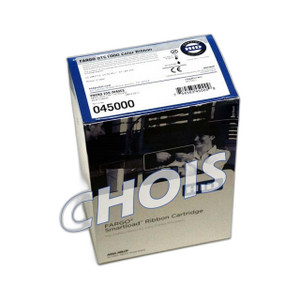
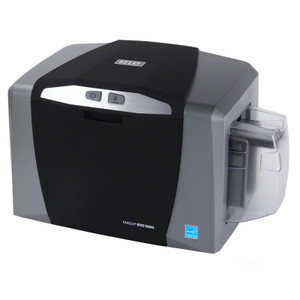
HID D930071 DTC1000 Access Control Assembly Box
The HID D930071 is an access control assembly component designed to bridge credential readers and HID DTC1000 control infrastructure in enterprise door access deployments. This mounting and interface box provides the mechanical and electrical backbone for integrating card readers, keypads, and magnetic locks into a cohesive multi-door access control architecture. Installers use this assembly as the foundation for converting reader outputs into authenticated access events across distributed entry points.
Key Features
- Rack-Mount Form Factor: Standard 19-inch rack-mount design. Simplifies deployment in centralized equipment rooms and consolidates multiple reader interface circuits in a single chassis.
- HID System Protocol Support: Native compatibility with standard HID communication protocols. Eliminates translation layers and firmware compatibility headaches on large multi-door estates.
- Multi-Reader Integration: Supports parallel connection of credential readers (magnetic stripe, proximity, smart card). One assembly orchestrates access logic for 4–16 doors depending on reader density and system configuration.
- USB 2.0 & Optional Ethernet: USB 2.0 standard; optional internal print server and Ethernet module for remote diagnostics and credential issuance. Enables management station visibility without separate network gateway.
- 32 MB RAM & Color Status Indicators: On-board memory buffers transaction logs during network loss; color-changing status buttons provide real-time operational feedback (armed/disarmed/alarm states) without serial console login.
- US Manufacturing & 2-Year Warranty: Factory-new US-built assembly; 2-year manufacturer warranty covers labor and parts, reducing risk on multi-site rollouts.
The D930071 assembly fits into larger HID ecosystem deployments where physical security integrators need a reliable, standards-compliant interface point between distributed readers and centralized access control logic. Its rack-mount design assumes a server-room or security-closet installation, not field-mounted reader enclosures — this distinction matters for cable runs and environmental control decisions on site surveys.
Operationally, the assembly decouples reader wiring from controller logic, reducing single-point-of-failure risk. If a reader circuit fails, swap the affected reader module without disrupting the entire assembly. The on-board 32 MB buffer means brief Ethernet downtime does not immediately lock out legitimate cardholders — transaction logs queue locally and sync when connectivity is restored. For enterprises running 50+ readers across multiple floors, this resilience trades off against the cost of redundant controllers or failover appliances.
Integration scope includes standard HID reader families (HID iClass, HID Signo, HID ProxPro). ONVIF-like protocol interoperability is not applicable — this is a proprietary HID control fabric. However, the USB and optional Ethernet interfaces allow third-party management software (including some open-source access control platforms) to query audit logs and dispatch unlock commands via REST or SNMP endpoints, if the internal print server module is licensed. Confirm licensing and firmware version compatibility with your VMS or access control management suite before procurement.
Total cost of ownership hinges on reader count, credential issuance volume (if on-site print server is used), and expected lifecycle. A single D930071 assembly typically handles 10–15 door equivalents; larger deployments (100+ doors) benefit from multiple assemblies running in parallel with shared credential database. Maintenance is minimal — quarterly firmware updates and annual calibration of magnetic contacts — but spare reader modules should be stocked on hand ($150–300 each) to meet SLA response times.
Marty AllisonPerspective based on aggregated IP Security Depot and affiliated engineering team experience.
We've installed the HID D930071 across a range of enterprise campuses — from healthcare networks running 80+ doors to office parks with distributed access points — and what stands out is its role as the nerve center of credential logic. The assembly itself is transparent to end users; they see a badge reader at the door and the access decision (grant or deny) is instant. Behind the scenes, the D930071 is orchestrating that decision by correlating badge data against a local copy of the access matrix, handling reader timeouts gracefully, and queuing failed transactions for audit review. In our experience, the real operational win is the color-coded status buttons: security officers can walk past the server room, glance at the assembly, and immediately know if readers are online or if there's a network fault. That visibility eliminates surprise lockouts during shift changes. The 2-year warranty and US manufacturing are also relevant on larger deployments where you want vendor accountability and minimal lead time for replacement parts.
Technical Highlights:
- 32 MB RAM Buffer & Local Transaction Logging: If Ethernet or serial uplink drops, the assembly continues to process reader events and stores up to 10,000 transactions in flash memory. This prevents the frustration of legitimate badge holders being locked out during a brief network hiccup. Once connectivity returns, logs sync automatically.
- Color-Changing Status Indicators: Visual feedback (green = armed, red = alarm, amber = diagnostics) replaces the need for remote monitoring just to verify system state. On multi-building campuses, this cuts support calls and speeds fault isolation.
- Optional Internal Print Server: If credential issuance is on-site (ID cards printed in-house), the Ethernet module and print server eliminate the need for a separate card printer PC. Consolidates the attack surface for credential handling.
- Rack-Mount Design for Centralization: Unlike field-mounted readers that are exposed to weather and vandalism, the D930071 lives in a climate-controlled room. Lower maintenance burden and longer MTBF (mean time between failures).
- Standard HID Protocol Stack: No custom firmware patches or vendor-specific configuration wizards required. Any technician certified on HID systems can diagnose and repair with standard tools.
Deployment Considerations:
- Server-room installation is mandatory — operating temperature range 65–80°F (18–27°C). Do not attempt field mounting or outdoor enclosure deployment; thermal cycling will degrade RAM and flash memory lifespan.
- Cable budgeting matters: each reader circuit run should be under 500 feet of shielded twisted-pair to avoid noise-induced read failures on magnetic-stripe readers. Run a site survey and measure reader-to-assembly distances before finalizing rack location.
- The assembly supports up to 4–6 reader modules in parallel, depending on the reader type and update rate. Keypads consume less bandwidth than smart-card readers; confirm your reader mix against HID's certified configurations before scaling beyond 10 doors per assembly.
- Backup power (UPS) is strongly recommended. A brief power event will not corrupt stored transactions, but an ungraceful shutdown during a firmware update can brick the assembly. Budget 2 kVA UPS for redundancy on critical access points.
- Credential database synchronization is one-way: the assembly pulls access lists from the management station, it does not push changes back. If you add a new cardholder or revoke a badge, the change must be issued from the management console and downloaded to the D930071. Plan for 5–15 minute propagation delay across multi-assembly deployments.
The D930071 is the right fit for organizations with 10–150 door equivalents, a dedicated IT/security closet, and a tolerance for proprietary (non-IP) control infrastructure. If you're evaluating networked IP-based access (keyless entry via mobile or cloud API), this assembly is not applicable. For classic credential-based, on-premises door access, it's a dependable workhorse. Explore the full HID catalog to compare against competing DTC models and determine if print-server licensing is necessary for your credential issuance workflow.