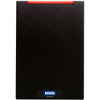
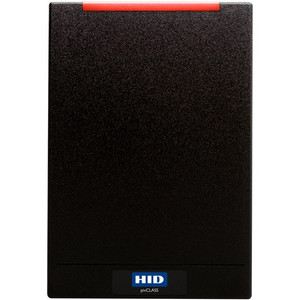
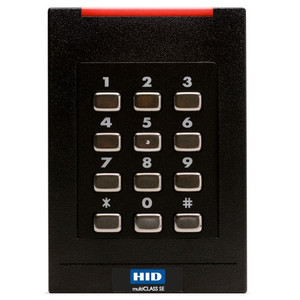
HID 920NHRNEKE000C R40-H PIVCLASS SE Elite Reader
The HID 920NHRNEKE000C is an R40-H PIVCLASS SE smart card reader purpose-built for federal, government, and high-security enterprise access control deployments. This reader enforces FIPS 200-bit encryption on all credential transactions, meeting FIPS 140-2 Level 2 compliance without exception — a non-negotiable requirement for federal facilities and defense contractor sites. Dual-frequency operation (125 kHz proximity + 13.56 MHz HF) and multi-credential support (HID iCLASS, MIFARE DESFire, PIVCLASS native, NFC) make it compatible with both legacy proximity installations and modern smart-card rollouts. RS-485 and Wiegand connectivity integrate directly into enterprise access control panels, with UART support available for specialized panel architectures.
Key Features
- PIVCLASS SE Elite Credential Engine: Native PIVCLASS DES/3DES support with FIPS 200-bit encryption. Meets federal identity verification standards for PIV (Personal Identity Verification) and PIV-I (PIV-Interest) card ecosystems.
- Dual-Frequency Card Technology: 125 kHz low-frequency proximity + 13.56 MHz high-frequency HF in a single reader. Supports HID iCLASS SE, MIFARE DESFire EV2, SEOS, and native NFC — one device eliminates the capex and installation labor of dual-reader solutions.
- RS-485 Half-Duplex + Wiegand Output: Factory-configured 485FDX serial communication for enterprise panel integration; Wiegand protocol support ensures backward compatibility with legacy door controllers. UART available on request for custom panel configurations.
- 12/24 VDC Power Supply: Accepts standard 12 or 24 volt DC input — verify your panel output voltage before installation. Pinout-compatible with HID Signo reader family for retrofit scenarios.
- Real-Time Status Feedback: Red/green LED indicators and audible buzzer confirmation provide immediate installation visibility and end-user feedback on credential acceptance or denial.
- Black Housing with Tamper Detection: Black finish with silver trim baseplate; optional tamper-detection output supports intrusion monitoring and audit logging on high-security perimeters.
The 920NHRNEKE000C bridges legacy proximity card fleets and modern federal smart-card standards within a single physical reader. For facilities transitioning from 125 kHz cards to PIVCLASS credentials, this dual-frequency approach eliminates the cost and operational disruption of replacing readers at every access point during the migration window. The encrypted credential transaction stream (FIPS 200-bit) is immune to cloning and replay attacks — critical when credential compromise can trigger facility-wide re-keying and badge issuance cycles worth thousands of labor hours.
Integration follows standard access control panel RS-485 serial protocols. Twisted-pair shielded wiring from reader to panel is mandatory, especially on runs exceeding 100 feet — unshielded cable invites noise-induced parity errors and intermittent read failures. The Wiegand fallback output (26- or 32-bit format, configurable) provides redundant communication on older panels that lack RS-485 support; however, Wiegand transmission is unencrypted, so FIPS-sensitive deployments should use RS-485 exclusively. UART support is available on special order for custom panel architectures (e.g., embedded Linux controllers, proprietary access-control microcontrollers). Confirm serial protocol support with your panel manufacturer's datasheet before finalizing the BOM.
NFC capability enables HID Mobile Access integration for facilities deploying smartphone-based credentials alongside physical cards. This is operationally useful in BYOD scenarios where employees present either a contactless DESFire card or their enrolled mobile device at the same reader — no secondary hardware needed. Bluetooth pairing and credential provisioning are handled via the HID Mobile Access management platform; the reader itself passes NFC-compliant credentials through to the access control panel for decision logic.
The HID 920NHRNEKE000C is FIPS 140-2 Level 2 certified and compliant with PIV/PIV-I federal identity standards. It integrates with all major enterprise access control platforms (Genetec Security Center, Software House C•CURE, Salto Systems, etc.) via standard OSDP (Open Supervised Device Protocol) support and legacy Wiegand fallback. For federal and defense contractors mandating FIPS encryption at the reader level, this is the standard choice. For commercial high-security installations (data centers, financial services, healthcare), the dual-frequency flexibility and modern NFC capability offset the higher cost versus single-frequency proximity-only readers.
Marty AllisonPerspective based on aggregated IP Security Depot and affiliated engineering team experience.
We've deployed the HID 920NHRNEKE000C across federal facilities, defense contractor campuses, and enterprise data-center environments where FIPS encryption at the credential reader is a hard compliance requirement, not a nice-to-have. The differentiator here is the dual-frequency architecture paired with PIVCLASS native support — it lets you run a hybrid credential fleet (legacy proximity + modern PIV cards) without swapping hardware or managing separate reader zones. On a 500-door federal facility, that means you don't have to replace 500 readers during a three-year PIV rollout; instead, you upgrade cards at your own pace and the 920NHRNEKE000C handles both transparently. The FIPS 200-bit encryption happens at the credential transaction boundary, not in software or at the panel — that level of cryptographic isolation is what federal auditors are actually checking for.
Real-world caveat: RS-485 wiring discipline matters. We've seen intermittent read failures on long runs (150+ feet) with unshielded Cat5 pairs — the moment you switch to foil-shielded twisted pair and proper grounding at the panel, failure rates drop to near-zero. If your panel is in a noisy environment (near high-power HVAC, switchgear, or RF broadcast), invest in the shielded cable and a ferrite choke on the reader side. Wiegand fallback is useful for backward-compatibility testing, but in a production FIPS environment, disable Wiegand output entirely and rely on RS-485 — Wiegand credentials are unencrypted and defeat the purpose of FIPS 200-bit signing at the reader.
Technical Highlights:
- FIPS 200-bit Encryption on Credential Data: Every card read is cryptographically signed and validated at the reader before transmission to the panel. This prevents credential cloning, replay attacks, and man-in-the-middle interception — a requirement for federal PIV deployments and defense contractor facilities under NIST SP 800-73 standards.
- Dual-Frequency (125 kHz + 13.56 MHz HF) in Single Housing: Eliminates the capex and installation labor of deploying two separate readers per door. On a 200-door campus, that's 200 fewer devices, 200 fewer power supplies, and simplified panel wiring — easily a 30-40% cost reduction versus dual-reader approach.
- PIVCLASS SE Native Support: Reads HID PIVCLASS DES/3DES cards directly, no conversion or middleware required. Integrates with federal PIV card ecosystems (State Department, DoD, GSA) without additional validation layers.
- RS-485 + Wiegand Redundancy: Factory-configured RS-485 (485FDX half-duplex) for modern panels; Wiegand output available as fallback for legacy controllers. In FIPS-sensitive deployments, use RS-485 exclusively and disable Wiegand to maintain encrypted credential transmission.
- NFC Capability for Mobile Access: Supports HID Mobile Access smartphone credentials via native NFC — same reader validates both physical cards and enrolled mobile devices. Useful for BYOD-friendly campuses without additional hardware investment.
Deployment Considerations:
- RS-485 shielded twisted-pair wiring is mandatory for runs exceeding 50 feet; use foil-shielded Cat5e or equivalent with ferrite chokes on noisy sites. Unshielded pairs introduce parity errors and intermittent read failures, especially near HVAC equipment or electrical switchgear.
- Confirm your access control panel supports 485FDX (half-duplex RS-485) before ordering. Legacy panels expecting full-duplex (485FDD) or Wiegand-only input require special configuration or fallback to Wiegand mode, which disables FIPS encryption.
- UART support is available on special order for embedded-system controllers; standard off-the-shelf configuration ships with RS-485 and Wiegand only. Factor 4-6 week lead time if UART is required.
- NFC smartphone credential provisioning requires enrollment via the HID Mobile Access management platform — separate contract and infrastructure. Doesn't happen automatically; requires IT/security team coordination.
- Power supply voltage (12 VDC vs. 24 VDC) must be verified against your panel output before installation. Wrong voltage will damage the reader; HID does not cover voltage mismatch under warranty.
The 920NHRNEKE000C is the right choice for federal facilities, defense contractors, and enterprise data centers where FIPS credential encryption and PIV card compatibility are compliance mandates. For commercial high-security sites (financial services, healthcare, research) needing dual-frequency flexibility without federal compliance overhead, this reader delivers defensible credential security at a reasonable capex premium versus single-frequency alternatives. Explore the full HID catalog for proximity-only readers, mobile access platforms, and enterprise access control integrations.