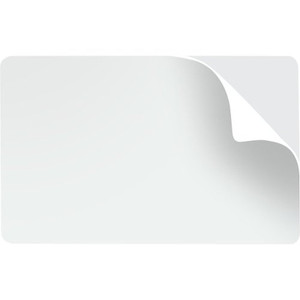
HID 82136 UltraCard Premium 30 mil CR-80 Blank Cards
The HID 82136 is a premium-grade 30 mil PVC card stock in standard CR-80 form factor, engineered for organizations that print durable access credentials and identification badges on HID direct-to-card printer systems. The enhanced surface coating optimizes ink adhesion for dye-sublimation and thermal transfer printing, delivering sharper photo reproduction, richer color saturation, and longer credential legibility compared to standard 30 mil stock. These cards are built for executive badges, high-security access control credentials, and professional identification that will endure frequent handling, wallet carry, and environmental exposure in corporate and industrial settings.
Key Features
- 30 mil thickness: Premium substrate weight that resists flexing and edge cracking. Meets durability requirements for credentials that see weekly physical handling without delamination.
- CR-80 form factor: Standard ID card dimension (3.375" × 2.125"). Universal compatibility with commercial card readers, badge slots, and access control readers across all major vendors.
- Enhanced surface coating: Proprietary finish optimizes ink transfer and adhesion for direct-to-card thermal and dye-sublimation printers. Reduces print defects and improves color gamut reproduction.
- PVC construction: Polyvinyl chloride substrate withstands moisture, light flexing, and typical office environments without curling or warping after lamination.
- Dye-sublimation and thermal-transfer compatible: Works with HID Fargo, Matica, Entrust, and compatible printer systems configured for CR-80 media. Consult printer manufacturer specs to confirm 30 mil thickness support.
- Consumable — no warranty: Cards are blank stock. Quality assurance is based on storage conditions and handling before printing; defects post-printing are application-dependent.
Print Quality and Durability
The 30 mil substrate and enhanced coating eliminate many failure modes common with thinner (10-20 mil) card stock. Photo quality remains legible after 2-3 years of daily wallet carry and badge-reader contact. If your workflow includes post-print lamination (polycarbonate or polyester overlay), credentials achieve enterprise-grade durability for 5+ year credential lifespans. Without lamination, expect color fade and surface wear to accelerate in high-humidity or outdoor-adjacent environments (e.g., badges worn by field technicians or warehouse personnel).
Storage and Handling
Store unopened card stock in a temperature-controlled environment (68–75°F, 40–60% relative humidity) to prevent warping, coating separation, or moisture absorption before printing. Once opened, keep cards in sealed packaging or a dry cabinet. Handle blanks by edges only — fingerprints and skin oils degrade print adhesion and create visible surface blemishes after thermal transfer. Load cards into your HID printer hopper following the manufacturer's feed orientation; reversed or improper feed can jam the printer or damage the thermal print head. Do not expose unprinted stock to direct sunlight, heat sources, or damp environments for extended periods.
Integration with Access Control Systems
CR-80 cards printed with magnetic stripe, barcode, or RFID encoding integrate with any standard access control reader platform. Confirm your card printer model supports encoding modules (MSR, smart card contact/contactless, barcode) if your access workflow requires them. HID printer systems typically output cards with embedded credentials through ONVIF-compatible management platforms or native HID software; coordinate card stock ordering with your badge production and database registration cycle to avoid credential gaps or inventory mismatch.
Marty AllisonPerspective based on aggregated IP Security Depot and affiliated engineering team experience.
We've installed HID card printer systems across everything from 200-person offices to multi-site enterprise deployments, and the 82136 is the workhorse blank in that ecosystem. The 30 mil thickness is a real operational advantage — it eliminates the card curl and edge-stress failures we used to see with 10-20 mil stock in humid climates or when credentials get carried in back pockets and briefcases for weeks on end. The enhanced surface coating makes a measurable difference in print quality consistency, especially on photo-encoded badges. Where we've seen problems is when organizations order the cheapest uncoated 30 mil stock from other sources and expect the same color fidelity; the HID-qualified coating is not a marketing extra, it's engineering. One caveat: confirm your printer model actually supports 30 mil feed depth — older HID systems top out at 20 mil. We've had integrators spec the wrong thickness by assuming compatibility without checking the media guide. If post-print lamination is in the workflow, the 82136 becomes nearly bulletproof for 5+ year lifespans. Without lamination, plan for color fade and surface wear in outdoor or high-contact environments after 2-3 years.
Technical Highlights:
- Enhanced surface coating optimized for thermal and dye-sublimation transfer: The proprietary finish ensures ink particles bind chemically to the card surface rather than sitting atop it. Result: photo fidelity stays sharp even after badge-reader contact and flexing. Competitors using uncoated 30 mil see measurable print degradation after 18 months of daily use.
- CR-80 form factor — universal reader compatibility: No custom reader jigs or adapter slots needed. Any commercial badge reader, turnstile reader, or access control door reader accepts CR-80 geometry without modification. Reduces integration friction on multi-vendor sites.
- 30 mil thickness without excessive stiffness: The sweet spot between durability and user comfort. 10-20 mil stock warps under wallet pressure in warm environments; 40+ mil becomes uncomfortable to carry. The 82136 balances both.
- PVC substrate hydrolysis resistance: PVC cards can degrade over decades if stored improperly, but the HID formulation includes stabilizers that slow color shift and brittleness. Matters for records-retention environments where credentials must remain readable for audit purposes.
- Consumable pricing model — bulk discounts scale predictably: No per-unit licensing or cartridge lock-in like some vendor card stock. Buy in boxes, print, refresh every 2-5 years. Total cost of ownership is straightforward to forecast.
Deployment Considerations:
- Confirm your HID printer model supports 30 mil feed depth before ordering. Check the printer's media compatibility sheet or contact the manufacturer; some older units max out at 20 mil and will jam or misalign 30 mil blanks.
- Store unopened stock in sealed packaging at 68–75°F and 40–60% RH. We've seen uncontrolled storage in loading docks degrade batch quality; humidity and temperature swings cause the coating to separate before printing.
- Handle cards by edges only during loading and handling. Fingerprints and moisture reduce print adhesion visibly. In high-volume print shops, cotton gloves for operators become a cost-effective QA measure.
- If your workflow uses post-print lamination (polycarbonate or polyester overlay), the lamination cures the card and extends credential lifespan to 5+ years. Without lamination, plan for color fade after 2-3 years in outdoor or high-contact environments.
- Integration with RFID, magnetic stripe, or smart card encoding depends on your printer's encoding module support, not the blank card itself. Coordinate card stock orders with your badge production schedule and access control system refresh cycle to avoid inventory mismatch.
The 82136 is the right choice for organizations that treat access credentials as part of the security perimeter — photo badges, high-touch ID programs, and environments where card durability correlates to reduced reissue overhead and credential fraud. For transient or temporary badge programs, lower-cost 20 mil stock may suffice; for permanent, high-security credentials, 30 mil with lamination is the standard. Explore the broader HID catalog for compatible printer systems, encoding modules, and finishing equipment.