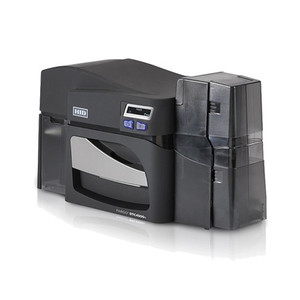
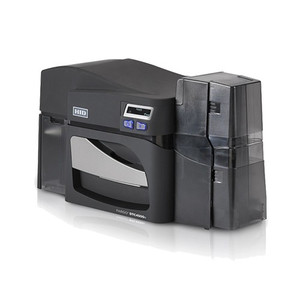
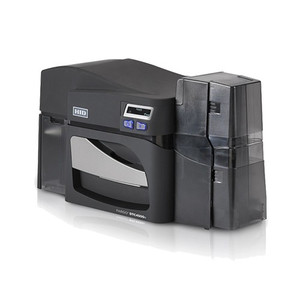
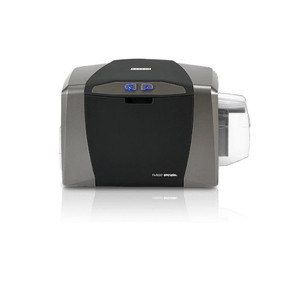
HID 55120 DTC4500e Dual-Sided Card Printer-Encoder
The HID 55120 is an enterprise-class card printer and encoder built for security integrators, IT departments, and credential issuance operations that need to produce compliant visual IDs and embedded security tokens in a single device. The DTC4500e combines dual-sided printing with integrated magnetic stripe, smart card, and proximity encoding—eliminating the need for post-print handling or separate encoding stations. This compact desktop unit supports both USB and Ethernet connectivity, making it suitable for standalone credential stations or networked, multi-site deployments where centralized print queue management and remote job submission from multiple workstations matter.
Key Features
- Dual-Sided Printing: Produces full-color credentials on both card surfaces in a single pass. This cuts cycle time significantly compared to single-pass or manual flip-and-reprint workflows—a material efficiency gain when you're rolling out access control across dozens or hundreds of employees or managing regular credential replacements and visitor badge programs.
- Integrated Card Encoding: Encodes magnetic stripe, smart card, or proximity credentials without additional hardware or secondary device handling. One machine handles the complete credential issuance pipeline, reducing workflow segmentation and simplifying material logistics for access control integrators managing distributed sites.
- USB and Ethernet Connectivity: USB enables direct attachment to portable credential stations or temporary issuance locations; Ethernet connectivity integrates with centralized print queue management, LDAP-based user directories, and badge design templates stored on enterprise servers. This flexibility is critical for multi-facility deployments where you need on-demand credential production without inventory complexity.
- Locking Input and Output Hoppers: Secure hopper design prevents unauthorized access to blank cards and cartridges during idle periods or multi-shift operations. Required in environments where credential stock control and audit trails are mandated by policy or compliance frameworks.
- YMCKO and YMCK Ribbon Support: Compatible with standard HID ribbon formats for color and monochrome credential designs, allowing flexibility in visual design while maintaining supply chain predictability and cost control.
- High-Capacity Feeders: Hopper design supports extended production runs, reducing interruptions from cartridge or card depletion during peak issuance periods—a real factor when you're issuing hundreds of badges in a single shift.
Integration & Compatibility
The 55120 integrates with leading access control platforms and credential management systems via standard print driver support. Ethernet connectivity enables queuing integration with LDAP-based user directories and centralized badge design templates; USB deployment supports portable credential stations. The device handles standard card stock sizes and thickness specifications aligned with industry access card and ID formats, so compatibility with existing card inventory and templates is straightforward.
For security integrators deploying multi-site access control systems, the 55120's ability to produce on-demand credentials at distributed locations reduces inventory complexity and enables rapid issuance during system expansions or credential expirations. The integrated encoding eliminates post-print card handling or separate encoding stations, streamlining the credential production pipeline and reducing labor overhead.
Operational Considerations
Locking hoppers require secure key management for material access—a necessary operational discipline in facilities where credential stock control is audited. Dual-sided printing requires consistent card feed and proper cartridge installation; maintenance intervals follow HID consumables guidance based on card volume. For larger deployments, Ethernet connectivity allows central IT monitoring of device status and cartridge depletion alerts, supporting proactive supply chain planning. The compact desktop footprint fits standard credential office spaces without requiring dedicated enclosures or excessive clearance.
Frequently Asked Questions
Q: Can the 55120 encode both magnetic stripe and smart card credentials in the same batch?
A: Yes. The integrated encoder supports magnetic stripe, smart card, and proximity credential encoding without requiring separate hardware or manual card removal between encoding passes. You can mix credential types within a single production run.
Q: Does the 55120 support networked credential issuance across multiple locations?
A: Yes. Ethernet connectivity enables centralized print queue management, LDAP integration, and remote job submission from multiple workstations across your organization. USB deployment is also supported for portable or temporary issuance stations.
Q: What ribbon formats are compatible with the 55120?
A: The 55120 supports YMCKO and YMCK ribbon formats aligned with standard HID ribbon specifications. YMCKO includes a clear protective overlay for enhanced durability; YMCK is used for monochrome or spot-color designs.
Q: Are the card hoppers lockable for security?
A: Yes. Both input and output hoppers feature locking mechanisms to prevent unauthorized access to blank cards and cartridges during idle periods or multi-shift operations. Secure key management is required.
Q: What is the typical card production speed?
A: The 55120 produces full-color dual-sided credentials in a single pass with cycle times optimized for enterprise issuance volumes. Exact throughput depends on design complexity and ribbon configuration; consult the manufacturer's performance specifications for your specific card design and encoding requirements.
Ted PerryPerspective based on aggregated IP Security Depot and affiliated engineering team experience.
The HID 55120 is engineered for credential issuance environments where you need to eliminate workflow steps and reduce material handling. The dual-sided engine in a single pass is the key differentiator—it cuts your production time in half compared to flip-and-reprint designs, and the integrated encoding means no separate machine or manual card movement between printing and encoding.
Technical Highlights:
- Dual-Sided Printing in One Pass: Produces full-color front and back in a single card feed cycle. Compared to single-pass printers, this reduces per-card cycle time and cuts labor overhead during high-volume issuance periods—your throughput will be substantially higher per operator hour.
- Integrated Encoding Without Manual Handling: The 55120 encodes magnetic stripe, smart card, or proximity credentials without requiring the card to leave the machine or move to a separate encoder. This eliminates post-print staging, reduces transcript errors, and simplifies audit trails for compliance-heavy environments.
- Locking Hoppers with Key Management: Secure input/output design prevents unauthorized card or cartridge access. Critical in regulated environments, but adds an operational discipline—you must manage hopper keys and enforce access logs if your facility policy requires material accountability.
Deployment Considerations:
- Dual-sided printing requires consistent card feed and proper cartridge installation. If your environment has inconsistent card stock quality or temperature swings, feed reliability can degrade. Stick to HID-specified card materials.
- Ethernet integration is powerful for multi-site issuance, but requires stable network connectivity and LDAP backend configuration. USB deployment bypasses this complexity if you're running a standalone or air-gapped credential station.
- Locking hoppers add security but require disciplined key management—not a gotcha if your facility already has credential control policies, but it is an operational requirement you cannot skip.
The 55120 is built for security integrators deploying enterprise access control roll-outs where on-demand credential production at distributed locations eliminates inventory complexity and enables rapid issuance during system expansions. If your credential workflow requires encoding, dual-sided visual design, and minimal material handling, the 55120 is a solid fit. If you're running simple single-sided badge printing without encoding, a simpler printer will lower cost and complexity.