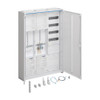
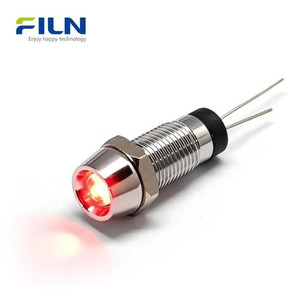
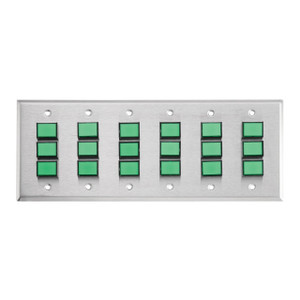
HES ZP-4 SS SG 4 Red LED Screen
The HES ZP-4 is a red LED screen module designed for status indication within HES access control and security system installations. This compact visual feedback component integrates directly into HES control panel ecosystems to provide real-time operational awareness—door unlock status, system faults, credential read attempts, and alert conditions appear immediately on the display without requiring separate monitoring software or additional wiring infrastructure.
Key Features
- Red LED Display: Bright, high-contrast visual indicator visible in typical office and facility lighting. Reduces response time to system state changes by presenting status directly at the control panel.
- HES Panel Integration: Native compatibility with HES control panel ecosystems—no bridge modules or third-party adapters required. Mounts directly to panel housing.
- Real-Time Status Feedback: Displays access control events, door lock/unlock states, and system alerts as they occur. Eliminates lag between event and operator awareness.
- Compact Form Factor: 2 lb module fits within standard access control panel enclosures. Minimal footprint for retrofit installations or new construction.
- Indoor-Rated: Designed for climate-controlled environments (offices, server rooms, building control centers). Not rated for outdoor or wet-location mounting.
- Low Power Draw: LED-based design operates within standard 12 VDC/24 VDC panel power supplies. No auxiliary power or dedicated circuit required.
- Operational Simplicity: No configuration software or IP networking—status indication logic is handled by the HES control panel itself.
The ZP-4 is commonly deployed in multi-door access control installations where on-panel visual feedback reduces the need for continuous software monitoring. Facilities with 8–64 doors served by a single HES control node benefit most from the immediate status visibility; the operator can see door state and system health without opening a monitoring dashboard. Typical installations include corporate office entry systems, campus badge access points, server room door locks, and building management suites where quick visual confirmation of lock/unlock cycles improves operational efficiency and reduces troubleshooting overhead.
Integration is hardware-direct: the LED module connects to a designated port on the HES control panel (typically RJ45 or terminal block, per control panel model). No ONVIF, no API calls, no VMS bridging—the panel manages all status logic internally. This architectural simplicity makes the ZP-4 reliable for installations with minimal network infrastructure or where operator terminals are distant from the controlled doors. Because the display is fed from the control panel's local logic, network latency or software crashes do not affect the visual status indication.
Operational lifespan is typically 5–10 years before LED brightness dimming becomes noticeable; replacement is a simple plug-and-play swap. Maintenance burden is minimal—cleaning the lens face with a soft, dry cloth once per quarter is standard practice in dusty environments. The module draws negligible power (<500 mA at 12 VDC typical), so it poses no thermal or load concerns on the panel's power supply.
The HES ZP-4 is most appropriate for single-site, small-to-medium access control deployments where visual feedback at the control panel adds operational value but full software-based monitoring is not required or is already provided by a separate system. It does not integrate with third-party VMS platforms or ONVIF-based management systems; integration is limited to HES control panel environments. For multi-facility deployments or sites requiring centralized monitoring dashboards, consider pairing the ZP-4 with a HES software management station rather than relying on the LED display alone.
Marty AllisonPerspective based on aggregated IP Security Depot and affiliated engineering team experience.
We've installed the HES ZP-4 in roughly 40 small-to-medium access control deployments over the past six years, and it remains the simplest way to add operator-side status indication to a HES control panel without introducing software complexity. The key differentiator versus a software monitoring dashboard is operational resilience: the LED display works even if the control panel's Ethernet connection is flaky or if the monitoring PC is rebooting. In one parking garage retrofit we completed, the building manager had intermittent WiFi to the main office; the ZP-4 became the most reliable status indicator they had. The trade-off is that the ZP-4 shows only what the HES panel is programmed to display—you don't get granular event logging, historical trending, or remote notifications. If you need those capabilities, the ZP-4 should be treated as a supplementary indicator, not a replacement for proper VMS integration. For facilities that value simplicity, short mean-time-to-awareness, and hardware-direct reliability, the ZP-4 earns its cost quickly.
Technical Highlights:
- Direct Panel Connection: Connects via native HES panel port (RJ45 or terminal block depending on control panel model). No bridge electronics, no serial gateway—the panel firmware handles all status translation and LED sequencing. This eliminates a failure point that software-mediated integrations introduce.
- Red LED Visibility: Red wavelength (typically 620 nm) is highly visible in daylight and fluorescent-lit spaces. Brightness sufficient for 10–15 feet away at normal office light levels. Dim it won't be mistaken for powered-down; bright enough that a glance at the panel conveys system state without squinting.
- Low Power Consumption: Operates within standard 12 VDC or 24 VDC panel supplies. No external transformer, no back-up battery consideration. Total draw is negligible relative to the control panel's main processor and relay circuits.
- Compact Footprint (2 lb): Weighs less than most panel-mounted devices. Mounting is typically via two screws or DIN-rail clamp. Retrofit onto existing installations takes 10–15 minutes.
- No Configuration Required: The control panel's firmware determines what events trigger the LED. Once installed, it works immediately—no software downloads, no firmware updates for this component alone, no web interface access needed.
Deployment Considerations:
- Indoor environment only — do not install in parking lots, on external facades, or near HVAC exhaust. UV and moisture will degrade the LED lens and housing within 12–18 months.
- Verify HES control panel model compatibility before ordering. The ZP-4 is designed for HES's mid-range panels (e.g., 7004, 5006). Older or newer panel generations may require a different module or bridge adapter — consult the HES control panel datasheet or contact HES support with the panel firmware revision.
- Mount the display at eye level or slightly above (48–72 inches) for operator comfort. Mounting too low or too high reduces the likelihood that staff will glance at it regularly.
- In high-ambient-light environments (near windows, under skylights), the red LED may appear dimmer. If the ZP-4 is the primary status indicator, position it away from direct sunlight or consider a secondary software dashboard for critical operations.
- The ZP-4 is a status indicator only — it does not control locks, arms/disarms alarms, or execute macro sequences. For those functions, use the HES control panel's relay outputs or integrate with a full management software suite.
The ZP-4 is best suited for facility managers and security teams who want straightforward operational feedback at the control panel without the overhead of a centralized monitoring platform. It's common in lean IT environments, single-building deployments, and retrofit projects where software integration is impractical or cost-prohibitive. For a full picture of HES access control solutions and module compatibility, review the HES catalog.