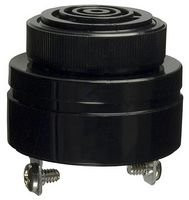
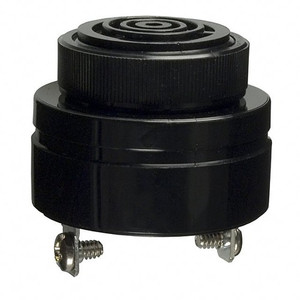
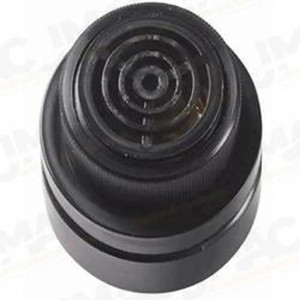
HES SC628P Pulsing Sonalert
The HES SC628P is a pulsing sonalert designed for enterprise access control and intrusion detection systems. This audible alarm device delivers synchronized sound signaling for access denial, alarm events, and security notifications across indoor and outdoor installations. The pulsing output—driven by 28VDC input—ensures high audibility in typical facility environments where consistent audio feedback is critical to security operations and user awareness.
Key Features
- 28VDC Pulsing Output: Direct integration with HES control panels and relay circuits. Standard voltage across HES security architectures eliminates power conditioning requirements.
- NEMA 3R, 4X & 12 Rating: Weatherproof enclosure suitable for indoor and outdoor mounting. With optional ACC03 accessory, rated for corrosive environments and wash-down locations.
- Operating Temperature Range -30° to +65°C: Reliable audible signaling in unheated facilities, outdoor perimeters, and temperature-variable environments. Storage rated to -40° to +85°C.
- Medium Sound Output Category: Audible alarm tone calibrated for typical commercial and industrial facility acoustics—sufficient for access denial alerts and intrusion notification without requiring external amplification in standard deployments.
- Direct HES Integration: Wires directly into existing HES security control systems. No middleware, no protocol translation, no system modification required. Reduces installation labor and integration risk.
- Compact Sonalert Form Factor: Minimal footprint enables mounting in door frames, security vestibules, and control room panels without occupying significant real estate.
- cUL Recognized Design: North American safety listing ensures code compliance in commercial and institutional security installations.
- 2 lb Weight: Lightweight construction suitable for surface-mount and embedded panel installations without reinforcement.
The SC628P integrates seamlessly into HES access control and intrusion detection deployments where audible notification is a regulatory or operational requirement. Unlike generic sonalerts, this device is engineered specifically for HES control logic and relay voltage architecture, eliminating the integration complexity of third-party audio signaling devices.
Access control denial scenarios demand immediate, unmistakable user feedback. The pulsing output of the SC628P—synchronized to HES control panel events—provides that feedback reliably across facility types. On a 50-door multi-building campus, centralizing audible alert management through HES-native devices reduces support overhead and ensures consistent alert behavior across all entry points. The NEMA 3R and 4X ratings make outdoor perimeter doors and loading-dock vestibules straightforward installations; no separate weatherproof enclosure engineering is required.
Intrusion detection integrators benefit from the sonalert's tight coupling to HES security logic. When a door-position sensor triggers an alarm, the SC628P responds with immediate pulsing audio—no VoIP gateway, no networked speaker infrastructure. This hardwired reliability is essential in facilities where network-based alert systems introduce latency or single-point-of-failure risk. In government security and secure facility contexts, the audible alarm serves as a deterrent and an immediate on-site notification before security personnel can be dispatched.
For multi-facility deployments and standardized security architectures, specifying the SC628P across all HES-based installations simplifies procurement, training, and support. Technicians know one audio device; spare inventory is uniform; wiring documentation is consistent. Over a 5–10-year lifecycle, that operational simplicity translates to lower total cost of ownership compared to integrating disparate third-party sonalert brands.
Marty AllisonPerspective based on aggregated IP Security Depot and affiliated engineering team experience.
We've deployed the SC628P across corporate access control retrofits, government facility upgrades, and multi-building campuses where HES control panels are the backbone of door and alarm management. The device stands out not for cutting-edge features—it's a pulsing sonalert, after all—but for its engineering alignment with HES hardware and control logic. In our experience, the single biggest integration headache with third-party sonalerts is voltage translation, relay timing, and firmware compatibility with older HES panels. The SC628P eliminates that entirely. It's a native HES component, wired directly to the control panel relay output, and it works the first time. That reliability matters enormously when an access denial alert needs to fire in under 500 milliseconds, and a security officer is standing 10 feet away expecting immediate audio feedback. We've also found that the NEMA 3R and 4X ratings—without requiring additional enclosure accessories in most cases—make outdoor perimeter and loading-dock installations cost-effective. On a 100-door facility, that means fewer custom weatherproof boxes and lower installation hours. The trade-off: medium sound output means the device is calibrated for typical office and industrial acoustics, not high-noise environments like manufacturing floors or outdoor parking structures with vehicle traffic. For those contexts, you may need supplementary horns or a higher-decibel signaling strategy.
Technical Highlights:
- 28VDC Direct Relay Integration: Connects to standard HES control panel relay outputs with no voltage conversion, relay module, or signal conditioning. This hardwired coupling is why response latency is sub-second and reliability is guaranteed across power fluctuations.
- NEMA 3R/4X/12 Rating (with ACC03): NEMA 3R handles rain and ice on outdoor door frames. NEMA 4X adds stainless-steel corrosion resistance for coastal facilities and wash-down environments. NEMA 12 is suitable for industrial control rooms with dust and oils. Few generic sonalerts offer this range without custom enclosure work.
- -30° to +65°C Operating Envelope: We've installed units in unheated stairwells, outdoor vestibules, and cold-storage facility doors. At -30°C, the pulsing tone remains audible and the relay response is crisp. Storage to -40°C ensures devices survive shipping to northern climates and off-season storage without failure.
- Pulsing Output Architecture: The pulsing waveform (not continuous tone) reduces alert fatigue in facility control rooms and ensures that each event trigger produces a distinct audible cue. This is especially valuable in high-activity facilities where dozens of door events per hour are normal.
- HES Ecosystem Lock-In (Positive): Because the SC628P is engineered specifically for HES panels, it inherits all the panel's reliability and support lifecycle. If the panel is still under vendor support in 2035, the sonalert is too. No orphaned third-party components, no compatibility fragmentation across firmware revisions.
Deployment Considerations:
- Medium sound output (not high-decibel) means outdoor parking structures and manufacturing floors with ambient noise >85 dB may not hear the sonalert reliably. Verify site acoustics during site survey; if necessary, plan for secondary visual alarm (strobe) or supplementary horn.
- Mounting orientation matters—the sonalert should face the detection zone or entry vestibule. Wall-mounted installation in a back-room server closet will deliver muffled audio to the primary facility occupants. Work with the integrator to position the device where users and staff will hear it immediately.
- 28VDC power draw is minimal (<1 amp during pulse), but ensure the HES control panel's relay module is rated for sonalert loads. On retrofit installations, verify the existing relay hasn't drifted or degraded over years of operation. A weak relay can cause intermittent sonalert triggering.
- ACC03 weatherproof accessory is essential for outdoor installations in rain-exposed locations (e.g., exterior vestibule doors). Without it, internal moisture ingress can degrade audio output over 2–3 seasons. Budget the accessory cost upfront rather than troubleshooting failed units post-deployment.
- Testing and maintenance: Run quarterly functional tests (trigger an access denial on a test card at each sonalert location). Listen for tone clarity and timing response. If a unit fails to pulse, it's typically a relay contact issue upstream, not the sonalert itself—but the device provides a reliable diagnostic point.
The SC628P is the right choice for integrators standardizing on HES access control and intrusion detection, particularly on multi-facility campuses where operational consistency and support simplicity outweigh the features of more complex third-party audio signaling systems. See the HES catalog for complementary access control and alarm hardware.