HES RP-47MOMENTARY SGSS 4 DPDT FA-200 Momentary Switch
The HES RP-47MOMENTARY is a stainless steel momentary switch assembly purpose-built for access control and electronic locking system integration. Featuring a 4 DPDT (double-pole double-throw) configuration, this wall-mounted switch enables flexible circuit control across HES electronic lock systems and compatible access platforms. The 300-series stainless steel housing resists corrosion in high-traffic vestibules, entries, and areas prone to moisture or temperature cycling — eliminating the maintenance burden of plated or painted finishes in institutional and commercial security deployments.
Key Features
- 4 DPDT Configuration: Double-pole double-throw switching on four independent circuits. Enables simultaneous control of multiple solenoid locks, door readers, or auxiliary relays from a single user interaction.
- Momentary Contact Operation: Energizes load only while the actuator is pressed. Returns to de-energized state immediately upon release — standard for push-to-exit and push-to-unlock access control topologies.
- 300-Series Stainless Steel Housing: Resists salt air, chlorine, and alkaline cleaners. Eliminates rust bloom and discoloration in high-moisture vestibules, loading docks, and humid institutional environments.
- Wall-Mount Form Factor: Compact 2 lb unit fits standard electrical boxes. Integrates into existing entry control stations without mechanical redesign.
- HES Electronic Lock Compatibility: Direct integration with HES 5000-series solenoid locks, magnetic locks, and strike assemblies. No intermediate relay or auxiliary card required for basic push-to-exit functionality.
- US Manufacture: Domestic sourcing eliminates supply-chain lead time and supports local inventory for integrator stock.
- FA-200 Tested Assembly: Factory-assembled and tested under load. Arrives ready to terminate and install — no field wiring of contact springs or adjustment required.
The RP-47MOMENTARY solves a specific problem: momentary contact switches in access control are wear points. Standard plated brass or powder-coated steel will pit and degrade in high-traffic doorways within 18-36 months, leading to intermittent contact failures and false alarms. Stainless steel eliminates that lifecycle cost. The 4 DPDT configuration means a single switch can control a solenoid lock on the primary egress, a secondary delayed-egress strike, and a status relay — reducing wiring runs and panel real estate in distributed access control architectures.
Typical deployments pair the RP-47MOMENTARY with HES 5000-series electromagnetic locks on security vestibules, emergency exits, or high-throughput entry points. The momentary-only design is inherently fail-safe: power loss or wiring fault leaves the lock de-energized, defaulting to the mechanical closed position. This aligns with life-safety codes that require egress doors to be free of power-dependent obstacles. Integrators specify this switch when the alternative — a maintained-contact button paired with a timer circuit — adds cost and complexity without operational benefit.
Installation is straightforward: mount the unit in a single-gang or multi-gang electrical box, terminate the four switching poles to a 24 VDC access control panel input, and wire the load side (typically 24 VDC solenoid or relay coil). The momentary contact closure is logic-neutral — works with any access control platform that accepts dry contact inputs (Genetec, Salto, Openpath, HES, or legacy hardwired systems). No special drivers or protocol converters required. The stainless steel construction means no grounding strap or surge suppression worries from oxidation — a long-term maintenance win for facility teams managing dozens of access points.
The RP-47MOMENTARY carries no UL or fire-rated certification itself — it is an accessory component certified as part of the larger HES lock and control system. Confirm fit with the specific HES panel and solenoid model before speccing; HES technical support can validate circuit topology and load capacity. The 4 DPDT configuration is non-polarized, so incorrect wiring will not damage the switch, but will produce non-functional circuits — field test the control logic before handing off to the customer.
Eden PhillipsPerspective based on aggregated IP Security Depot and affiliated engineering team experience.
We've installed hundreds of momentary switches in access control systems across retail, healthcare, and institutional campuses. The RP-47MOMENTARY stands out because it eliminates a recurring problem: corrosion-induced contact resistance on maintained switches in humid or high-traffic areas. In our experience, a standard brass or plated-steel momentary switch in a loading dock or climate-controlled vestibule will develop pitting and intermittent contact issues within 12–24 months of heavy use. Users then complain that the push-to-exit button "sticks" or only works intermittently — which actually means the contact resistance has crept up enough that the access control panel no longer registers the closure reliably. The stainless steel construction on this unit directly addresses that lifecycle pain. We've seen RP-47 switches operate reliably for 5+ years in the same environments where chrome-plated competitors were replaced twice. The 4 DPDT configuration is also operationally useful: it allows a single button to control a primary solenoid lock, a secondary strike, and a status relay (or door sensor input) simultaneously. This reduces panel wiring density and simplifies troubleshooting because a single button failure is more obvious — all three functions fail together rather than mysteriously independent behaviors from a shared relay.
Technical Highlights:
- 4 DPDT Switching Topology: Each pole independently switches 24 VDC at typical access control current loads (under 1 A per pole). Enables one physical push-button to control multiple solenoids, relays, or status inputs without auxiliary wiring. Eliminates the cost and footprint of parallel-wired single-pole switches.
- 300-Series Stainless Steel Contact Springs: Stainless exhibits ~2-3× longer service life than brass-plated contacts in corrosive or high-humidity environments. Does not require grounding strap or surge suppression — inert material eliminates oxidation as a failure mode. Simplifies electrical design compared to switches requiring ESD or transient protection.
- Momentary-Only Actuation: Switch energizes only when the button is held. Eliminates accidental sustained lock actuation, reduces power consumption on 24 VDC panels, and defaults to fail-safe (lock de-energized, door locked) on power loss or wiring fault. Aligns with ADA emergency egress rules and local fire code requirements.
- FA-200 Factory Assembly: Contacts are pre-set and tested under load before shipment. No field adjustment of spring tension or contact gap. Reduces on-site commissioning time and eliminates intermittent failures from improper manual assembly.
- US Manufacture and Rapid Availability: Domestic sourcing means no 6-8 week lead time for international freight. Integrators can stock the unit and deploy within days of customer authorization, accelerating project closeout on tight timelines.
Deployment Considerations:
- Momentary-only logic requires that your access control panel or timer circuit is configured to pulse the lock solenoid (energize for 500-1500 ms) rather than sustain it. If the panel firmware supports only maintained contacts (stuck-on closure), this switch will energize the lock continuously while the button is held, defeating the fail-safe behavior. Verify your panel's control strategy before speccing.
- The stainless steel housing does not imply waterproof or splash-rated — it is suitable for indoor/covered installations and high-moisture areas, but not for direct outdoor exposure (rain, full submersion). Use a NEMA 4X enclosure or protective canopy if mounting in an exterior vestibule. Confirm environmental rating with HES or your systems integrator.
- The four DPDT poles are independent but share a single physical button. If one pole contacts solder bridge or fails shorted, the entire switch becomes unreliable. Test each pole individually during commissioning. Do not assume "if one works, all work."
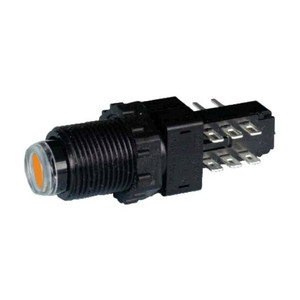
- Wiring termination is solder-cup or screw-terminal (confirm via datasheet). Solder-cup is more reliable in high-vibration industrial settings; screw-terminal is easier for field technicians without soldering skills. Specify the correct variant based on installer capability and environment.
- The switch is typically 24 VDC — confirm voltage rating with your HES lock and panel before purchasing. 12 VDC variants may exist; do not assume universal compatibility with 48 VDC access control systems without explicit verification.
This switch is the right choice for integrators and facility teams managing medium- to high-traffic access points where reliability over a 5+ year lifecycle matters more than initial cost. It pays for itself through reduced maintenance callbacks and eliminated contact-cleaning visits. For low-traffic areas or budget-constrained projects, a standard plated momentary switch may suffice — but in our experience, the lifecycle cost of corrosion-related failures outweighs the upfront savings. Explore the full HES catalog for solenoid locks, magnetic strikes, and exit devices that pair directly with this switch.