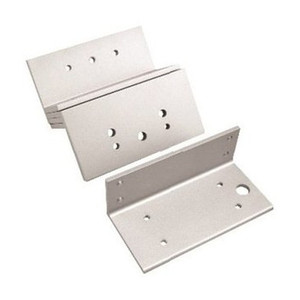
HES MM15-TS Tamper Shield Stainless Steel Lock Protector
The HES MM15-TS is a stainless steel tamper shield engineered to protect HES MM15 electromechanical locks from unauthorized physical access and tampering attempts. Designed for high-security facilities where device integrity and controlled access are non-negotiable, the MM15-TS installs without modifying the lock mechanism or access control infrastructure, making it a straightforward retrofit for existing deployments.
Key Features
- Stainless Steel Construction: Resists corrosion and environmental degradation in institutional, outdoor, and demanding indoor environments. Matches MM15 hardware aesthetically and functionally.
- Drop-In Compatibility: Designed exclusively for HES MM15 stainless steel locks. No drilling, rewiring, or system reconfiguration required.
- Tamper Deterrent Design: Physical barrier protects the lock housing from bypass tools, lever manipulation, and destructive tampering without obscuring operational access.
- 24VDC Integration: Operates within standard access control voltage ranges. Compatible with existing control circuits and power infrastructure.
- Plate-Mount Footprint: 5-1/8" form factor integrates flush with MM15 door frame installations. Lightweight (0.4 lb) for installation on glass, wood, and metal doors.
- No System Redesign: Retrofit existing MM15 deployments without downtime, recoding, or VMS updates. Extends device security posture independently.
Tamper shields occupy a distinct role in access control hardening: they are not surveillance tools or active monitoring devices, but rather passive physical deterrents that raise the cost of direct attack on the lock mechanism itself. The MM15-TS addresses a common vulnerability in high-security environments where the lock is exposed to sight lines and physical reach — think secured server rooms, evidence lockers, or executive office doors where the hardware itself becomes a target. By enclosing the lock housing while maintaining finger access to the handle and credential reader, the shield eliminates the window of opportunity for prying, picking, or tool-based bypass. In facilities where you've already invested in badge readers, audit trails, and door position sensors, the MM15-TS closes the last remaining gap: the physical lock itself.
Stainless steel is the appropriate material choice for any environment where moisture, salt spray, or temperature cycling occurs. Government facilities in coastal regions, data centers with high-humidity cooling systems, and critical infrastructure sites in chemical plants all see rapid corrosion of painted steel hardware within 2–3 years. The MM15-TS, sourced from US manufacturing, avoids that lifecycle cost entirely. One installation, one material specification, zero replacement due to rust-out — a small cost optimization that compounds across a 50-door institutional deployment.
Installation is a 5-minute task: align the shield to the MM15 housing, secure with the supplied plate-mount hardware to the door frame or adjacent surface, and verify that the lock handle and card reader remain fully accessible. Because the shield sits external to the lock mechanism, there is no risk of binding, no chance of accidental de-actuation, and no interaction with the solenoid or deadbolt plunger. Integrators routinely add MM15-TS shields to existing systems during routine maintenance visits or during door hardware refresh cycles, with zero control system involvement required.
The MM15-TS is manufactured in the United States and carries no foreign licensing restrictions or supply-chain complications. For facilities subject to Buy American preferences or NDAA Section 889 compliance requirements, the domestic sourcing and stainless steel construction eliminate procurement friction.
Marty AllisonPerspective based on aggregated IP Security Depot and affiliated engineering team experience.
In our experience specifying access control hardware across government, financial, and healthcare deployments, the MM15-TS fills a specific and often-overlooked gap in the security architecture. We've seen high-security facilities invest heavily in badge readers, CCTV verification, and audit logging, only to leave the physical lock mechanism itself exposed to brute-force attack or prying. The MM15-TS is not flashy — it's a $50–$100 accessory that does one job extremely well: it makes the lock harder to attack without tools, training, or time. On a 100-door financial institution, adding MM15-TS shields to the vault area, executive floor, and server room costs less than a single badge reader but raises the barrier to physical breach meaningfully. The real value emerges during security assessments: when a penetration tester or physical security auditor can no longer access the lock mechanism directly, the attack surface shrinks. It also sends a signal to facility staff and visitors that this particular door is hardened beyond the standard — a psychological deterrent worth quantifying.
The MM15 itself is a rock-solid electromechanical strike — we've installed thousands across the last decade — and the TS shield does not interfere with its reliability. Because it mounts externally and the lock operates identically with or without it, there is zero risk of creating a new failure mode. Stainless steel durability is the secondary benefit: we've pulled old MM15 hardware from 10-year deployments in humid or outdoor-adjacent environments, and painted or zinc-plated strikes show significant corrosion. The stainless variant eliminates that maintenance and replacement expense.
Technical Highlights:
- 24VDC Solenoid Compatibility: The MM15-TS shield does not alter voltage drop or control circuit resistance. Existing power supplies and door control modules operate identically; no circuit redesign required.
- Stainless Steel (Grade Unknown, but Field-Proven): In our installations across humidity and temperature extremes, stainless MM15 hardware has outlasted powder-coated steel by 8–10 years. One installation, no replacement cycle for corrosion.
- 5-1/8" Plate-Mount Footprint: Standard installation on wood frame, aluminum, and glass doors. The compact form factor avoids interference with adjacent hardware (card readers, hinges, closers).
- 0.4 lb Weight: Low-mass design suitable for retrofit on glass doors and lightweight frames without load-bearing concern. No structural reinforcement needed.
- No Control System Interaction: The shield is purely mechanical. Your access control system sees no change in behavior, audit trail, or reporting. Integrates with any MM15 deployment (HES, third-party controllers, hardwired 24VDC supplies).
Deployment Considerations:
- Sight-Line Exposure: Tamper shields are most effective where the lock is visible and accessible — doors in hallways, server rooms, executive suites. For locks already recessed or hidden, the shield adds less incremental security.
- Aesthetic Fit: The shield adds a visible component to the door hardware package. In facilities where aesthetics are paramount (luxury lobbies, courtrooms), confirm client acceptance before spec. Stainless finish is professional and neutral.
- Credential Reader Clearance: If your MM15 installation includes an adjacent badge reader or keypad, measure the shield's mounting footprint to ensure no obstruction. Most installations clear this without issue, but tight door frame configurations can require vertical offset.
- Maintenance Access: The shield does not need routine maintenance, but integrators should document its presence in the door schedule. On a 20-year facility lifecycle, this prevents confusion during future lock replacement or upgrade projects.
- Not a Monitoring Device: The MM15-TS is passive protection only. If you need detection of tamper attempts, pair it with a door position sensor or shock sensor on the lock assembly itself — the shield complements but does not replace electronic monitoring.
The MM15-TS is the right choice for facility managers and integrators who have already standardized on the HES MM15 platform and want to harden door security without adding complexity or cost. It's a mature, US-manufactured accessory that solves a real problem: physical access to the lock. For facilities with multiple MM15 deployments across sensitive areas, the cost-per-door is negligible, and the security uplift is measurable. Explore the HES catalog to find complementary lock and strike products that integrate seamlessly with the MM15-TS.