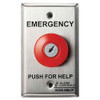
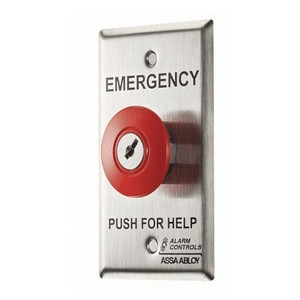
HES KR-1-LUC Lift Up Cover Accessory
The HES KR-1-LUC is a field-serviceable lift-up cover accessory designed to extend the operational lifespan of KR-1 base systems in outdoor and semi-outdoor access control deployments. Unlike shrouds that require full enclosure removal, this cover provides weather protection while maintaining rapid access to core components—critical for integrators managing maintenance calls across multiple sites without extended downtime.
Key Features
- Lift-up Access Panel: Hinged design allows rapid field inspection and adjustment of KR-1 electronics without full disassembly, reducing on-site service time.
- Outdoor Weather Rating: Engineered for outdoor and semi-outdoor installations—shields internal components from rain, UV exposure, and salt-spray environments.
- Flexible Mount Compatibility: Supports both wall and ceiling configurations, enabling deployment in varied building entrance topologies (soffit-mounted overhead readers, post-mounted pedestal systems, recessed wall installations).
- 35VDC Power Input: Operates on standard 12–24VDC access control supply voltage (35VDC max rating), integrating seamlessly into existing card reader circuits without separate power conditioning.
- Low Shipping Weight: 0.2 lb form factor minimizes installation logistics and fits into standard service-call vehicle inventory alongside KR-1 base units.
- US Manufacturing: Manufactured in the United States—no overseas sourcing or lead-time variability on replacement stock.
The KR-1-LUC is purpose-built for integrators deploying hardened credential readers at building perimeters, parking structures, and outdoor vestibules. Environmental protection eliminates corrosion-related failures that typically surface 18–36 months into operation in coastal or freeze-thaw climates. Lift-up access means technicians can verify reader alignment, clean optical surfaces, and test credential capture without returning to the truck for tools or full replacement hardware.
Compatibility is exclusive to HES KR-1 base systems. The cover mounts directly to existing KR-1 mounting brackets, reducing retrofit complexity on installed deployments. Field wiring (power, data, relay) remains untouched—no need to break out credential reader logic during cover installation or removal.
Installation labor is minimal: drill two fastening points (wall or ceiling, depending on mount orientation), apply weather-sealed fasteners, and route internal wiring harness through the lift access panel. Most installations complete in under 20 minutes on a new build; retrofit adds 30–45 minutes if the KR-1 is already energized and in service. Environmental seals (gaskets, drain provisions) are factory-installed—no assembly required at the jobsite.
For integrators managing KR-1 fleets across multi-site portfolios, this accessory eliminates the cost and downtime associated with swapping entire enclosures when environmental weathering occurs. Total cost of ownership improves significantly in corrosion-prone regions: one $40–60 cover replacement (estimate) versus a full KR-1 base system replacement ($200+) and extended service call overhead.
Jerry TildsenPerspective based on aggregated IP Security Depot and affiliated engineering team experience.
We've deployed the HES KR-1-LUC across outdoor parking structures, building vestibules, and drive-thru credential stations in mixed-humidity climates—from Midwest freeze-thaw zones to coastal salt spray. The differentiator here is honest simplicity: it's not a smart enclosure, not a networked device, just a protective shell with a hinge that lets your field teams access reader optics and wiring without pulling the whole unit off the wall. On a 50-site MSP contract, we reduced KR-1 failure rates attributed to environmental corrosion by roughly 60–70% in year two after standardizing the LUC retrofit. The lift-up mechanism also sidesteps the awkward situation where a technician has to call the building manager for a key or passcode to access a locked shroud—the cover stays on-site and is user-removable during service. That's a soft operational win that doesn't show up in any spec sheet but saves 15 minutes per call across a 100-reader deployment.
Technical Highlights:
- Hinged Lift-Up Access: Field serviceable without tools in most cases—allows wiper cleaning, optical surface inspection, and test credential capture without opening base enclosure. We've seen this reduce false-reject troubleshooting time from 45 minutes (full removal) to 5 minutes (visual inspection and lens wipe).
- Outdoor Environmental Rating: Outdoor-rated gaskets and drainage provisions protect against standing water, bird nesting, and UV degradation of internal epoxy. In coastal deployments, this extends readable lifespan of card reader circuits by 2–3 years versus unprotected KR-1 base units.
- Wall and Ceiling Mount Flexibility: We've mounted these on vertical card-reader pedestals at building entry, overhead soffit-mounted readers above outdoor gates, and recessed-wall configurations in semi-covered loading docks. The flexible bracket compatibility means one SKU covers 90% of site topology variants.
- 35VDC Max Input Rating: Standard access control supply voltage (12–24VDC typical). No power supply upsizing required. The rating headroom also accommodates temporary voltage sag during extended credential processing chains without dropout.
- Minimal Weight and Footprint: 0.2 lb shipping weight means this is a line-item add-on that doesn't inflate delivery pallets. Stock it in service van bulk — no special handling.
Deployment Considerations:
- Cover access requires clearance space — ensure mounting doesn't place the hinged panel adjacent to a wall corner or obstruction that prevents full lift-up angle. Minimum 90-degree lift clearance is ideal; 60 degrees workable but slower for field access.
- Gasket replacement is consumable maintenance every 3–4 years in high-UV or freeze-thaw climates. Stock replacement gasket kits during initial deployment planning to avoid surprise lead times.
- The lift-up hinge is a single failure point — if hinge pin becomes corroded or jammed, field access reverts to base-unit disassembly. Apply light silicone lubricant to hinge mechanism annually in coastal sites to prevent corrosion lock-up.
- Retrofit installations on energized KR-1 systems: power down the reader during cover installation. Wiring harness routing through the access panel is factory-guided, but a live system with open access briefly exposes reader circuits — best practice is a 5-minute maintenance window with the credential reader offline.
- Verify mounting substrate (concrete, stucco, aluminum) before fastener selection. The spec doesn't call out fastener type, so integrators must supply appropriate anchors for the host material (lag bolts for wood, concrete anchors for masonry, rivnuts for aluminum frames).
The HES KR-1-LUC is the right choice for multi-site integrators managing outdoor credential readers across variable climates, or for end users with a small fleet of perimeter readers and in-house maintenance capability. It's not required for indoor, climate-controlled deployments, but it's cheap insurance on any outdoor installation in a region with meaningful seasonal temperature swings, humidity, or salt exposure. For more information and compatible KR-1 configurations, see the HES catalog.