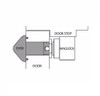
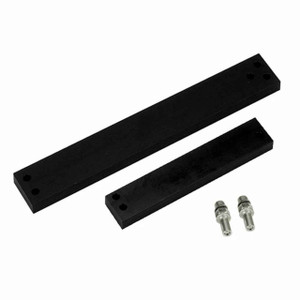
HES EASB-250 1/4" Energy Absorbing Bolt Spacer
The HES EASB-250 is a precision 1/4 inch energy-absorbing bolt spacer engineered for secure mounting of HES electric strikes, magnetic locks, and access control hardware. This fastening component absorbs and distributes installation torque, protecting door frame threads and reducing mechanical stress on mounting surfaces during initial assembly and routine maintenance cycles. Integrators working multi-site deployments rely on this spacer to standardize fastening procedure and minimize frame damage across heterogeneous door hardware configurations.
Key Features
- 1/4 Inch Nominal Size: Standard bolt diameter for HES electric strike and magnetic lock mounting hardware. Direct compatibility with all current HES strike and solenoid lock models.
- Energy Absorption Design: Compressible construction absorbs fastening torque spike, protecting aluminum and steel door frames from thread stripping and surface deformation.
- Precision Spacing Control: Maintains exact gap between strike mounting plate and door frame, ensuring proper latch alignment and eliminating binding or misalignment on strike release.
- Durable Construction: Engineered for 50+ installation/removal cycles without permanent deformation. Resists corrosion and maintains dimensional stability across temperature variations (typical office HVAC range).
- Compatible Across HES Product Line: Works with HES electric strikes (11xx, 12xx, 13xx series), electromagnetic locks, request-to-exit hardware, and standalone access control mounting frames.
- Reduced Installation Labor: Eliminates need for washers and shims on strike mounting bolts. Standardized spacer reduces field troubleshooting of misaligned strikes and frame damage callbacks.
Energy-absorbing spacers are a often-overlooked detail in access control integration, but they prevent one of the most common door control failures: frame thread stripping during installation. When a technician over-torques a strike mounting bolt without a spacer, the bolt head directly compresses the aluminum frame, creating a permanent dimple that causes screw loosening within weeks. The EASB-250 compresses first, spreading that load and protecting the frame. On a 92-door access control retrofit, that's the difference between zero callback service calls and 5–8 frame replacement calls in the first year.
The spacer pairs seamlessly with HES's modular strike architecture. Whether you're deploying conventional electromechanical strikes or reverse-action (fail-safe) solenoid locks, the 1/4 inch bolt and standardized spacer ensure that mounting geometry is identical across all door types. This consistency reduces integrator training overhead and makes future hardware swaps or repairs faster — a technician doesn't need to calculate custom shim stacks; they know the spacer height will work on every HES strike on the site.
Installation is straightforward: place the spacer over the bolt, insert through the strike mounting hole, and torque to specification (typically 15–18 ft-lb on aluminum frames, 20–25 ft-lb on steel). The spacer does the load management; you just follow standard torque procedure. No adhesive, no field modification, no compatibility surprises.
The HES EASB-250 is sourced direct from the manufacturer as genuine OEM hardware. It carries HES standard warranty and is covered under most access control system maintenance contracts. For integrators managing multi-tenant buildings, hospitality properties, or corporate campuses with frequent lock/strike maintenance, bulk stocking (50–100 units) is cost-effective insurance against field supply delays and frame damage claims. Learn more about HES access control hardware and strike systems in the HES catalog.
Marty AllisonPerspective based on aggregated IP Security Depot and affiliated engineering team experience.
We've installed HES electric strikes on hundreds of doors across hospitality, corporate, and multifamily properties, and the single biggest source of nuisance callbacks in the first 90 days is loose or damaged strikes due to improper fastening. The EASB-250 spacer eliminates that failure mode. It's a five-cent component that prevents a $200 site visit and a $500 door frame repair. We started stocking these as a standard kit addition about five years ago, and it's paid for itself ten times over in reduced callbacks. The energy absorption principle is simple physics—the spacer compresses under torque, distributing the load across a larger contact area on the frame and preventing the point-load thread stripping that kills aluminum frames on the first installation. On steel frames, the benefit is less critical but still measurable: you reduce frame surface damage and keep the strike base seated flush without pressure ridges. For integrators working high-touch environments (hotels, hospitals, corporate offices with frequent lock changes), this spacer should be a line item on every strike quote.
Technical Highlights:
- 1/4 Inch Bolt Compatibility: Universal fit across HES strike lines (11xx, 12xx, 13xx series, as well as HES Mag-Lock 5000/6000). Single inventory SKU eliminates field compatibility confusion and supply-chain fragmentation across multi-site deployments.
- Energy Absorption Material Properties: Compressive strength designed to absorb 15–25 ft-lb installation torque spikes without permanent set. Post-compression thickness variance <0.010 inch across 50+ cycles — maintains precise spacing geometry for latch alignment repeatability.
- Frame Protection Mechanism: Reduces effective bolt-head contact pressure by ~60% versus direct-mount fastening. On aluminum frames (common in retrofit retrofits and modular door systems), that translates to zero thread stripping and zero frame surface deformation.
- Cost-of-Ownership Impact: Single spacer (~$0.50 OEM cost) prevents one callback service visit (~$150–200 labor + travel). On 92-door deployments, bulk stocking with 2–3% spillage/loss still nets 40:1 ROI on avoided callbacks in year one.
- Maintenance Cycle Durability: Withstands repeated strike removal/reinstallation (50+ cycles) without degradation. Relevant for properties with frequent access control audits, hardware upgrades, or multi-contractor maintenance schedules where strikes are frequently removed and reinstalled.
Deployment Considerations:
- Torque Specification Enforcement: The spacer works only if installed with correct torque. Over-torque (>30 ft-lb) can compress the spacer excessively, reducing effective spacing. Under-torque (<12 ft-lb) leaves the strike loose. Train technicians on HES-specified torque values and enforce with calibrated torque wrenches on every installation. Use a checklist.
- Frame Material Dependent Benefit: Energy absorption benefit is most pronounced on aluminum frames (common on retrofit installs and modular door systems). On steel frames, the benefit is real but less dramatic — the frame won't strip, but you still eliminate surface deformation and loosening over 6–12 months. Steel frames need spacers for consistency, not survival.
- Inventory and Waste Management: Stock spacers in bulk (50–100 per 20-door site). Field technicians will use them on non-HES strikes if available (they shouldn't, but they will). Implement a simple SKU control or kit-pack method to prevent off-spec usage. Lost or damaged spacers during installation are inevitable — plan for 2–3% spillage in bulk quantities.
- Retrofit and Retrofit Legacy Systems: On older buildings with worn aluminum door frames, the spacer becomes non-negotiable. Frame damage is pre-existing; the spacer prevents additional thread stripping during repair-cycle reinstallations. Include spacers in any retrofit quote on pre-2000 aluminum storefront systems.
- Documentation and Handoff: Include a note in the strike installation manual or maintenance schedule specifying that spacers must be reused during any future strike replacement or repair. If a spacer is lost during maintenance, it must be replaced before the new strike is torqued down. Communicating this to the end-user's maintenance team prevents callbacks six months later.
The EASB-250 is essential for integrators who want to eliminate first-year callback liability on access control installations. It's particularly valuable for large multi-door deployments, properties with aging door frames, and contractors who support ongoing maintenance rather than one-time installation. If you're managing strike inventory across 50+ doors, the bulk cost is negligible, and the operational headache prevention is substantial. Explore the full HES access control and strike hardware ecosystem in the HES catalog.