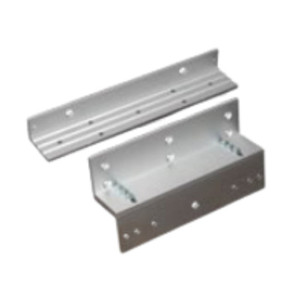
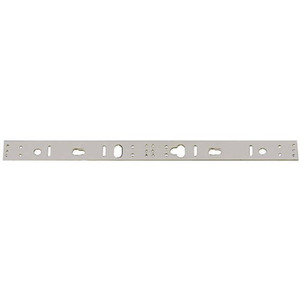
HES AM3320 Maglock Mounting Brackets
The AM3320 Maglock Brackets Duro are purpose-built mounting hardware for electromagnetic lock systems in commercial access control deployments. These brackets provide the mechanical interface and structural support needed to secure maglock units to door frames and structural elements with precision alignment, ensuring reliable lock operation across standard installation environments.
Key Features
- Dual mounting configurations: Frame-mounted and surface-mounted designs accommodate various door frame styles and structural layouts — eliminates the need to stock multiple bracket types for different installation scenarios.
- Precision alignment: Engineering tolerances ensure proper maglock seating and consistent holding force — misalignment directly reduces lock reliability and can cause nuisance failures in high-traffic areas.
- Load distribution design: Brackets distribute electromagnetic force evenly across mounting surfaces, reducing stress concentration and extending hardware lifespan in demanding commercial environments.
- Code compliance: Engineered to meet building code requirements for access control installations — critical for facility certification and liability protection in secure facilities.
- Durable construction: Commercial-grade materials withstand repeated door cycles and standard building environment stresses (temperature swings, humidity, vibration from foot traffic).
- Installation flexibility: Compatible with standard maglock applications, reducing integration complexity when retrofitting existing door frames or deploying across multiple facility locations.
Integration & Compatibility
The AM3320 brackets are designed to integrate with electromagnetic lock systems in standard commercial access control architectures. When paired with a complete access control solution including door sensors and reader technology, these brackets provide the mechanical foundation that ensures lock performance under real-world door stress and thermal cycling.
Installation flexibility supports both retrofit and new construction scenarios. Frame mounting works where structural elements are accessible; surface mounting accommodates situations where frame modification is impractical. Proper installation requires alignment with the maglock unit and verification that the mounting surface can handle sustained electromagnetic holding force — typically 600–1,200 pounds depending on the maglock model.
Deployment Considerations
Maglock systems deliver fail-safe operation (lock releases on power loss) rather than fail-secure, making them suitable for emergency egress compliance and areas where power-loss lockdown is not required. The AM3320 brackets support that functionality by ensuring the maglock sits flush and releases smoothly when de-energized. Installation should include verification of surface load capacity and frame structural integrity — weak frames or deteriorated concrete will compromise lock reliability regardless of bracket quality.
Frequently Asked Questions
Q: Can the AM3320 brackets be used with any maglock model?
A: The AM3320 is designed for standard electromagnetic lock installations. Verify that your specific maglock model is compatible with the bracket footprint and mounting hole pattern before installation.
Q: What is the holding force capacity of the AM3320 brackets?
A: The brackets themselves are engineered to support standard commercial maglock units (typically 600–1,200 lbs holding force). The actual holding force depends on the maglock model and installation quality.
Q: Do the AM3320 brackets support both frame and surface mounting?
A: Yes, the bracket set is engineered to accommodate both frame-mounted and surface-mounted installations, providing installation flexibility across different door frame types and structural scenarios.
Q: What building codes apply to maglock installations with the AM3320?
A: Electromagnetic lock installations must comply with local fire codes, ADA egress requirements, and NFPA standards. The AM3320 brackets are engineered for code-compliant installations, but always verify compliance with local building authority requirements for your specific facility.
Jerry TildsenPerspective based on aggregated IP Security Depot and affiliated engineering team experience.
The AM3320 is a straightforward bracket system, but straightforward doesn't mean unimportant. I've seen maglock installations fail not because of the lock itself, but because the mounting interface was sloppy — poor alignment, undersized hardware, or frame misalignment. The AM3320 brackets address the most common install gotchas: they're engineered for precision alignment and dual mounting configurations, meaning you're not improvising with universal brackets or fighting incompatible hole patterns.
Technical Highlights:
- Dual mounting design (frame and surface): Eliminates inventory complexity — one bracket set handles retrofit and new construction scenarios without requiring different part numbers or custom fabrication.
- Load distribution engineering: Brackets spread the sustained electromagnetic holding force (600–1,200 lbs depending on maglock) across the mounting surface, reducing localized stress that causes premature hardware wear or frame damage.
- Code-compliant construction: Meets building and fire code requirements for access control installations — directly supports facility certification and reduces liability risk in commercial and secure facilities.
Deployment Considerations:
- Installation quality determines lock reliability. Verify surface load capacity before mounting; weak or deteriorated concrete will compromise the entire system regardless of bracket quality.
- Maglock systems are fail-safe by design (lock releases on power loss) — appropriate for emergency egress compliance, but not for fail-secure scenarios where power-loss lockdown is required.
The AM3320 brackets are the right choice for integrators who need predictable, code-compliant maglock installations across multiple commercial locations without on-site fabrication or trial-and-error alignment. Deploy them in office buildings, secure facilities, and controlled entry environments where installation standardization and reliable long-term performance matter.