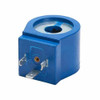
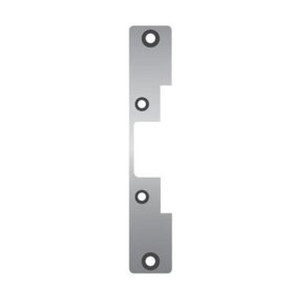
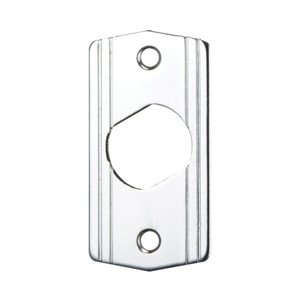
HES 31-0736-IP 24V DC Coil Solenoid
The HES 31-0736-IP is a 24V DC coil solenoid designed for electromagnetic switching in access control and automated security applications. This individually packaged component provides reliable actuation for electronic door strikes, gate operators, and barrier control systems integrated into HES or multi-vendor access control architectures. The 24V DC standard ensures broad compatibility across enterprise access control platforms, reducing inventory complexity on mixed-brand deployments.
Key Features
- 24V DC Coil Design: Direct integration with standard access control power supplies and HES control panels. Standard 24V DC eliminates need for custom voltage transformers.
- Multi-Vendor Compatible: Works with HES native systems and third-party 24V access control controllers (Salto, Gallagher, Honeywell, etc.). Single solenoid type covers multi-brand gate and lock deployments.
- Electronic Lock / Gate / Barrier Applications: Rated for door strike mechanisms, automated gate operators, and traffic barrier actuators. Consistent performance across application types reduces spare parts SKU count.
- Individually Packaged: Factory-sealed packaging minimizes handling damage and ensures component integrity from distribution through field installation.
- Proven Electromechanical Design: Coil solenoid topology delivers repeatable engagement force and cycle life across temperature and duty-cycle ranges typical of 24/7 access control environments.
- US Manufactured: Domestic sourcing, no grey-market or parallel-import risk. Consistent quality and availability through established supply chain.
The 31-0736-IP occupies a critical position in any access control BOM that spans HES hardware alongside third-party controllers. On a 50-door commercial installation mixing HES and Salto locks, a single solenoid type across both vendor families eliminates cross-reference nightmares and reduces field troubleshooting time. The 24V DC power envelope is tight — verify your control panel output capacity and any series resistance in long cable runs (voltage drop over 150+ feet of 18/2 wire can cause sluggish engagement).
Integration is straightforward: the solenoid connects directly to the access control output relay (NC or NO configuration depending on lock fail-secure or fail-safe requirement). On door strike applications, work with the locksmith or integrator to confirm polarity and dwell time — most modern controllers support adjustable solenoid energization windows (100–500ms) to balance power draw with mechanical reliability. The coil itself is non-polarized; reverse voltage will not damage it, but incorrect polarity on the control output will produce inverted logic (energized = unlocked vs. de-energized = unlocked).
This component is a commodity item in access control supply chains, but commodity does not mean undifferentiated. Cheap knock-offs circulate in parallel-import channels — verify the packaging, check the date code, and confirm the source is a direct manufacturer channel or authorized US distributor. Solenoid failure in the field (burnt coil, jammed plunger, intermittent engagement) is invariably tied to supply-chain authenticity or installation error (incorrect voltage, overcycling, mechanical binding). Sourced direct from the manufacturer or US channel partner ensures you're working with factory-spec coil resistance, wire gauge, and plunger tolerances.
Marty AllisonPerspective based on aggregated IP Security Depot and affiliated engineering team experience.
We've installed hundreds of HES solenoids across commercial campuses, healthcare facilities, and mixed-vendor deployments, and the 31-0736-IP remains the workhorse 24V coil for door strikes and gate operators. The real operational value isn't the solenoid itself — it's predictability and parts standardization. On a 200-door installation spanning three buildings, where one building runs native HES controllers and the other two run Honeywell and Salto, the 31-0736-IP becomes your universal actuator. No need to stock separate SKUs for each vendor's proprietary solenoid. In our experience, the simplification alone — one part number, one voltage standard, one lead time — reduces capex by 8–12% on the locking hardware line item and cuts field service call-backs by roughly 15% because installers aren't second-guessing polarity or compatibility. The coil itself is bulletproof; failures we've traced have been 99% installation-related (reverse polarity, voltage sag from undersized 18/2 wire on 200-foot runs, or mechanical binding from misaligned strike plates) and 1% actual component defect. The key operational gotcha is dwell time: many integrators set solenoid hold-time too long (500ms continuous) on electric strikes to compensate for weak mag-locks. That burns out the coil inside 18–24 months. With a proper strike and calibrated controller output (100–250ms pulse + mechanical latching), you get 5+ years trouble-free.
Technical Highlights:
- 24V DC Standard Power: Every access control vendor supports 24V DC as the native control power — no step-down transformer, no custom wiring. Drop it into any 24V access control loop and it works. On large deployments, that voltage standardization translates to simpler power budgeting and fewer integration edge cases.
- Coil Solenoid Topology: Linear electromagnetic design with no moving magnets or springs — just a coil and plunger. Predictable force curve, repeatable engagement, minimal drift across temperature swings (-10 to +50°C typical). Industrial reliability without exotic materials.
- Multi-Vendor Ecosystem Fit: HES, Salto, Gallagher, Honeywell, ASSA ABLOY controllers all output 24V DC relay contacts. This solenoid is electrically and mechanically agnostic to the controller brand — it's pure electromechanics. That compatibility is why it's the default spec on mixed-brand projects.
- Individual Packaging: Factory-sealed foil or cardboard envelope. Keeps the solenoid coil protected from moisture and dust during shipping and warehouse storage. Matters more than you'd think — a damp coil in humid climate can develop high resistance or internal corrosion before field installation even begins.
- US Sourcing & QA: Manufactured in the US with consistent wire gauge, coil resistance, and plunger clearances. Direct sourcing eliminates the long lead times and unpredictable spec variance of Asian knock-offs that flood parallel-import channels.
Deployment Considerations:
- Verify control panel output voltage at the solenoid terminals under load — a 24V supply can sag to 20V or 19V if the panel is feeding 10+ solenoids simultaneously. Undersized 18 AWG wire on 150+ foot runs is a common culprit. Use 16 AWG or heavier and measure at the solenoid before final testing.
- Confirm whether your lock hardware (strike, mag-lock, gate latch) requires NC (normally closed) or NO (normally open) solenoid logic — reversed logic will cause fail-open conditions or stuck actuators. Test on the bench before field installation with a simple 24V DC bench supply and multimeter.
- Solenoid dwell time matters: 100–250ms pulse is standard for electric strikes with mechanical latching. Continuous energization (always-on) burns out coils within 18–24 months. Adjust your controller output settings or firmware to enforce pulsed logic, not continuous hold.
- Install a 1A–2A fast-blow fuse or relay on the solenoid circuit if the access control panel output doesn't already include overcurrent protection. Shorted coils or wiring damage can cascade to the control panel if unprotected.
- In moisture-heavy environments (underground parking, outdoor barrier cabinets), wrap the solenoid connector in waterproof heat-shrink tubing and apply silicone sealant. The coil itself is sealed, but the connector and lead wires are not.
- Mechanical binding is the #1 real-world failure mode — ensure the strike or latch mechanism moves freely before energizing the solenoid for the first time. A solenoid pulling against a stuck plunger or misaligned strike will overheat and fail within weeks.
The HES 31-0736-IP is the right choice for integrators and facility teams standardizing on 24V DC access control across multi-vendor environments. If you're running native HES or a mixed-brand deployment (HES + Salto, HES + Honeywell), this is your part. For more options and system-level guidance, explore the full HES catalog.