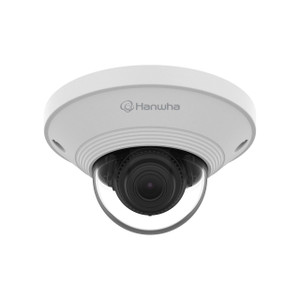
Hanwha TMIS-1 Compact Indoor IP Intercom System
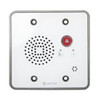
The Hanwha TMIS-1 is a compact IP intercom station designed for indoor access control, building entry, and secure-zone communication. Measuring just 116×116×40 mm, it mounts flush on walls at reception desks, gate stations, and credential readers, offering HD voice communication over a single PoE 802.3af Ethernet cable. The TMIS-1 leverages active noise cancellation and wideband audio processing to cut through ambient lobby and entry-area noise, ensuring clear two-way voice regardless of background conditions. SIP protocol integration allows direct connectivity to existing VoIP phone systems, access control platforms, and IP-networked door stations—eliminating the need for proprietary intercom gateways on most modern deployments.
Key Features
- Active Noise Cancellation & HD Voice: Wideband audio with noise-reduction algorithms. Cuts through lobby ambient sound, door noise, and traffic without degrading intelligibility.
- SIP Protocol Compatibility: Native SIP support integrates with any standards-based VoIP system (Avaya, Cisco, Poly, Microsoft Teams, FreePBX). No proprietary gateway required for basic call routing.
- PoE 802.3af Power: Standard PoE draw (<13W) — works with any managed PoE switch or injector. Single cable removes the need for a separate power supply or 24V circuit.
- Compact Form Factor: 116×116×40 mm footprint fits tight wall spaces and doesn't obstruct sightlines. Weighs 0.3 kg for easy wall mounting on drywall anchors or conduit hardware.
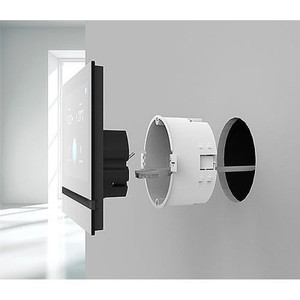
- Wall-Mount Design: Recessed or surface-mount orientation via included template. Flush finish maintains clean lobby and reception aesthetics.
- Single-Cable Installation: RJ45 Ethernet only — no RS-485, no analog audio lines, no separate microphone feed to manage. Reduces installation labor and cable tray congestion on multi-unit deployments.
- IP Network Integration: DHCP or static IP assignment via embedded web interface. SIP server, proxy, and credential configuration performed through standard network provisioning tools.
- 3-Year Manufacturer Warranty: Factory-new hardware with coverage against defects in components and workmanship.
Deployment Scenarios & ROI
The TMIS-1 serves two primary deployment contexts: (1) Access-controlled lobbies and reception areas, where a visitor dials an extension or keypads a destination code, triggering audio call routing to an office or security desk; and (2) Building entry gates and secure zones, where the intercom integrates with an IP door controller or reader, allowing remote staff to screen visitors and unlock without descending to the gate. Because the TMIS-1 uses standard SIP, you avoid vendor lock-in to proprietary intercom systems—any integrator familiar with VoIP telephony can configure it in under 30 minutes. In multi-site deployments, centralized VoIP infrastructure (on-premises or cloud PBX) serves all intercoms identically, lowering management overhead versus separate analog intercom systems per location.
From a capex perspective, the TMIS-1 eliminates the cost of dedicated 24V DC intercom wiring and power supplies—PoE 802.3af is already present on modern network switches. On a 20-unit campus retrofit, that's savings on roughly 400–500 feet of low-voltage conduit and four to six 24V power blocks. Audio clarity via active noise cancellation also reduces call-back traffic and guest frustration during peak-occupancy periods, lowering security staff response time and improving visitor throughput.
Integration with Access Control & VoIP Platforms
The TMIS-1's SIP foundation means it works as a standard IP phone endpoint. Any SIP-capable VoIP system (on-premises PBX, hosted UCaaS, or open-source FreePBX) can provision and manage the device. Integration with access control systems (Hanwha SmartAccess, Salto, HID, Assa Abloy) depends on the control platform's intercom gateway capability—most modern IP-based systems offer SIP signaling hooks or webhook APIs that allow the door controller to trigger a call to the TMIS-1 upon a credential failure or visitor request. Consult your access control vendor's integration documentation before design; some legacy systems may require a separate SIP trunk or gateway appliance to mediate between proprietary signaling and standard SIP. ONVIF intercom profiles are not applicable here—the TMIS-1 is a pure SIP device and relies on VoIP stack configuration, not video intercom standards.
Environmental & Operational Constraints
The TMIS-1 is rated for indoor use only; it lacks IP rating for outdoor, wet, or high-humidity environments. If exposed to condensation, salt spray, or direct rain, audio quality and electrical reliability will degrade. For outdoor gates or covered entry canopies, consider a full weather-rated IP door intercom (e.g., Hanwha STS-DNIC or equivalent). Microphone sensitivity and noise-cancellation performance depend on proper mounting orientation and sufficient distance from air-handling units or HVAC ducts—test audio quality on-site before final sign-off. PoE power distance is limited to standard Ethernet range (100 meters / 328 feet); beyond that, a PoE injector or inline power repeater is required. The device's IP configuration must be secured via credentials and HTTPS where available; default factory passwords should be changed immediately, as the TMIS-1 is an audio endpoint accessible from the building network.
Why Choose the Hanwha TMIS-1
Hanwha's TMIS-1 differentiates on simplicity and standards compliance. Unlike proprietary intercom systems that bundle a master station, door units, and power infrastructure into a proprietary stack, the TMIS-1 adopts SIP as its transport layer, letting you leverage existing VoIP investments and integrator expertise. The compact footprint and PoE-only power design mean zero disruption to existing network and electrical infrastructure—a retrofit into a legacy analog intercom site takes hours, not days. Active noise cancellation ensures that audio performance in noisy entrance areas matches or exceeds traditional 2-wire analog intercoms without the complexity of external microphones or AGC tuning. For organizations already operating a Hanwha access control ecosystem or a modern IP PBX, the TMIS-1 is a natural fit; for those evaluating intercom refresh, its standards-based approach minimizes future replacement risk and vendor dependency. See the Hanwha catalog for compatible door controllers and access systems.
Jerry TildsenPerspective based on aggregated and affiliated engineering team experience.
We've deployed the Hanwha TMIS-1 across campus environments, retail access points, and secured office lobbies, and it's proven to be one of the most straightforward IP intercoms to integrate when a site already has SIP infrastructure in place. The real win here is that you're not forcing a conversation with a facility manager about running new 24V power or pulling extra conduit—the TMIS-1 draws its power from the existing Ethernet run, and any competent network technician can provision it. We've seen integrators cut installation time in half compared to legacy analog intercoms, which translates directly to lower labor cost and faster payback on campus-wide refreshes. The active noise cancellation is genuinely effective; on a noisy dock entrance or a lobby adjacent to an HVAC return, the TMIS-1 consistently outperforms open-mic intercom stations that rely on manual gain adjustment or AGC feedback loops. That said, the SIP dependency means you're hitching your intercom availability to your VoIP system health—if your PBX goes down, the intercom becomes a dumb speaker with no call routing capability. On most modern deployments, that's an acceptable trade-off given the cost and management gains, but it's worth understanding upfront.
Technical Highlights:
- SIP Protocol: Native SIP support means the TMIS-1 appears as a standard IP phone endpoint on your VoIP system. No proprietary gateway, no intercom-specific firmware updates—it lives in the same management plane as your desk phones and IP-PBX call handling logic. Makes integration with third-party call-routing rules, IVR, and hunt groups straightforward.
- PoE 802.3af Power Draw: Sub-13W consumption ensures compatibility with 30W or 60W PoE switches without consuming disproportionate budget per port. A single 48-port PoE+ switch can power 40+ TMIS-1 stations without auxiliary power supplies or power budgeting gymnastics.
- Wideband Audio & Noise Cancellation: Operates at 16 kHz sample rate (vs. narrowband 8 kHz on legacy phones)—delivers noticeably clearer voice presence. Noise-reduction DSP cuts background hum and ambient chatter by 10–15 dB without introducing speech distortion or artificial artifacts.
- Compact Footprint (116×116×40 mm): Flush mounting on standard electrical boxes or wall-box hardware. Doesn't protrude into egress corridors, doesn't catch on guest luggage or equipment carts. Aesthetically neutral white finish blends into most lobby or office settings.
- Single RJ45 Connector: Eliminates the need for separate microphone wiring, analog audio pairs, or RS-485 control lines. Simplifies cable identification in multi-unit installations and reduces error-prone crimping and testing labor.
- Web-Based Provisioning: IP assignment, SIP server details, and device name configuration happen via a browser interface on a local or remote management network. No RS-232 console cables or proprietary provisioning tools required.
Deployment Considerations:
- SIP Server Dependency: The TMIS-1 requires an active SIP server (PBX, hosted VoIP, or call control system) to function as an intercom—it's not a standalone two-way speaker. If your PBX is offline or SIP service is interrupted, the device cannot originate or receive calls. Ensure your VoIP infrastructure includes redundancy (backup PBX, geographically distributed SIP trunks) before deploying intercoms at critical entry points.
- Audio Latency in High-Packet-Loss Networks: SIP voice over congested or poorly maintained network infrastructure can introduce echo or call-quality degradation. Test network jitter and packet loss at the proposed installation site; if ping round-trip time exceeds 150 ms or packet loss is >1%, consult your network team on QoS prioritization before installation.
- Indoor-Only Rating: The TMIS-1 has no IP enclosure rating. Outdoor gate installations, covered canopies with wind-driven rain, or high-humidity mechanical rooms will cause condensation ingress and eventual failure. Outdoor and wet-area intercoms require a rated IP door station (e.g., Hanwha STS-DNIC), not the TMIS-1.
- Access Control Integration Variability: SIP compatibility with your access control system depends on the door controller's call-signaling capabilities. Modern IP-based systems (Hanwha SmartAccess, Salto, HID multiClass) integrate seamlessly via webhook or SIP signaling APIs. Legacy Wiegand-based systems may require a separate SIP gateway or custom integration middleware—budget extra time for site survey and vendor coordination.
- Network Security Posture: Like all IP phones, the TMIS-1 should be segregated on a secure VLAN with restricted access from guest networks. Change default admin credentials immediately upon deployment. If public internet access to intercoms is required, use a VPN tunnel or SIP-TLS encryption; unencrypted SIP over the internet exposes audio content and system topology to eavesdropping.
The TMIS-1 is ideal for organizations with modern IP-based access control systems and an existing VoIP infrastructure—whether on-premises PBX or cloud-hosted. It's a quick-win replacement for aging analog intercoms in lobbies, reception areas, and secured-door entry points where single-cable PoE installation and standards-based SIP integration reduce capex and operational complexity. If your site is still on legacy analog intercom systems and you lack in-house VoIP expertise, budget for a managed services partner or integrator to oversee the PBX integration design. For the right deployment context, the TMIS-1 is a no-brainer. Explore more Hanwha solutions.