
Barcode and RFID Warehouse Automation: Buyer's Guide
Warehouse and store-floor automation depends on the right combination of barcode scanners, RFID readers, mobile computers, and rugged tablets. This guide walks through the hardware categories, where each fits, brand-by-brand strengths, and how to spec a system for inbound receiving, picking, putaway, and inventory cycle counts.
- Mobile computers with integrated scanners (Zebra TC, Honeywell CT, Datalogic Memor) replace separate handhelds and PCs for most warehouse workflows
- RFID is right when item-level tracking matters (apparel, retail, high-value, or asset tracking); barcode is fine for most case-and-pallet operations
- WMS integration is the bottleneck — confirm device-OS compatibility before buying any hardware
- Plan device-per-user counts realistically — 1 device per active worker, plus 15-25% spare pool
Four hardware categories
Four hardware categories cover most warehouse and store-floor deployments:
- Mobile computers. Integrated barcode scanner + Android or Windows OS. The workhorse device for pickers, putaway, cycle-counters. Zebra TC, Honeywell CT, Datalogic Memor, Janam, Unitech are the major lines.
- Fixed scanners and presentation scanners. Stationary at conveyor lines, packing benches, retail POS. Datalogic, Honeywell, Zebra all compete here.
- RFID readers and antennas. Fixed dock-door arrays, handheld RFID, tabletop encoders. Impinj, Zebra, Honeywell, Alien are the major lines.
- Rugged tablets and vehicle-mount terminals. Forklift-mounted tablets, dock-supervisor tablets, mobile-cart tablets. Zebra, Honeywell, Panasonic Toughbook, Getac, Janam.
Barcode scanners
Mobile computers
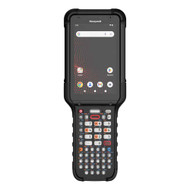
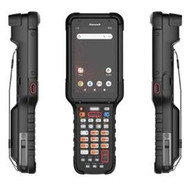
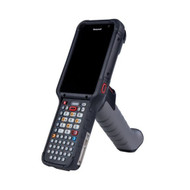
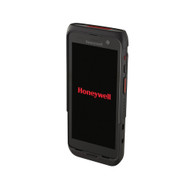
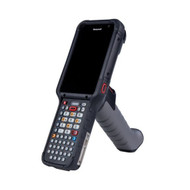
Mobile computers and rugged Android devices for picking, receiving, and putaway:
RFID readers and tags
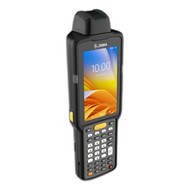
RFID readers and tags for item-level and asset tracking:
Brand strengths
Brand strengths in warehouse automation hardware:
| Brand | Strength | Typical use |
|---|---|---|
| Zebra | Broadest lineup, strong Android OS support, deep WMS integration partners | Distribution centers, retail, healthcare |
| Honeywell | Strong scanner optics, rugged tablets, hands-free wearables | Warehouse, parcel, manufacturing |
| Datalogic | European market leader, strong fixed scanners and presentation imagers | Retail, conveyor, packaging |
| Janam | Compact rugged devices at competitive cost | Field service, light-duty warehouse, route accounting |
| Socket Mobile | Bluetooth scanners for iOS/Android tablet pairing | Retail, inventory, POS |
| Unitech | Industrial mobile computers, vehicle-mount, RFID | Manufacturing, warehouse, port |
| CipherLab | Affordable rugged Android, RFID and barcode in one chassis | Mid-market warehouse, retail backroom |
RFID vs barcode
RFID vs barcode — when to choose which
| Criterion | Barcode (1D/2D) | RFID (UHF/HF) |
|---|---|---|
| Per-tag cost | Free (printed) | $0.05-$0.50+ per tag |
| Read distance | 0-12 inches typical | 10-30 feet typical |
| Line of sight needed | Yes | No |
| Read concurrency | One at a time | Hundreds per second |
| Item-level uniqueness | Possible (SGTIN, serialized) | Native via EPC |
| Best for | Cases, pallets, packing | Apparel, asset tracking, item-level retail |
| WMS integration complexity | Standard | Higher; middleware often required |
Specification checklist
Specification checklist
- Confirm WMS or ERP compatibility before buying any hardware — vendor specs often lag actual OS support
- For Android devices, lock down OS-level updates with Mobile Device Management (Soti, AirWatch, Knox) — uncontrolled OS upgrades break apps
- Budget device-per-user with a 15-25% spare pool to cover breakage and charging swaps
- Specify drop-rated to 5 feet onto concrete for warehouse use; 8 feet for cold storage / forklift use
- Plan charging infrastructure: cradle chargers for desks, gang chargers for break rooms, vehicle chargers for forklifts
- Test scanner performance on actual labels you'll use — damaged, curved, or low-contrast labels expose scanner quality differences
- For RFID, plan tag commissioning workflow — usually a tabletop encoder station at inbound receiving
Frequently asked questions
- What's the typical lifespan of a warehouse mobile computer?
- 3-5 years for active duty use, 5-7 years for lighter-use roles. The first thing to fail is usually the battery (which is user-replaceable on most rugged devices) followed by the touch screen. Drop damage is the next most common cause of replacement. Plan a refresh cycle of 4 years for mainstream warehouse use.
- Do I need a dedicated WMS for RFID, or can I use my existing system?
- Most modern WMSs support RFID either natively or via middleware. NetSuite, SAP, Manhattan, Highjump, JDA Dispatcher, and Korber all have RFID modules. Smaller WMSs sometimes require a third-party RFID middleware platform (Impinj ItemSense, Zebra MotionWorks Material, OATSystems) to bridge readers to the WMS. Verify before committing on hardware.
- Should I buy Zebra or Honeywell?
- Both are strong. Zebra has the deeper Android lineup and more Mobile Device Management options. Honeywell has stronger scanner optics on the high-end scanner imagers and the CK and CT lines are excellent for picking and inventory. For most mid-market warehouses, the choice often comes down to which vendor your WMS provider supports best or which existing infrastructure you have.
- How does Bluetooth scanner pairing with phones/tablets compare to a rugged mobile computer?
- Bluetooth scanners (Socket Mobile, Zebra CS series) paired with iOS/Android tablets work well for low-volume retail and inventory tasks. They cost less and let you use commercial-grade tablets for the front-end UI. The trade-off is durability — phones and tablets aren't drop-rated for warehouse use, and the BT scanner can lose pairing in noisy RF environments. For active warehouse work, a purpose-built rugged mobile computer is more reliable.
- Can I mix brands across a single warehouse?
- Yes — most WMSs are vendor-agnostic on the scanner/device side. Common mix: Zebra mobile computers for picking, Datalogic fixed scanners on conveyor, Honeywell wearables for case-pick zones, Socket Mobile BT scanners for cycle counting. Just plan for separate MDM profiles per vendor and consistent app deployment across all devices.
Quote warehouse automation hardware
Working on a WMS upgrade or new DC build-out? Senior Specialists can size mobile computers, scanners, RFID readers, and rugged tablets and quote channel-direct.
Get a quote Browse all categories