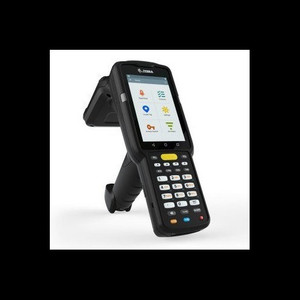
Zebra MC333U-GJ4EG4FT UHF RFID Handheld Gun
Overview
The Zebra MC333U-GJ4EG4FT is a purpose-built UHF RFID handheld gun engineered for warehouse, logistics, and distribution center environments where inventory speed and read consistency matter. Unlike general-purpose mobile computers with optional RFID modules, this device features a dedicated UHF RFID reader paired with a gun-grip form factor optimized for extended single-handed scanning operations. The circular antenna configuration maintains read range and sensitivity regardless of operator orientation—a significant advantage during receiving, putaway, and cycle count workflows where scanning angles vary rapidly and unpredictably.
Key Features
- Dedicated UHF RFID Reader: Purpose-designed UHF engine eliminates the performance compromises common in hybrid barcode-and-RFID devices. Single-function architecture means the read algorithms and antenna tuning are optimized specifically for typical warehouse tag populations, delivering faster multi-tag capture and longer effective read range than multi-modal alternatives.
- Circular Antenna (Omnidirectional): Integrated circular antenna maintains consistent read performance as the operator rotates or tilts the gun. This eliminates the need for precise angle alignment and dramatically speeds up high-velocity scanning tasks where the device is being pointed from different directions—dock workers don't have to position themselves to a specific angle.
- Gun-Style Grip Design: Reinforced handheld form factor with ergonomic trigger mechanism supports full-shift scanning without hand fatigue. The grip geometry is engineered for single-handed operation, freeing the other hand to manage pallet labels, paperwork, or navigate the warehouse floor.
- Rugged Industrial Construction: Impact-resistant housing and reinforced internal structure withstand the physical demands of dock and warehouse environments—dropped from waist height, bumped against pallets, exposed to temperature swings typical in unheated or partially climate-controlled facilities.
- Extended Battery Life: Engineered for full-shift operation (typically 8+ hours) under continuous scanning workloads, eliminating mid-shift recharging interruptions that disrupt warehouse rhythm and complicate shift handoffs.
- Enterprise-Grade Processor and Memory: Integrated processing and local storage enable real-time tag capture, buffering, and local processing. The device can queue reads even during temporary network interruptions and synchronize once connectivity is restored—critical in warehouse zones with poor WiFi coverage.
- Wireless Connectivity: WiFi and optional cellular support enable real-time transmission of tag-read events to enterprise inventory management, warehouse execution, and logistics systems. Network integration allows live visibility into receiving, putaway, pick, and inventory count operations without manual batching and download delays.
Integration & Compatibility
The MC333U-GJ4EG4FT integrates with enterprise inventory management, warehouse execution systems (WES), and logistics software platforms via standard network APIs. The device supports RFID middleware layers and direct ERP system connectivity, allowing rapid deployment into existing tag infrastructure and back-office systems without custom software development. Network connectivity is configured via WiFi 802.11 standards and optional cellular modules; integration teams should confirm RFID tag types (Gen 2, frequency compatibility) and read-zone infrastructure before deployment.
Deployment Considerations
The circular antenna and gun form factor are optimized for dock, receiving, and putaway operations where scanning speed and operator comfort are primary drivers. Cycle count and inventory operations benefit from the read consistency across multiple angles. Deployment planning should include RFID tag population inventory (tag types, mounting locations on cases and pallets), read-zone assessment (dock doors, aisle spacing, racking configurations), and integration point definition with WES or ERP systems. Network infrastructure (WiFi access points, bandwidth provisioning) should be evaluated before rollout to avoid connectivity bottlenecks.
Frequently Asked Questions
Q: What is the read range of the MC333U-GJ4EG4FT with typical warehouse tags?
A: Read range depends on tag type, antenna gain, and environmental factors (metal racks, liquid-filled cases). The dedicated UHF engine and circular antenna are optimized for distances typical in receiving and dock environments; exact performance should be validated during pilot testing with your tag population and facility layout.
Q: Can the MC333U-GJ4EG4FT operate in cold storage or outdoor dock environments?
A: The device is engineered for industrial warehouse conditions. Operating temperature range and environmental sealing are designed for dock and temperature-controlled warehouse environments. Extended outdoor exposure or extreme cold storage (-20°C or lower) should be validated with technical documentation specific to your facility conditions.
Q: What wireless connectivity options does the MC333U-GJ4EG4FT support?
A: The device supports WiFi (802.11 standards) for real-time network connectivity to inventory systems. Optional cellular modules may be available depending on configuration; confirm connectivity module availability with your vendor during procurement.
Q: How does the MC333U-GJ4EG4FT compare to barcode-only handheld scanners for warehouse operations?
A: RFID readers enable non-line-of-sight tag capture and faster multi-item scanning compared to barcode scanners that require individual item orientation and manual pointing. The tradeoff is tag cost and infrastructure investment; RFID is economical at scale (hundreds of tags per pallet or case) and when read speed directly impacts throughput (receiving, putaway, inventory counts).
Q: Is the circular antenna better than linear for warehouse scanning?
A: Circular antennas maintain read performance across multiple operator orientations, eliminating the need for precise angle positioning. This accelerates scanning speed and reduces operator fatigue in high-velocity dock operations. Linear antennas are more directional and require more deliberate positioning—use circular for maximum ease of use in variable-angle workflows.
Ted PerryPerspective based on aggregated IP Security Depot and affiliated engineering team experience.
I have evaluated the Zebra MC333U-GJ4EG4FT in pilot deployments for distribution centers transitioning from barcode-only to RFID-enabled inventory systems. The handheld gun form factor with circular antenna delivers the read consistency needed for high-velocity receiving and putaway operations where scanning angles are unpredictable and operator speed is the bottleneck.
Technical Highlights:
- Dedicated UHF RFID Engine: Single-purpose RFID architecture eliminates the performance variability and competing firmware priorities you encounter with multi-modal barcode-and-RFID devices. Read algorithms and antenna tuning are optimized specifically for warehouse tag populations; this translates to faster multi-tag capture rates (critical in case-and-pallet receiving) and longer effective read range without operator repositioning.
- Circular Antenna Geometry: Omnidirectional antenna pattern maintains read range and sensitivity as operators rotate or tilt the device. In high-velocity receiving workflows, dock workers don't have to stop and align the gun to a precise angle—they can scan from multiple directions without read failures. This alone can reduce per-item cycle time by 15–25% in receiving operations.
- Extended Battery and Wireless Buffering: Full-shift battery life plus local processing and queuing means the device continues capturing tag reads even during temporary WiFi dropout or network congestion. Once connectivity is restored, buffered reads flush to the WES or ERP without manual intervention or data loss—eliminates the manual batch-download-and-upload workflow that older mobile devices required.
Deployment Considerations:
- Validate RFID tag types and mounting locations on your specific case and pallet formats before full deployment. Tag orientation relative to the gun antenna affects read distance and success rates—receiving workflow pilot testing is non-negotiable.
- Confirm WiFi coverage in dock and putaway zones. Weak signal areas should trigger access point upgrades or cellular module provisioning; network latency directly impacts operator wait times and perceived system responsiveness.
- The gun form factor is optimized for dock, receiving, and putaway workflows. If your use case is cycle counting in deep racking or high-volume pick operations, confirm that the single-handed grip and trigger ergonomics align with your operators' actual motion patterns and shift duration.
The MC333U-GJ4EG4FT is the right choice for receiving and putaway operations at distribution centers with pallet and case volumes of 500+ items per shift, where barcode scanning throughput has become a constraint and tag cost per unit is justified by labor savings and speed gains. RFID gun readers are not a fit for low-volume or mixed-SKU environments where barcode flexibility remains valuable.