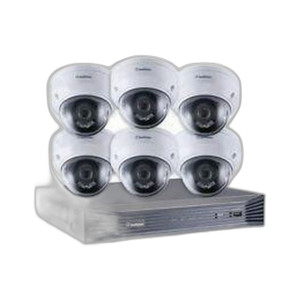
Geovision GV-VMS-VR Enterprise Network Video Management System
Overview
The Geovision GV-VMS-VR is an enterprise-class network video recording appliance designed for organizations deploying centralized video management across distributed IP camera installations. Unlike analog-based systems, it leverages existing Ethernet infrastructure to ingest and store concurrent streams from multiple IP cameras, eliminating dedicated coaxial cabling while reducing installation complexity. The GV-VMS-VR addresses the core workflow for security integrators and facility operators: ingest streams from numerous cameras across single or multi-site deployments, apply centralized recording policies, and provide professional-grade playback and incident export without proprietary hardware lock-in.
Compatibility
The GV-VMS-VR operates as a vendor-neutral ONVIF-compatible recording platform. It accepts IP camera streams from any manufacturer compliant with ONVIF Profile S, T, or G standards — including Axis, Hanwha, Hikvision, Uniview, and other standards-based cameras. The system supports legacy camera integration through optional gateway solutions where direct IP connectivity is not available. Multi-camera deployments scale from dozens to hundreds of concurrent streams depending on network bandwidth and configured storage capacity. The architecture integrates into existing VMS ecosystems via ONVIF APIs and standard network protocols (HTTP, RTSP, RTP), avoiding vendor-specific control dependencies.
Installation Notes
The GV-VMS-VR operates over standard Ethernet backbone infrastructure. Deployment requires adequate PoE budget or separate power supplies to feed IP cameras, dimensioned by total wattage of connected devices. Network switch capacity must accommodate simultaneous camera streams at configured bitrate and frame rate (typical range: 2–8 Mbps per 1080p30 stream). Centralized storage is configurable to match retention policies; retention duration scales inversely with megapixel count, frame rate, and compression codec selection (H.265 reduces storage requirements 40–60% versus H.264). Remote management and failover support enable multi-site clustering where needed.
What's in the Box
Package contents not specified in available evidence. Contact the supplier for exact included accessories, power cables, and documentation.