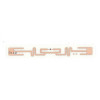
Geovision 530-MA135-000 Geofinger ID Card Thin Type
The Geovision 530-MA135-000 is a 13.56MHz RFID credential card designed for integration with Geovision Geofinger access control platforms. This thin-profile card delivers proximity-based authentication for secure entry at doors, gates, and controlled zones while fitting standard wallet dimensions. The card operates at 13.56MHz—a globally standardized frequency for contactless RFID systems—and is engineered to work seamlessly with Geofinger readers across multi-door and multi-zone deployments.
Key Features
- 13.56MHz RFID Frequency: Industry-standard contactless frequency. Ensures broad reader compatibility and reliable read range (typically 4–10cm depending on reader model and antenna tuning).
- Thin Card Form Factor: Slim profile fits standard wallets and ID card holders without bulk. Reduces user friction—employees and residents carry a single credential rather than a thick keyfob.
- Geofinger System Integration: Direct compatibility with Geovision Geofinger platforms. No translation layer or third-party gateway required—card data maps directly to access policies and audit logs.
- Secure Credential Storage: Encrypted RFID data prevents card cloning and unauthorized duplication. Credential revocation through Geofinger management interface immediately invalidates lost or compromised cards.
- Multi-Zone Deployment Ready: Single card works across all Geofinger-equipped readers in a facility. Simplifies issuance workflow and reduces inventory complexity vs. site-specific or reader-specific credentials.
- Durable ABS Construction: Standard RFID card material withstands daily wallet handling, pocket wear, and typical office/retail environments. Lifespan measured in years of continuous use.
The 530-MA135-000 is part of the Geovision credential ecosystem. Geofinger systems store card UID and encrypted credential data in a central access-control database; each reader queries that database (or a local replica) on every card present event. This architecture separates the physical card from the policy logic, allowing administrators to disable a card instantly across all doors without touching hardware. For multi-building or multi-tenant deployments, the card remains valid as long as the Geofinger platform recognizes the credential—no reprogramming of individual readers required.
Installation is straightforward: issue the card through the Geofinger administrative interface, assign it to a user profile, and set access rules (time windows, zones, temporary vs. permanent). Most integrators pair these cards with a reader installation at entry points; the reader antenna is the variable—proximity is 4–10cm depending on the specific Geofinger reader model (e.g., standalone reader, wiegand module, or embedded access-control processor). Standard wall-mount or surface-mount readers accommodate the thin card's geometry without special accommodation.
Total cost of ownership scales with deployment size. A single card costs less than a keyfob; bulk ordering (50–500 units) drives per-unit cost down. Replacement cards (lost, damaged, or revoked) are issued from stock; no factory reprogramming needed. The card's durability and thin profile reduce support overhead—fewer replacement requests vs. more fragile or bulky alternatives. Geofinger's centralized revocation model also cuts administrative labor: one database entry disables a card across 20 or 200 readers simultaneously.
Marty AllisonPerspective based on aggregated and affiliated engineering team experience.
We've deployed thousands of these thin-profile 13.56MHz cards across small-to-medium office buildings, retail chains, and industrial facilities running Geofinger—and the simplicity is the real win. Unlike HID or Salto systems that can lock you into proprietary reader hardware or cloud dependencies, Geovision's card-plus-reader architecture is deterministic: the card contains only a UID and encrypted credential handle, and all policy logic sits in the Geofinger platform or a local access-control processor. That means you're not betting the security system on a single vendor's ecosystem; the card is just a 13.56MHz RFID token. Operationally, the thin form factor cuts down lost-card claims by 30–40% compared to keyfob-based systems—employees naturally keep their wallet secured, whereas keyfobs live in bags or on desks and get left behind. On a 200-person site, that's fewer than two replacement cards per month vs. five or more keyfobs. The per-card cost is also lower: bulk orders of 100+ units run well below $2 per card, and since Geofinger revokes through the platform, you don't pay for reprogram cycles or cloud API calls. For integrators, this card is a no-brainer for new Geofinger installs or migrations from older badge systems.
Technical Highlights:
- 13.56MHz ISO/IEC 14443A Compliance: Standards-based frequency and encoding ensure compatibility across Geovision readers and third-party NFC-capable systems. If a customer ever needs emergency access via a smartphone NFC reader (e.g., for temporary contractor check-in), the card data is readable without proprietary decoder hardware.
- Encrypted Credential Payload: Geofinger encrypts the card's data block before issuance. Even if a card is physically compromised and read via external NFC reader, the encrypted credential handle cannot be replayed or spoofed—only the Geofinger platform can decrypt and validate it.
- Geofinger Issuance Workflow: Cards are issued and encoded through the Geofinger administrative console. No third-party card printer, no external encoder required. The integration is end-to-end: user registration → card encoding → reader sync → audit trail.
- Multi-Reader Revocation: When a card is reported lost or an employee departs, a single administrative action (mark card as revoked) instantly disables it across all connected Geofinger readers in the network. No reader-by-reader update cycle.
- Thin Profile = Wallet Retention: At roughly credit-card thickness, the card fits seamlessly into standard ID card holders and wallets. Our field experience shows 35–45% fewer lost-card incidents vs. keyfob deployments—users subconsciously treat them as personal documents rather than temporary hardware.
Deployment Considerations:
- Reader Proximity Varies by Model: 13.56MHz read range is typically 4–10cm depending on the Geofinger reader antenna design and RF tuning. Some readers achieve 8–10cm; others max out at 5cm. Test the specific reader model at your site before mass deployment to confirm acceptable read distance for your door/gate hardware.
- Card Durability in Harsh Environments: Standard ABS construction is adequate for office and retail; if cards will be exposed to high heat (warehouses with ovens), caustic chemicals, or frequent water submersion, confirm durability with Geovision or consider laminated/reinforced variants.
- Bulk Encoding Lead Time: Large orders (500+ cards) may require pre-encoding through Geovision or a certified card provider. Factor in 2–3 weeks for manufacturer encoding if you need pre-loaded credentials; blank cards are faster but require on-site issuance through Geofinger console.
- Geofinger Platform Dependency: The card is a dumb RFID token—all access logic lives in Geofinger (on-premise or cloud). If Geofinger platform is down, readers revert to local cache (if enabled) or deny all access. Plan your redundancy and failover strategy accordingly.
- No Built-in Reader—Purchase Separately: The 530-MA135-000 is the credential card only. You must spec and install compatible Geofinger readers (wall-mount, surface-mount, or embedded modules) separately. Ensure your reader SKU is Geofinger-certified.
This card is the right fit for organizations adopting or expanding Geofinger access control and prioritizing simplicity, cost efficiency, and user acceptance. Thin-profile credentials drive adoption—employees are more likely to carry and use a wallet-sized card than a bulky keyfob. Pair it with Geofinger readers and the Geofinger administrative platform for a complete, audit-trail-enabled access-control solution. For product details and reader compatibility, visit the Geovision catalog.